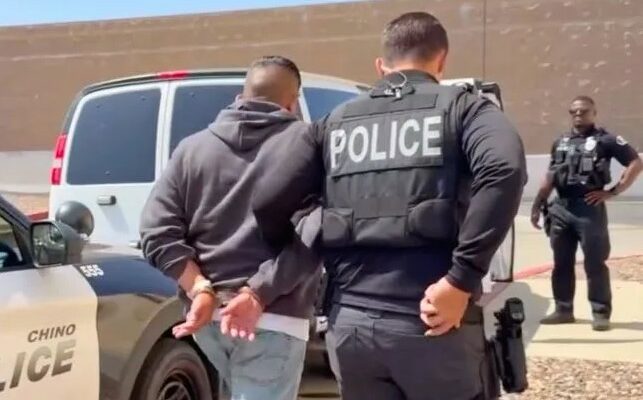
Getting body cam footage after a California arrest comes down to two tracks. If it’s a shooting or a use of force causing death or great bodily injury, the agency has a hard 45-day deadline under AB 748. For every other arrest, a rough takedown, a bad handcuffing, a search you think was illegal, there’s no fixed deadline, so you file a CPRA request, send a preservation letter the same day, and push. Departments routinely purge “non-evidentiary” footage on short retention cycles, sometimes within weeks, which is why speed matters more than the paperwork itself. Pair the video request with a separate request for the officer’s personnel and misconduct history under SB 1421/SB 16, that’s the request most people forget, and it’s often the one that actually moves a case.
Keypoints:
- Preservation demand goes out first, same day, this stops routine deletion before you’ve even filed anything
- Critical incidents (shootings, force causing death/great bodily injury) get a 45-day release deadline under Gov. Code § 7923.625
- Ordinary arrests have no fixed deadline, agencies can and do deny CPRA requests citing “investigatory records” exemptions
- Body cam footage is not automatically a public record for every arrest; access depends on the incident type and any active investigation
- A separate SB 1421/SB 16 request for the officer’s misconduct history is often more valuable than the video itself
- Private footage, doorbell cams, business surveillance, bystander video, can overwrite in days, so it needs collecting fast, separately from the official request
The video exists. That is the part most people get right. What surprises them is how quickly it can stop existing, and how differently the rules treat a routine arrest compared to a shooting.
If you were beaten, tased, bitten by a police dog, or arrested on charges you know are false, the body camera and dash camera recordings are often the difference between your word against an officer’s and a case that resolves itself the moment a judge or a jury watches sixty seconds of footage. Here is how to go after it. Whether you know exactly how to get body cam footage already or you’re starting from zero, the process below works the same way.
QUICK ANSWER: Send a written preservation demand to the agency immediately, then file a California Public Records Act request. If an officer fired a weapon or used force causing death or great bodily injury, Government Code section 7923.625 requires release within 45 days. For ordinary arrests there is no 45 day rule, so speed matters. Criminal defense counsel can also obtain the video through discovery.
Step one, and do it today: send a preservation letter
Before you request anything, demand that the agency keep it.
Retention schedules vary by department, and video categorized as non evidentiary is frequently purged on a short cycle. A written preservation demand, sent to the agency’s records unit and its city attorney or county counsel, identifies the date, time, location, incident or report number, and the officers involved, and asks that all body worn camera, dash camera, station, and jail video be preserved along with the associated metadata and audit logs.
Two reasons this comes first. It stops the clock on routine deletion. And if a department destroys video after receiving a preservation demand, that destruction itself becomes an issue in the case. Even people who’ve never dealt with an agency before can figure out how to get bodycam footage once they understand this first step, the preservation letter is what buys you the time to do everything else properly.
Step two: know which category your incident falls into
California treats two situations very differently.
Critical incidents: the 45 day rule
AB 748 took effect on July 1, 2019 and now appears at Government Code section 7923.625. It covers recordings of critical incidents, meaning an incident in which an officer discharged a firearm, or in which force by an officer caused death or great bodily injury.
For those recordings, the agency must make the video available under the Public Records Act within 45 days of the incident, or within 45 days of when it should reasonably have known about it.
An agency can delay release beyond 45 days only if disclosure would substantially interfere with an active criminal or administrative investigation, for example by endangering a witness or a confidential source. Even then it must notify the requester in writing and reassess every 30 days, and it cannot push past one year unless it can show by clear and convincing evidence that interference would still occur. Where privacy interests outweigh the public interest, the agency is expected to blur or redact rather than withhold, and it must still provide a copy to the people directly involved.
Everything else
Most arrests are not critical incidents. A takedown that leaves you with bruises and a resisting charge, a handcuffing that dislocates a shoulder, a search of your car after a stop, none of that triggers the 45 day clock. Most arrests aren’t critical incidents. A takedown that leaves you bruised with a resisting charge, a handcuffing that dislocates a shoulder, a car search after a stop, none of that trips the 45-day clock, and none of it is automatically a public record the way critical-incident footage is. If the charges against you don’t match what you know happened, this is often where a false arrest claim starts taking shape.
For those recordings the routes are a Public Records Act request, a criminal discovery request if charges were filed, and civil discovery once a lawsuit is on file. Agencies often deny records act requests for ordinary arrest video by citing the investigatory records exemption, and that denial is common enough that you should plan for it rather than be surprised by it.
Step three: file the Public Records Act request properly
A request that gets results is specific and dated. Include the incident date and approximate time, the location, the report or incident number if you have one, the names or badge numbers of the officers if you know them, and the categories you want: body worn camera video, in car video, station and booking area video, computer aided dispatch logs, radio traffic, and the use of force report.
Ask for the records in their native format with metadata intact. Ask separately for the retention policy and the audit log showing who viewed or exported the file. Agencies must respond within ten days as to whether they hold disclosable records, though the actual production commonly takes longer. Knowing how to request body camera footage the right way,not just what to ask for, but how to phrase it, is what separates a request that gets ignored from one that gets answered.
Step four: request the personnel and misconduct records too
This is the request people forget, and it is often the more valuable one.
SB 1421, effective in 2019, and SB 16, which expanded it in 2022, opened categories of peace officer records that used to be sealed. Under Penal Code section 832.7 the public may obtain records relating to officer involved shootings, uses of force resulting in death or great bodily injury, sustained findings of dishonesty, sexual assault by an officer, and sustained findings of unreasonable force or unlawful arrests and searches.
That is a separate request from video, sent to the same agency. If the officer who arrested you has a sustained finding for dishonesty or unreasonable force, that record is a public record now, and it changes the shape of a case.
For anyone facing charges, criminal defense counsel has an additional tool in the Pitchess motion, which is a court process for obtaining complaint history from an officer’s confidential personnel file. Our article on Brady lists and Pitchess motions explains how those fit together.
What the video does and does not settle
Body camera footage is evidence, not a verdict. Cameras get switched on late, obstructed by an arm or a vest, or angled away from what matters. Audio often captures what the lens misses. Bystander video, business surveillance, and doorbell cameras frequently show what the officer’s camera does not, and private systems overwrite in days, so those need to be collected fast.
The point isn’t that video proves everything. The point is that the video, its metadata, the audit log, and the officer’s own report either line up or they don’t. Our breakdown of what evidence actually wins police misconduct cases goes deeper on how that gap becomes the case.
Our article on body cameras and police accountability goes deeper on how footage actually functions in litigation. This is exactly the kind of fight a police misconduct attorney in California handles daily, agencies stall, cite exemptions, and hope requesters give up. If criminal charges are also on the table, pairing that request with a criminal defense lawyer in California ensures the same footage gets pulled through discovery too, not just the records act.
Conclusion
Body cam footage doesn’t wait around for you to get organized, it can be gone before you’ve even decided who to call. The preservation letter goes out same day, the Public Records Act request follows right after, and if the incident involved a shooting or serious injury, the 45-day clock is already running whether you’ve filed anything or not.
At Steering Law, this is the exact fight Jerry L. Steering has been having with California law enforcement agencies since 1984, footage withheld, deadlines ignored, records “lost.” If your video request has already been denied, delayed, or you’re not sure where to even start, Steering Law can send the preservation demand and the records request on your behalf, and push back when an agency stonewalls.
Frequently asked questions
Two things happen at once: you send a written preservation demand to the agency’s records unit so nothing gets deleted, and you file a California Public Records Act request naming the incident date, location, and officers involved. Do both on the same day, waiting even a week can mean the footage is already gone.
Start with the agency that made the arrest, not a third party. Your request should specify body-worn camera, in-car video, and booking-area footage separately, since departments often process each category on its own track and a vague request slows everything down.
Only for critical incidents, shootings or force causing death or great bodily injury, where release is mandatory within 45 days under Gov. Code § 7923.625. For a routine arrest, footage isn’t automatically public in the same way, and agencies frequently deny those requests citing an investigatory exemption.
Put it in writing, address it to the agency’s records division, and include the report number if you have one. Requests that ask for “all video” tend to get stalled; requests that list exact categories, body cam, dash cam, dispatch audio, move faster because there’s nothing for the agency to interpret or delay on.
The footage sits with the agency’s records unit, not with the individual officer, so that’s who you contact first. If the department doesn’t respond within the standard CPRA window, the next step is either a formal appeal or involving an attorney who can push through a denial.
Same process regardless of how you spell it, bodycam or body camera. Preservation letter first, Public Records Act request second, and a clear list of exactly which recordings you want. Skipping the preservation step is the single most common reason people end up with nothing.
Write to the agency directly, not through a general contact form if you can avoid it, go to the records unit or city attorney’s office. Name the officers, the date, and the incident number, and ask for the retention policy alongside the footage so you know how long you actually have.
If nobody was seriously hurt, there’s no 45-day deadline forcing the agency’s hand, which means your request can sit for weeks. A preservation letter sent immediately, followed by a specific CPRA request, is what keeps that footage from being purged before the agency even responds.
Yes, any member of the public can file a Public Records Act request for it, not just the person who was arrested. That said, agencies have more room to deny requests tied to ordinary arrests than critical incidents, so persistence and specificity matter more than the fact that you’re allowed to ask.
Contact the arresting agency’s records division and reference the incident report number, if you have it, or the date, time, and location if you don’t. If the agency claims it doesn’t exist or was never activated, that gap itself becomes something worth documenting for the case.
Sources
- California Government Code section 7923.625 (formerly Government Code section 6254(f)(4), added by AB 748, effective July 1, 2019)
- Best Best & Krieger, “AB 748: More Public Access to Body Camera Footage Under the Public Records Act”
- California Penal Code section 832.7, as amended by SB 1421 (2018) and SB 16 (2021)
- California Public Records Act, Government Code section 7920.000 and following
- California Evidence Code sections 1043 to 1047 (Pitchess procedure)
- First Amendment Coalition, Police Transparency Handbook

Steering Law is a California-based civil rights and criminal defense firm led by Jerry L. Steering, Esq. The firm focuses on police misconduct cases, including excessive force, false arrest, malicious prosecution, contempt of cop incidents, and 42 U.S.C. §1983 civil rights actions, while also handling serious criminal defense matters. Steering Law is dedicated to protecting clients’ constitutional rights and delivering justice for individuals who have been wronged by law enforcement.
