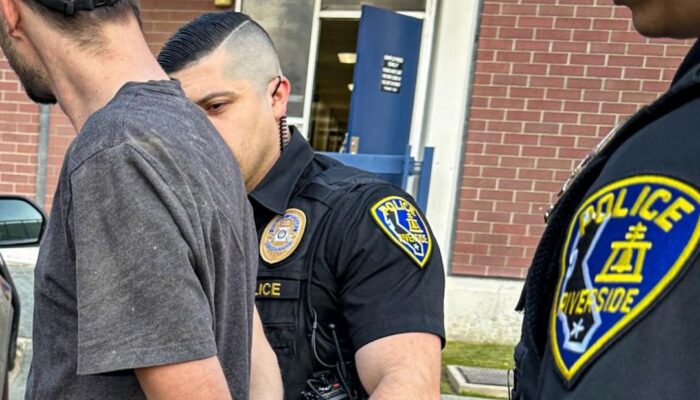
Most people who have been falsely arrested do not know it happened. They know the arrest felt wrong. They know they did not do anything illegal. But they assume that if the police arrested them, some legal justification must exist — because otherwise, why would officers do it?
That assumption is wrong. Officers make false arrests every day in California. Some result from mistaken identity. Others are pretextual — manufactured to punish someone who questioned police authority, refused a search, or happened to be in the wrong place. And some are calculated: a way to shift legal liability away from an officer who used excessive force by charging the victim with a “resistance offense” that gives the arrest the appearance of legitimacy.
False arrest is not a legal technicality. It is a Fourth Amendment violation. And in California, it is something you can sue for.
What Is a False Arrest Under California and Federal Law?
A false arrest occurs when a law enforcement officer takes you into custody — physically detaining you and depriving you of your freedom of movement — without the legal justification required to do so.
Under both the Fourth Amendment to the United States Constitution and California Penal Code § 836, a police officer making a warrantless arrest must have probable cause — facts and circumstances that would lead a reasonable person to believe that a crime has been committed and that the specific person being arrested committed it. An arrest made without that evidentiary foundation is constitutionally invalid. It is a false arrest regardless of what the officer’s report says, regardless of whether charges were filed, and regardless of whether those charges were later dropped.
Probable cause is not a gut feeling. It is not a hunch. It is not based on the neighborhood you were standing in, the way you looked at an officer, or the fact that someone who vaguely matched your description was seen nearby. Courts are clear on this: probable cause requires specific, articulable facts that, taken together, justify the conclusion that this person, right now, committed this crime.
When those facts do not exist and the arrest happens anyway, that is a civil rights violation — and you have the right to sue.
False Arrest vs. Unlawful Detention: The Distinction That Determines Your Case
California and federal law recognize that police encounters exist on a spectrum. At one end is a consensual encounter — an officer approaching you and asking questions you are free to decline. Your freedom has not been restricted. No constitutional standard applies.
In the middle is a Terry stop — a brief investigatory detention permitted by Terry v. Ohio, 392 U.S. 1 (1968). An officer can temporarily detain you if they have reasonable suspicion: specific, articulable facts suggesting criminal activity. Reasonable suspicion is a lower standard than probable cause. It allows a brief investigative stop — nothing more.
At the far end is an arrest — a full custodial detention requiring probable cause. The moment an officer handcuffs you, places you in a patrol car, or makes clear you are not free to leave, the encounter has crossed from detention into arrest. And the legal standard jumps from reasonable suspicion to probable cause.
Why does this distinction matter in litigation? Because officers routinely blur the line — treating a situation as a “detention” to avoid scrutiny while exercising the kind of total physical control that only a lawful arrest authorizes. If what happened to you looked and felt like an arrest — handcuffs, patrol car, no freedom to leave — it was an arrest, regardless of what the officer called it. And it required probable cause.
Common Scenarios That Constitute False Arrest in California
Not every wrongful police encounter is a false arrest. But some of the most common situations that generate viable civil rights claims include:
Arrests based on fabricated police reports. Officers write reports after encounters. Those reports often characterize what happened in ways designed to justify the arrest retroactively. When the officer’s account is contradicted by body camera footage, bystander video, or witness testimony, a fabricated basis for arrest can itself be the foundation of a civil rights claim.
Arrests for exercising constitutional rights. As covered throughout this blog series, officers frequently arrest people for questioning their authority, refusing a warrantless search, filming an encounter, or verbally challenging an order. None of those things are crimes. Arresting someone for them — under the guise of a “resistance offense” — is a false arrest. It is also, as covered in Blog #1, a Contempt of Cop arrest.
Arrests based on mistaken identity. An officer receives a description of a suspect. The description matches you imperfectly. The officer makes the arrest anyway, without doing the additional investigative work necessary to establish actual probable cause as to you specifically. Misidentification-based arrests happen with disturbing regularity and are among the most straightforwardly actionable.
Arrests following unlawful Terry stops. If an officer stops you without reasonable suspicion — because you were in a “high-crime area,” because you are a certain race, because you were walking away — any arrest that flows from that stop is tainted. Evidence discovered during an unlawful stop can be suppressed in your criminal case. The unlawful stop itself, and the resulting arrest, can support a civil rights claim.
Arrests used to cover up excessive force. This is the pattern at the heart of most of Mr. Steering’s civil rights practice. An officer uses force. To justify the force and to insulate themselves from civil liability, they arrest the person they used force upon and charge them with a resistance offense. The arrest is the mechanism — not the consequence — of the misconduct.
What a False Arrest Can Cost You — Even If Charges Are Dropped
Most people assume that if charges are dropped or dismissed, the matter is over. It is not.
A false arrest produces lasting consequences: lost wages for time spent in custody or fighting charges, medical bills for injuries sustained during the arrest, damage to your reputation and employment record even without a conviction, the cost of criminal defense and bail, and serious emotional harm.
In a civil rights lawsuit under 42 U.S.C. § 1983 and the California Bane Act, you can seek compensation for all of those consequences — plus punitive damages when the officer’s conduct was deliberately retaliatory or racially motivated. Under the Bane Act, successful plaintiffs can also recover treble damages and enhanced attorney’s fees unavailable in federal-only claims.
What you cannot do is accept a plea bargain in the criminal case and then try to sue. A conviction — including a guilty plea to a minor charge — almost always blocks the civil rights lawsuit. How the criminal case is handled is not a separate matter from the civil rights case. They are the same matter, and they must be managed together from day one.
Frequently Asked Questions About False Arrest in California
Dropped charges are significant evidence that probable cause was lacking, but they do not automatically establish a false arrest claim. Charges can be dropped for many reasons — insufficient evidence, prosecutorial discretion, witness unavailability. A civil rights lawsuit requires demonstrating that the officer lacked probable cause at the moment of arrest. That is a separate legal question requiring an experienced attorney to evaluate.
A general description — alone — is typically not sufficient. Courts require specific, articulable facts connecting you to a specific crime. A description broad enough to apply to thousands of people is not enough. If the officer escalated from a Terry stop to an arrest based on little more than a general match, the arrest may lack the required legal foundation.
Yes, in some circumstances. A warrant issued on a false or fabricated affidavit does not provide legal cover for the resulting arrest. An arrest made on a facially invalid warrant can still constitute a constitutional violation. This is a complex area requiring experienced civil rights counsel.
This is the most frequently misunderstood question in California civil rights law. A conviction for a resistance offense arising from the same encounter almost always bars a subsequent lawsuit under Heck v. Humphrey, 512 U.S. 477 (1994) — which is exactly why officers charge their victims with resistance offenses. If you are facing such charges, contact a civil rights attorney immediately. Do not take a plea without counsel who understands both the criminal and civil dimensions.
The federal § 1983 claim has a two-year statute of limitations. But before suing for California state law violations — including Bane Act claims — you must file a government tort claim within six months of the incident. Missing that deadline permanently bars your state law claims. Call an attorney immediately after the arrest.
You Were Not Wrong to Think Something Was Wrong
If you were taken into custody and knew — felt in your bones — that you had not done anything to justify it, you were probably right. The law says officers must have facts. Not feelings. Not hunches. Not a desire to control the situation. Facts.
The Law Offices of Jerry L. Steering has been litigating false arrest cases in California federal courts since 1984. We know how these cases are built, which evidence matters, and what it takes to hold an officer and their department accountable. If you believe you were falsely arrested — whether charges were filed, dropped, or you were never charged at all — call us.
| Call Jerry L. Steering, (949) 474-1849 — Available 24 Hours a Day Free Case Evaluation — No Fee Unless We Recover jerry@steeringlaw.com | steeringlaw.com/free-case-evaluation Law Offices of Jerry L. Steering | Newport Beach, California Serving Orange County, Los Angeles County, Riverside County, San Diego County, and throughout California |
Prior case results do not guarantee or predict similar outcomes in future matters. This article is for informational purposes only and does not constitute legal advice. The State Bar of California does not recognize a specialty in police misconduct.
Sources
- U.S. Constitution, Amendment IV — Protection from unreasonable searches and seizures.
- California Penal Code § 836 — Standards for lawful warrantless arrest; probable cause requirement.
- Terry v. Ohio, 392 U.S. 1 (1968) — Established reasonable suspicion standard for investigatory stops; distinguished from probable cause required for arrest.
- Florida v. Bostick, 501 U.S. 429 (1991) — Standard for when a person is “seized” under the Fourth Amendment.
- Heck v. Humphrey, 512 U.S. 477 (1994) — Conviction bars § 1983 civil rights claim arising from same conduct.
- 42 U.S.C. § 1983 — Federal civil rights statute for constitutional violations under color of state law.
- California Civil Code § 52.1 — Tom Bane Civil Rights Act; provides state civil rights remedies including treble damages.
- California Assembly Bill 93 (effective January 1, 2024) — Prohibits officers from requesting consent to search without first having reasonable suspicion.
- Law Offices of Jerry L. Steering — “False Arrest vs. Unlawful Detention in California — What’s the Difference, and Why It Matters for Your Civil Rights Case,” January 14, 2026. https://steeringlaw.com/false-arrest-vs-unlawful-detention-in-california-whats-the-difference-and-why-it-matters-for-your-civil-rights-case/
- Shouse Law Group — “I Was Falsely Arrested in California — What Can I Do About It?” Updated March 2026. https://www.shouselaw.com/ca/civil-rights/false-arrest/
- FindLaw — “The Fourth Amendment and Probable Cause.” https://constitution.findlaw.com/amendment4/annotation04.html
- California 2024 Racial and Identity Profiling Act (RIPA) Annual Report — Individualized reasonable suspicion standards and statistical benchmarks.

Steering Law is a California-based civil rights and criminal defense firm led by Jerry L. Steering, Esq. The firm focuses on police misconduct cases, including excessive force, false arrest, malicious prosecution, contempt of cop incidents, and 42 U.S.C. §1983 civil rights actions, while also handling serious criminal defense matters. Steering Law is dedicated to protecting clients’ constitutional rights and delivering justice for individuals who have been wronged by law enforcement.
