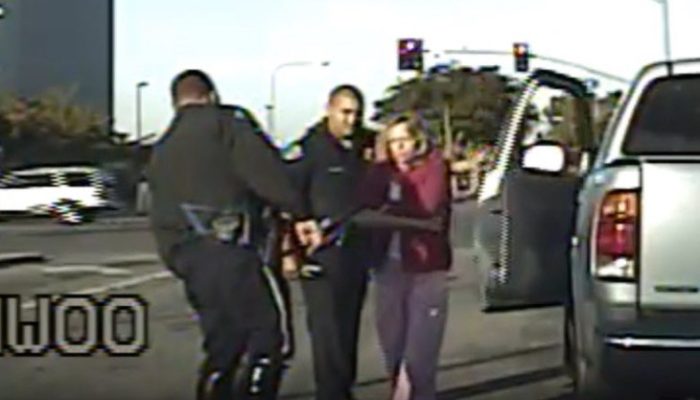
Halloween falls on a Saturday this year, and holiday weekends often bring sobriety checkpoints across Southern California. Most people roll through in two minutes and drive home. But every year I hear from people whose two-minute stop turned into a search, a detention, or a pair of handcuffs, without the reasonable suspicion the Constitution requires. Here is what the police can and cannot do.
Quick Answer
Yes. DUI checkpoints are legal in California when they follow the safeguards the California Supreme Court set in Ingersoll v. Palmer (1987). Supervisors must plan them, officers must stop cars by a neutral formula, the stop must be brief, and the checkpoint must be clearly marked. If police skip those rules, or hold you without reasonable suspicion, the stop can be unlawful.
Are DUI checkpoints legal in California?
Yes, with conditions. The U.S. Supreme Court upheld sobriety checkpoints in Michigan Department of State Police v. Sitz (1990). Three years earlier, the California Supreme Court in Ingersoll v. Palmer held California checkpoints lawful only when they follow specific guidelines designed to limit officer discretion and keep the intrusion small.
Think about how unusual a checkpoint is. Normally an officer needs reasonable suspicion that you did something wrong before he can stop your car. At a checkpoint, he stops you with no suspicion at all. Courts allow that narrow exception because of the public safety interest in drunk driving. But the exception only holds if the checkpoint stays inside its limits. The Supreme Court made that clear in City of Indianapolis v. Edmond (2000), which struck down a checkpoint whose real purpose was general crime control, such as looking for drugs.
What rules must a California DUI checkpoint follow?
Ingersoll v. Palmer identified eight factors courts use to decide whether a checkpoint is constitutional:
- Supervisory decision-making. Command staff, not field officers, decide to set up the checkpoint and set its rules.
- Limits on officer discretion. Cars are stopped by a neutral formula, such as every car or every third car, not by an officer’s hunch.
- Safety. Proper lighting, signs, and traffic control protect drivers and officers.
- Reasonable location. The site should reflect a real drunk-driving problem, such as a high rate of DUI collisions.
- Time and duration. The timing should make sense, such as weekend nights.
- Indicia of official nature. Signs, marked cars, and uniformed officers show that it is a legitimate checkpoint.
- Length and nature of detention. Each stop should be brief, enough to look for signs of intoxication and nothing more.
- Advance publicity. Public notice helps reduce the intrusion and the surprise, and serves the deterrent purpose.
No single factor is a magic switch, but a checkpoint that ignores several of them is vulnerable.
Do you have to stop at a DUI checkpoint in California?
Yes. Vehicle Code section 2814.2 requires a driver to stop and submit to a sobriety checkpoint inspection when signs and displays direct the stop. The same statute bars police from impounding your car at a checkpoint when the only offense is driving without a license, if a licensed driver can take it.
That impound rule is worth knowing. For years, checkpoints were criticized as tow-truck revenue machines, and the legislature responded. Under Vehicle Code 2814.2, if the registered owner, or a licensed driver the owner authorizes, can take the car by the end of the checkpoint, it should be released to that person.
Can you avoid a checkpoint before you reach it? Making a lawful turn onto another street is generally not, by itself, a crime. But if you make an illegal U-turn or commit any other traffic violation to avoid it, an officer can pull you over for that violation. I covered how far “any traffic violation” stretches in my post on Whren v. United States.
What can the police ask you at a DUI checkpoint?
At the initial stop, officers may briefly observe you, ask for your license and registration, and ask a few general questions. You must provide your license and registration. You do not have to answer questions about where you have been or whether you have been drinking; you may politely decline.
This is where checkpoints go sideways. The initial stop is supposed to be brief and suspicionless. Anything more, being ordered out of the car, field sobriety tests, a search of your vehicle, requires something more: reasonable suspicion that you are impaired or that some other crime is happening. “He seemed nervous” is not enough. Neither is the fact that you exercised your right not to answer.
A few practical points:
- Field sobriety tests (walking a line, following a pen) are generally voluntary. You can politely decline.
- The roadside breath test (the preliminary alcohol screening, or PAS) is generally optional for drivers 21 and over who are not on DUI probation, under Vehicle Code 23612.
- The chemical test after a lawful DUI arrest is different. California’s implied consent law requires it, and refusing has real penalties.
- Your car cannot be searched just because you are at a checkpoint. Officers need consent, probable cause, or another legal basis.
Stay calm, keep your hands visible, and do not argue at the window. A checkpoint is the worst possible place to “fail the attitude test.” Be polite, be brief, and save the fight for court.
When does a checkpoint stop become an illegal detention?
A checkpoint stop becomes unlawful when it is longer or more intrusive than the brief screening the courts approved, without reasonable suspicion to justify it. Holding you for extended questioning, searching your car without consent or probable cause, or arresting you without probable cause can all violate the Fourth Amendment.
Those are the cases I care about. A driver who had nothing to drink gets pulled into secondary screening because an officer did not like his answers. A passenger gets ordered out and patted down for no reason. A sober person gets arrested because she declined a field sobriety test, then spends a night in jail before the blood results clear her. When that happens, there may be a claim for unlawful detention or false arrest. For the distinction between those two claims, see Do California Police Have to Tell You Why You’re Being Detained?
Wrongly detained or arrested at a checkpoint?
If a checkpoint stop turned into a search, an arrest, or force you did not deserve, talk to a lawyer about your rights. Steering Law handles false arrest and unlawful detention cases throughout Southern California from our Newport Beach office. Call (949) 474-1849 for a consultation.
Frequently Asked Questions
Yes, if they follow the guidelines set by the California Supreme Court in Ingersoll v. Palmer (1987), including supervisory planning, neutral selection of cars, and brief stops.
Yes. Vehicle Code 2814.2 requires drivers to stop when signs and displays direct them to.
A lawful turn before the checkpoint is generally not illegal by itself. Any traffic violation you commit while avoiding it can justify a stop.
You must show your license and registration. You can politely decline to answer questions about where you have been or whether you have been drinking.
Not just because you are at a checkpoint. A search requires consent, probable cause, or another recognized legal basis.
Under Vehicle Code 2814.2, not if that is the only offense and a licensed driver authorized by the owner can take the car by the end of the checkpoint.
The roadside preliminary screening test is generally optional for drivers 21 and over who are not on DUI probation. The chemical test after a lawful DUI arrest is required under implied consent law.
About the Author
Jerry L. Steering, Esq. has been suing police officers and defending bogus “resistance offense” criminal cases throughout California since 1984. A graduate of the University of Georgia School of Law (1984), he is admitted to practice in California, Georgia, the Ninth and Eleventh Circuits, and the United States Supreme Court. His police-misconduct cases have produced settlements and verdicts in the millions, and his work has been featured on ABC News, CNN, Good Morning America, Dateline NBC, The Washington Post, and the Los Angeles Times. He practices from Newport Beach and serves clients across Southern California.
Legal Disclaimer
Disclaimer: This article is for general informational purposes only and does not constitute legal advice. Reading this post or contacting Steering Law through this website does not create an attorney-client relationship. Every case is different; if you are facing a legal issue, you should consult a qualified California attorney about your specific situation. Past results do not guarantee similar outcomes.
Sources
- Ingersoll v. Palmer, 43 Cal.3d 1321 (1987) (CourtListener): https://www.courtlistener.com/?q=%22Ingersoll+v.+Palmer%22
- Michigan Dept. of State Police v. Sitz, 496 U.S. 444 (1990) (Justia): https://supreme.justia.com/cases/federal/us/496/444/
- City of Indianapolis v. Edmond, 531 U.S. 32 (2000) (Justia): https://supreme.justia.com/cases/federal/us/531/32/
- California Vehicle Code section 2814.2: https://california.public.law/codes/vehicle_code_section_2814.2
- California Vehicle Code section 23612 (implied consent and preliminary alcohol screening) (California Legislative Information): https://leginfo.legislature.ca.gov/faces/codes_displaySection.xhtml?lawCode=VEH§ionNum=23612

Steering Law is a California-based civil rights and criminal defense firm led by Jerry L. Steering, Esq. The firm focuses on police misconduct cases, including excessive force, false arrest, malicious prosecution, contempt of cop incidents, and 42 U.S.C. §1983 civil rights actions, while also handling serious criminal defense matters. Steering Law is dedicated to protecting clients’ constitutional rights and delivering justice for individuals who have been wronged by law enforcement.
