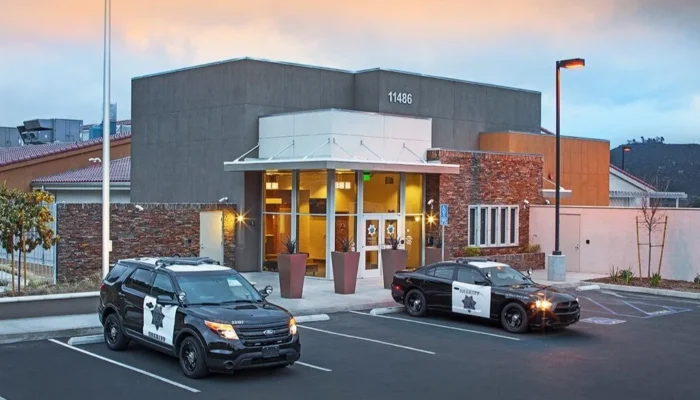
People call my office all the time and say, “I want to sue the Sheriff.” I understand the impulse. The deputies who beat you or falsely arrested you work for him, wear his badge, and follow his policies. So why shouldn’t the man at the top answer for it? I have been suing police officers and their bosses since 1984, and the honest answer is that the law makes this much harder than it should be. Here is how it works.
Quick Answer
Yes, but only in limited situations. Under 42 U.S.C. § 1983, a sheriff or police chief is not automatically liable for what deputies or officers do. You must show the supervisor’s own conduct caused the violation: setting it in motion, knowingly allowing it to continue, or showing deliberate indifference to a known pattern. Qualified immunity still applies, and the October 2026 Villanueva ruling shows how hard that test can be.
Can you sue a sheriff or police chief personally under Section 1983?
Yes, you can name a sheriff or police chief as an individual defendant, but only for his own wrongful conduct. Federal civil rights law does not allow “vicarious liability,” which means a supervisor is not liable just because he is the boss. You must connect his personal actions, or his deliberate inaction, to your injury.
The federal civil rights statute, 42 U.S.C. § 1983, lets you sue anyone who, acting under color of state law, violates your constitutional rights. The Supreme Court has said that each government official is liable only for his or her own misconduct. In the real world, the Sheriff gets to say, “I wasn’t there,” and often that ends it.
But not always. The Ninth Circuit has long recognized that a supervisor can be held personally liable when there is “a sufficient causal connection” between what he did and what happened to you.
When is a supervisor personally liable for a deputy’s misconduct?
A supervisor can be personally liable when he set in motion a series of acts he knew or should have known would violate someone’s rights, knowingly refused to stop that misconduct, was culpably indifferent in training or supervising his people, or acquiesced in a pattern of violations he knew about.
Those categories come straight out of the Ninth Circuit’s model civil jury instructions on supervisory liability, which rely heavily on Starr v. Baca, 652 F.3d 1202 (9th Cir. 2011). In Starr, a jail inmate sued then-Los Angeles County Sheriff Lee Baca personally. The Ninth Circuit held that a supervisor’s knowing acquiescence in unconstitutional conduct by subordinates can itself be the supervisor’s own wrongdoing.
In practice, the cases that survive look like this:
- Repeated warnings ignored. The Sheriff received reports, audits, or lawsuits describing the same abuse and did nothing.
- Approval or encouragement. The chief ratified or praised the use of force, as in Larez v. City of Los Angeles (9th Cir. 1991), a case involving a police chief who approved or encouraged excessive force by his officers.
- Direct orders. The supervisor personally directed the operation that caused the harm.
A general complaint that “the Sheriff runs a bad department” does not work.
What happened in the Villanueva qualified immunity case?
On October 21, 2026, the Ninth Circuit held that former Los Angeles County Sheriff Alex Villanueva was entitled to qualified immunity in a lawsuit by protesters who said deputies shot them with projectiles during a 2020 demonstration. The court found no clearly established law prohibiting his specific supervisory conduct.
The case is Astorga v. Villanueva, No. 24-4061. Villanueva was not at the demonstration. The district court had allowed the claim against him to go forward; the Ninth Circuit reversed. The panel distinguished Larez and cited the Supreme Court’s 2026 decision in Zorn v. Linton, which again demanded a prior case with closely matching facts before an official loses immunity.
Two things matter here. First, the ruling is an unpublished memorandum, so it is not binding precedent. Second, the court did not decide whether the deputies themselves acted lawfully. This is how the system works: the people with the most power get the most protection, and the “clearly established law” test does the heavy lifting. I have written before about why qualified immunity is a curse, and this case is a textbook example.
Is suing the sheriff personally different from suing the county?
Yes. A claim against the sheriff personally targets his own conduct and is subject to qualified immunity. A claim against the county or city targets its policies, customs, or failure to train. Qualified immunity does not protect the entity itself, which is why the two claims are often brought together.
Under federal law, a county or city can be liable for its own unconstitutional policy or custom, but not simply because it employs the deputy. That is the Monell doctrine. State law is different. Under California Government Code § 815.2, a public entity is generally liable for injuries caused by an employee acting within the scope of employment. That is one reason I almost always plead state claims alongside federal ones, including claims under the Tom Bane Civil Rights Act. I explained the differences in Qualified Immunity vs. the Bane Act.
If you plan to bring state-law claims against a California public entity, you generally must file a government claim within six months under Government Code § 911.2. Miss it and those claims may be gone.
How do you prove a sheriff knew about a pattern of abuse?
You prove it with records. Prior complaints, internal affairs findings, use-of-force data, audits, earlier lawsuits and settlements, and personnel records released under California’s transparency laws can show the supervisor knew and did nothing. Without that paper trail, the claim against the supervisor rarely survives.
This is detective work, and it starts early:
- Request public records on prior use-of-force complaints and sustained findings for the department.
- Gather published court decisions and settlements involving the same unit or station.
- Look for audit reports, inspector general findings, or grand jury reports.
- Identify what training and policies were in place, and whether they were followed.
- Preserve your own evidence, including video, photos, and medical records.
A supervisor claim that rests on a single incident almost never works. A claim built on years of documented warnings sometimes does.
Should you name the sheriff in your lawsuit?
Sometimes. Naming a sheriff or chief makes sense when you have specific facts showing his personal involvement or deliberate indifference. Naming him without those facts invites an early motion to dismiss and a qualified immunity appeal that can delay your case for a year or more.
When a court denies qualified immunity, the officer can usually appeal right away, and the whole case can sit still while the appeal is decided. Strategy matters. “Make the wrong step and you are out. We know where to step.” Sometimes the smartest move is to go after the deputies and the county, and leave the Sheriff for another day.
If you were hurt or falsely arrested by deputies anywhere in Los Angeles County, Orange County, or elsewhere in Southern California, talk to a lawyer who litigates federal civil rights lawsuits every day. You can learn more about our police misconduct practice or request a free case evaluation.
Frequently Asked Questions
Only if you can show the sheriff’s own conduct caused the violation, such as ordering it, knowingly allowing it, or ignoring a known pattern. Being the boss is not enough under Section 1983.
Supervisory liability is a claim that a supervisor is personally responsible for a constitutional violation because of his own actions or deliberate indifference, not simply because he supervises the officer who did it.
Yes. Sued personally, a sheriff or chief can claim qualified immunity, and the court asks whether clearly established law prohibited his specific supervisory conduct.
No. Astorga v. Villanueva is an unpublished Ninth Circuit memorandum, which generally is not binding precedent in future cases.
Yes. A county can be liable under Section 1983 for its own policies, customs, or failure to train, and under California law for employees acting within the scope of employment.
No. Qualified immunity protects individual officials. It does not protect the public entity itself.
Generally, a government claim must be presented within six months of the incident under Government Code section 911.2. Talk to a lawyer right away to protect your deadlines.
Prior complaints, sustained internal affairs findings, audits, earlier lawsuits and settlements, use-of-force data, and released personnel records can show knowledge and inaction.
About the Author
Jerry L. Steering, Esq. has been suing police officers and defending bogus “resistance offense” criminal cases throughout California since 1984. A graduate of the University of Georgia School of Law (1984), he is admitted to practice in Georgia (1984) and California (1986, State Bar No. 122509), the Ninth and Eleventh Circuit Courts of Appeals, and the United States Supreme Court. His police misconduct cases have produced settlements and verdicts in the millions, and his work has been featured on ABC News, CNN, Good Morning America, Dateline NBC, The Washington Post, and the Los Angeles Times. He practices from Newport Beach and serves clients across Southern California. Call (949) 474-1849 or request a free case evaluation.
Legal Disclaimer
Disclaimer: This article is for general informational purposes only and does not constitute legal advice. Reading this post or contacting Steering Law through this website does not create an attorney-client relationship. Every case is different; if you are facing a legal issue, you should consult a qualified California attorney about your specific situation. Past results do not guarantee similar outcomes.
Sources
- U.S. Court of Appeals for the Ninth Circuit, Astorga v. Villanueva, No. 24-4061 (Oct. 21, 2026), memorandum: https://cdn.ca9.uscourts.gov/datastore/memoranda/2026/10/21/24-4061.pdf
- Davis Vanguard, “Ninth Circuit Grants Former LA County Sheriff Qualified Immunity in Lawsuit over Force Used against Protesters”: https://davisvanguard.org/2026/10/villanueva-granted-qualified-immunity/
- Ninth Circuit Manual of Model Civil Jury Instructions, 9.4, Section 1983 Claim Against Supervisory Defendant: https://www.ce9.uscourts.gov/jury-instructions/civil/chapter-9/9-4-section-1983-claim-against-supervisory-defendant-in-individual-capacity-elements-and-burden-of-proof/
- Starr v. Baca, 652 F.3d 1202 (9th Cir. 2011), FindLaw: https://caselaw.findlaw.com/us-9th-circuit/1575276.html
- Dorsey & Whitney, March 23, 2026 Supreme Court Update (Zorn v. Linton): https://www.dorsey.com/newsresources/publications/client-alerts/2026/3/march-23-supreme-court-update
- 42 U.S.C. § 1983, Cornell Legal Information Institute: https://www.law.cornell.edu/uscode/text/42/1983
- California Government Code § 815.2: https://leginfo.legislature.ca.gov/faces/codes_displaySection.xhtml?lawCode=GOV§ionNum=815.2
- California Government Code § 911.2: https://leginfo.legislature.ca.gov/faces/codes_displaySection.xhtml?lawCode=GOV§ionNum=911.2

Steering Law is a California-based civil rights and criminal defense firm led by Jerry L. Steering, Esq. The firm focuses on police misconduct cases, including excessive force, false arrest, malicious prosecution, contempt of cop incidents, and 42 U.S.C. §1983 civil rights actions, while also handling serious criminal defense matters. Steering Law is dedicated to protecting clients’ constitutional rights and delivering justice for individuals who have been wronged by law enforcement.