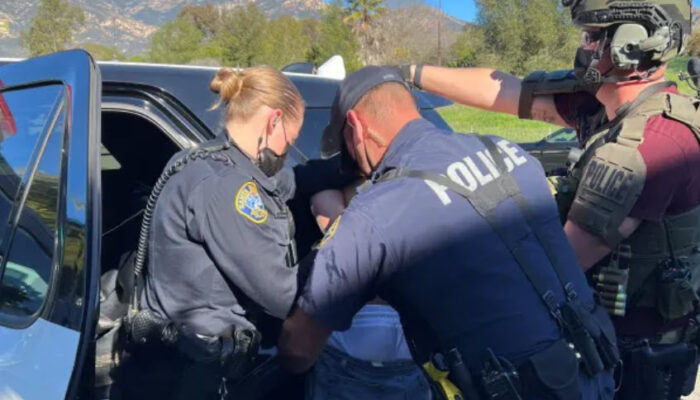
For most of my career, a bad cop who got fired in one city could simply move down the freeway and get hired in another. Departments did not always share files, and California was one of the few states with no way to strip an officer of his license to police. Police reform advocates called it the “wandering officer” problem. SB 2 finally changed that.
Quick Answer
Not easily anymore. Since January 1, 2022, California’s SB 2 has allowed the state’s police standards agency, POST, to suspend or revoke an officer’s certification for serious misconduct such as excessive force, dishonesty, or a knowingly false arrest. A decertified officer cannot work as a peace officer in California. A new law taking effect January 1, 2027 extends similar rules to former immigration enforcement officers.
Can a police officer who was fired for misconduct get another police job in California?
Often not, if the misconduct was serious. Under SB 2, California’s Commission on Peace Officer Standards and Training (POST) can revoke an officer’s certification. Without certification, the officer cannot serve as a peace officer anywhere in the state, no matter which department wants to hire him.
Before SB 2 took effect in 2022, POST could issue certificates but had almost no power to take them away for misconduct. An officer fired for lying in reports or beating a handcuffed suspect could resign before the discipline was final, keep a clean certificate, and apply elsewhere. That loophole was real, and it put dangerous people back on the street.
Decertification closes most of that gap. It follows the officer, not the department. And under Penal Code 13510.8, agencies must finish investigating serious misconduct regardless of the officer’s employment status, so resigning does not make a pending investigation disappear.
What misconduct can get an officer decertified?
California law defines nine categories of “serious misconduct” that can lead to suspension or revocation, according to POST’s Guide to Decertification:
- Dishonesty in reporting, investigating, or prosecuting a crime or misconduct
- Abuse of power, including intimidating witnesses or knowingly making a false arrest
- Physical abuse, including excessive or unreasonable force
- Sexual assault
- Bias based on a protected status, in violation of law or policy
- Egregious or repeated acts that violate the law
- Participation in a law enforcement gang
- Failure to cooperate with a misconduct investigation
- Failure to intercede when another officer uses clearly excessive force
Look at number two. “Knowingly making a false arrest” is now, in itself, a ground for losing a badge. So is dishonesty in a police report. Those are exactly the things I see in “Contempt of Cop” cases, where an officer arrests someone for disrespecting him and then writes a report to justify it.
How does the decertification process work?
A complaint or agency report goes to POST’s Peace Officer Standards Accountability Division, which investigates. If it finds reasonable grounds, a nine-member advisory board reviews the case and makes a recommendation. Revocation requires clear and convincing evidence and a two-thirds vote of the Commission, followed by the officer’s right to an administrative hearing.
Departments are required to report serious misconduct allegations to POST. Members of the public can also file complaints directly with POST under Penal Code 13509.5, which is something most people do not know. If you were the victim of serious misconduct, you do not have to rely on the department to report its own officer.
Importantly, much of the process is public. Under Penal Code 13510.85, board hearings and the records introduced in them are open, even though police personnel files are normally confidential. POST also publishes the names of officers whose certification has been suspended or revoked, along with the basis.
What does the new MELT ICE Act change?
Starting January 1, 2027, AB 1627, the Misconduct Ends Law-Enforcement Trust Act of 2026, extends California’s peace officer disqualification rules to former immigration enforcement officers who committed serious misconduct. Prior immigration enforcement work alone is not disqualifying; it is the misconduct that counts.
According to an October 7 analysis by Liebert Cassidy Whitmore, the law brings federal, out-of-state, and territorial officers who engage in immigration enforcement under Government Code 1029. If they committed misconduct serious enough that POST would have revoked a California officer’s certificate for it, they cannot be hired as California peace officers.
The Governor vetoed a broader bill, AB 1896, which would have barred hiring based on participation in certain immigration enforcement activity even without a misconduct finding. In his veto message he called that approach a step too far.
How does decertification help a civil rights lawsuit?
Decertification is an administrative action, not a lawsuit, and it does not pay you anything. But public decertification findings and prior misconduct records can be powerful evidence in a civil case, especially in claims that the city or county knew about an officer’s history and kept him on the street anyway.
That kind of claim is called a Monell claim, and it lets you hold the government entity itself responsible for its own policies, customs, or failures to train and supervise. I explain it in Suing the City, Not Just the Officer: Monell Claims in California. An officer with a documented history of serious misconduct, still on patrol, is often the starting point for one.
SB 2 also changed California’s Bane Act so that it applies more clearly to police misconduct, a change I covered in What Is Qualified Immunity, and Can California’s SB 2 Get Around It? Taken together, these reforms mean the system is finally asking whether bad officers should keep their badges, not just whether their victims can get paid.
What should you do if an officer’s misconduct seems serious enough for decertification?
Protect your own case first. Before you file any complaint, with POST or with the department, talk to a civil rights lawyer. A complaint is a written statement, and anything in it can be used against you later, including in a criminal case built on a “resistance” charge.
- Preserve your evidence: photos, medical records, video, and witness names.
- Calendar the six-month government claim deadline if you may sue a city or county.
- Decide with your lawyer when and how to file a POST complaint, so it helps your case rather than hurting it.
Hurt by an officer with a history?
If you were injured or falsely arrested by an officer you believe has done this before, talk to a lawyer before you file anything. Steering Law handles police misconduct cases throughout Southern California, including Orange County communities like Irvine. Call (949) 474-1849 for a consultation.
Frequently Asked Questions
It is the suspension or revocation of a peace officer’s state certification by POST, which prevents the officer from serving as a peace officer anywhere in California.
SB 2 took effect January 1, 2022, creating the current misconduct-based decertification system.
Resigning does not end a pending investigation. Under Penal Code 13510.8, agencies must complete serious misconduct investigations regardless of the officer’s employment status.
Yes. “Abuse of power,” which includes knowingly making a false arrest, is one of the nine categories of serious misconduct.
Yes. Members of the public can submit complaints of serious misconduct directly to POST, in addition to complaining to the officer’s department.
Many are. Board hearings, certain Commission reviews, and records introduced in those proceedings are public under Penal Code 13510.85, and POST publishes the names of decertified officers.
AB 1627, effective January 1, 2027, extends California’s peace officer disqualification rules to former immigration enforcement officers who committed serious misconduct.
About the Author
Jerry L. Steering, Esq. has been suing police officers and defending bogus “resistance offense” criminal cases throughout California since 1984. A graduate of the University of Georgia School of Law (1984), he is admitted to practice in California, Georgia, the Ninth and Eleventh Circuits, and the United States Supreme Court. His police-misconduct cases have produced settlements and verdicts in the millions, and his work has been featured on ABC News, CNN, Good Morning America, Dateline NBC, The Washington Post, and the Los Angeles Times. He practices from Newport Beach and serves clients across Southern California.
Legal Disclaimer
Disclaimer: This article is for general informational purposes only and does not constitute legal advice. Reading this post or contacting Steering Law through this website does not create an attorney-client relationship. Every case is different; if you are facing a legal issue, you should consult a qualified California attorney about your specific situation. Past results do not guarantee similar outcomes.
Sources
- California POST, Guide to Decertification: https://post.ca.gov/portals/0/post_docs/resources/sb2/Guide_to_Decertification.pdf
- California Penal Code section 13510.8 (California Legislative Information): https://leginfo.legislature.ca.gov/faces/codes_displaySection.xhtml?lawCode=PEN§ionNum=13510.8
- California Penal Code section 13510.85 (public proceedings) (California Legislative Information): https://leginfo.legislature.ca.gov/faces/codes_displaySection.xhtml?lawCode=PEN§ionNum=13510.85
- Liebert Cassidy Whitmore, “Governor Newsom Signs the MELT ICE Act of 2026, Broadening the Basis for Peace Officer Disqualification, and Vetoes the GTFO Act,” Oct. 7, 2026: https://www.calpublicagencylaboremploymentblog.com/legislation/governor-newsom-signs-the-melt-ice-act-of-2026-broadening-the-basis-for-peace-officer-disqualification-and-vetoes-the-gtfo-act/
- Hanson Bridgett, “Law Enforcement Officer Decertification” (SB 2 implementation overview): https://www.hansonbridgett.com/publication/230306-6070-leo-decertification
- California Government Code section 1029 (peace officer disqualification) (California Legislative Information): https://leginfo.legislature.ca.gov/faces/codes_displaySection.xhtml?lawCode=GOV§ionNum=1029

Steering Law is a California-based civil rights and criminal defense firm led by Jerry L. Steering, Esq. The firm focuses on police misconduct cases, including excessive force, false arrest, malicious prosecution, contempt of cop incidents, and 42 U.S.C. §1983 civil rights actions, while also handling serious criminal defense matters. Steering Law is dedicated to protecting clients’ constitutional rights and delivering justice for individuals who have been wronged by law enforcement.