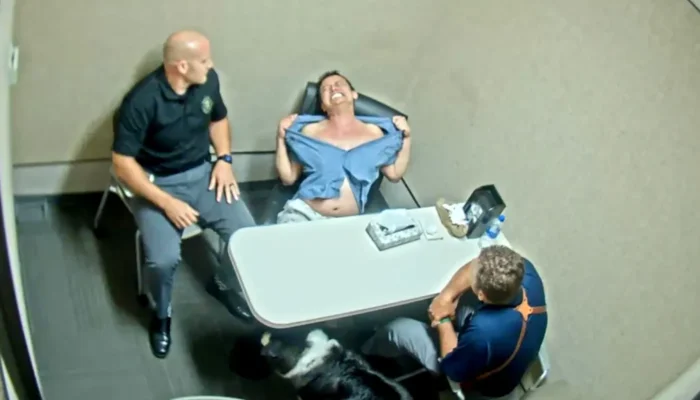
Not lawfully. Under Ninth Circuit case law, hesitating, asking a question, or being slow to understand an order is passive resistance, and officers may only use force that is objectively reasonable under Graham v. Connor. Active resistance physically fighting, struggling, or using force against officers allows more force than passive resistance, which is the mere absence of immediate compliance. Courts have found that going limp, refusing to present arms for handcuffing, or standing still after being told to kneel are all forms of passive resistance, not active resistance, and force disproportionate to that passive conduct can be a Fourth Amendment violation and the basis of a civil rights lawsuit.
Keypoints
- Hesitation, confusion, or a question is not resistance; officers may only use objectively reasonable force under Graham v. Connor.
- Passive resistance is the absence of compliance (going limp, standing still); active resistance is physically fighting or struggling against officers.
- Courts weigh the severity of the crime, whether the person posed an immediate threat, and whether they were actively resisting or fleeing.
- Verbally objecting to an officer, or “talking back,” is protected speech and is not, by itself, a crime or resistance.
- Penal Code § 148(a)(1) requires the officer’s duty to have been lawful; if the underlying order was unlawful, the charge has no foundation.
- Officers confronting someone in a mental health crisis must consider that the person may be neither dangerous nor urgent before escalating to extreme force.
- Never plead guilty to a resisting charge before talking to a civil rights attorney; a conviction can be used to defeat your civil claim.
Here is the scene I have watched play out for forty years. An officer barks an order. The person hesitates, or asks a question, or is simply slow to understand what is happening, and the next thing anyone sees is a takedown, a Taser, or a knee on a back. Afterward, the report says the person was “resisting.” They call it a Resistance Offense, and they use it as a hammer, both to justify the force and to bar the civil suit that should follow. The law draws a hard line between not fighting back and fighting back, and that line is where these cases are won.
Can the police use force just because you did not obey fast enough?
Not lawfully. Under Ninth Circuit law, failing to immediately comply with an officer’s command, without more, is passive resistance that does not justify significant force. Officers may use only force that is objectively reasonable, and hesitation alone is near the bottom of that scale.
The Fourth Amendment does not require instant, robotic obedience on pain of a beating. As a police excessive force attorney, this is the single most common misunderstanding I see people bring into my office. Police force is measured by the objective-reasonableness standard the Supreme Court set in Graham v. Connor, which asks courts to weigh factors like the severity of the crime, whether the person posed an immediate threat, and whether the person was actively resisting or trying to flee. Slowness, confusion, or a question is not a threat, and it is not active resistance. When officers escalate to serious force over mere non-instant compliance, they have crossed the line the Constitution draws.
What is the difference between active and passive resistance?
Active resistance involves physically fighting, struggling, or using force against officers. Passive resistance is the absence of that: going limp, not immediately complying, verbal objection, or failing to present your arms for cuffing. The Ninth Circuit treats passive resistance as justifying far less force than active resistance.
This distinction is not academic. It decides cases. In Rice v. Morehouse, the Ninth Circuit held that failing to immediately comply with commands, absent other concerning conduct, was passive resistance. In Smith v. Hemet, refusing to reenter a home and to remove hands from pockets was treated as passive resistance. Courts have found that standing for a moment after being told to kneel, refusing to reenter a car, and failing to present one’s arms for cuffing are all forms of passive resistance.
The reason officers work so hard to recharacterize passive resistance as active is that the label controls how much force they are allowed to use, and whether they keep their qualified immunity. If they can convince a court you were fighting, the force looks reasonable. If the truth is that you were slow, scared, or simply standing there, the force does not.
I want to be precise about what the courts have actually said, because the defense will try to blur it. The Ninth Circuit has recognized that even where some resistance exists, the level of force still has to match the level of the threat. A person who pulls an arm away, or who does not offer his wrists the instant he is told to, has not declared war on the officer. The proper response to low-level, passive non-compliance is more talk, more time, and a measured hands-on approach, not a strike, a Taser, or a dog. When officers skip the ladder and jump straight to serious force, the gap between what they did and what the situation called for is the constitutional violation, and it is what a jury needs to see.
Here is how the two categories generally break down, based on how California’s federal courts have described them:
| Passive Resistance (less force allowed) | Active Resistance (more force may be allowed) |
| Not immediately complying with a command | Physically struggling against officers |
| Going limp or refusing to move | Striking, kicking, or grabbing an officer |
| Verbal objection or arguing | Attempting to disarm an officer |
| Failing to present arms for handcuffing | Fleeing in a way that endangers others |
| Keeping hands in pockets after an order | Using a weapon or threatening violence |
Is arguing with a police officer a crime in California?
No. Verbally objecting to or questioning an officer is protected and is not, by itself, a crime or active resistance. This is what I call the “Contempt of Cop” problem: officers punish attitude, not law-breaking, and then charge Penal Code § 148(a)(1) to paper it over.
You do not lose your rights because you failed the attitude test. Talking back, asking why you are being detained, or recording an encounter is not resistance, and it is not a Resistance Offense. Yet I see people charged under Penal Code § 148(a)(1), which criminalizes willfully resisting, delaying, or obstructing an officer in the lawful performance of duty, for nothing more than a bruised ego on the other side of the badge. The words “lawful performance of duty” matter: if the officer’s own conduct was unlawful, the charge fails at its foundation, because there was no lawful duty to obstruct.
What about force against someone in a mental health crisis?
California’s federal courts hold that officers may not use extreme force against an emotionally disturbed person in circumstances that are neither dangerous nor urgent, without first attempting less intrusive measures. A person in crisis is not, for that reason alone, a dangerous person the police may simply overpower.
Some of the worst cases I see involve people who were not committing any crime at all, but were having a psychiatric emergency. These are exactly the cases where a civil rights attorney police misconduct claim and a mental-health-crisis defense have to be built together, because the police report seldom frames it that way on its own. The Ninth Circuit has been clear that mental illness does not turn a person into a threat, and that officers confronting a disturbed individual in a situation that is neither dangerous nor urgent must consider that fact and cannot lead with extreme force. When departments send armed officers to what is really a medical call and someone gets hurt or killed, that failure to de-escalate is part of the constitutional picture, not an excuse for it.
The same principle protects people who are deaf, intoxicated, elderly, or simply do not speak English well. An order that is not understood is not an order that was defied. I have handled cases where the entire justification for a violent takedown was that a frightened, confused person did not drop to the ground fast enough on a command he never processed. Courts allow juries to consider whether the person could even comprehend what was being demanded, and whether the officers gave any warning before escalating. Those are the human facts the police report tends to leave out, and they are exactly the facts that win these cases.
What should you do if you were hurt during an arrest for “resisting”?
Get medical care and photograph every injury. Write down what was said and done, in order. Preserve any video and get witness names. Do not plead to the resisting charge before talking to a civil rights attorney, because a conviction can be used to defeat your civil claim.
The resisting charge is not just a criminal problem; it is a trap set for the civil case. If you plead guilty to resisting, the defense will wave that plea in front of the civil jury and argue you admitted the officer acted lawfully. That is exactly why the criminal defense and the civil rights claim have to be handled together, by someone who sees the whole board. I have spent my career defending these “Resistance Offense” charges precisely so they cannot be used to bar the civil suit that the force deserves.
If this happened to you anywhere in Southern California, from Irvine to Newport Beach and across the region, do not assume the police report is the last word. You can learn more on my resisting arrest and Penal Code § 148 defense page and my Irvine police misconduct page. The difference between passive and active resistance is not a technicality. It is often the whole case.
Can you sue the police for excessive force after a resisting arrest charge?
Yes, and this is one of the most misunderstood parts of these cases. People assume that being charged with resisting arrest, even if the charge is later dropped or reduced, automatically defeats a civil claim for excessive force. It does not. What matters is whether the force used was proportionate to what you actually did, not to what the report claims you did. According to research summarized by the National Institute of Justice, the overwhelming majority of police-citizen encounters never involve any resistance at all, and even among those that do, most resistance is passive rather than active, which is exactly why courts scrutinize these cases so closely rather than accepting an officer’s characterization at face value. If your resisting charge was based on hesitation, confusion, or a mental health crisis rather than genuine physical struggle, that charge is often the weakest part of the government’s case, not the strongest.
Conclusion
The gap between hesitating and fighting is where most of these cases actually live, and it is a gap police reports are written to erase. At Steering Law, unpacking that gap, matching the report against body-camera footage, witness accounts, and the actual sequence of events is the work I have built my practice around for forty years. If you were met with force after a moment of confusion, a question, or simply not moving fast enough, Steering Law can tell you honestly whether that force crossed the constitutional line and what pursuing it would look like.
Sources
- Graham v. Connor, 490 U.S. 386 (1989), Justia: https://supreme.justia.com/cases/federal/us/490/386/
- Rice v. Morehouse, 989 F.3d 1112 (9th Cir. 2021), and related Ninth Circuit resistance cases, discussed in PORAC LDF, “Qualified Immunity in Use-of-Force Cases” (Jan. 2026): https://poracldf.org/blog/qualified-immunity-in-use-of-force-cases-guidance-for-police-part-i-the-law/
- California Penal Code § 148, California Legislative Information: https://leginfo.legislature.ca.gov/faces/codes_displaySection.xhtml?sectionNum=148.&lawCode=PEN
- Scott v. Smith and Ninth Circuit authority on force against emotionally disturbed persons, LAAPOA summary: https://laapoa.com/2025/02/ninth-circuit-ruling-prompts-refusal-to-respond-to-mental-health-calls/
FAQs
No. Officers may only use force that is objectively reasonable under Graham v. Connor. Hesitation, confusion, or slowness to comply is not, by itself, active resistance and does not justify escalated force.
Passive resistance is the absence of compliance, going limp, standing still, refusing to present hands for cuffing. Active resistance involves physically fighting, struggling, or using force against officers. Courts allow more force in response to active resistance than passive resistance.
No. Verbally objecting, asking why you’re being detained, or questioning an officer is protected and is not, by itself, a violation of Penal Code § 148(a)(1).
Not without talking to a civil rights attorney first. A guilty plea can be used against you in a later civil lawsuit to argue the officer’s force was lawful, even if it wasn’t.
Generally, not extreme force, if the person is neither dangerous nor an immediate threat. Courts require officers to consider less intrusive measures before escalating against someone in psychiatric distress.
Yes. A resisting arrest charge does not automatically defeat an excessive force claim; what matters is whether the force used matched what you actually did, not what the report claims.
Get medical care and photograph every injury, write down what was said and done in order, preserve any video, and do not plead to the resisting charge before speaking with a civil rights attorney.
Disclaimer: This article is for general informational purposes only and does not constitute legal advice. Reading this post or contacting Steering Law through this website does not create an attorney-client relationship. Every case is different; if you are facing a legal issue, you should consult a qualified California attorney about your specific situation. Past results do not guarantee similar outcomes.

Steering Law is a California-based civil rights and criminal defense firm led by Jerry L. Steering, Esq. The firm focuses on police misconduct cases, including excessive force, false arrest, malicious prosecution, contempt of cop incidents, and 42 U.S.C. §1983 civil rights actions, while also handling serious criminal defense matters. Steering Law is dedicated to protecting clients’ constitutional rights and delivering justice for individuals who have been wronged by law enforcement.