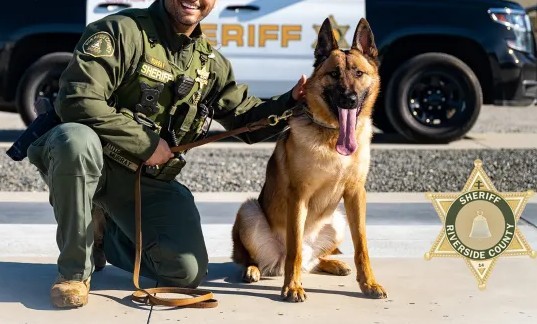
Yes. A police dog is a use of force, the same as a baton or a Taser. When a K-9 is released on someone who is surrendering, already restrained, not resisting, or suspected only of a minor offense, the bite can be excessive force under the Fourth Amendment. You can sue the handler and the agency under 42 U.S.C. § 1983 and California law.
Most people think a police dog bite is an unfortunate but legally simple event. It is not. A trained patrol dog can cause catastrophic, disfiguring injuries: torn muscle, severed nerves, exposed bone. I have seen wounds from a bite measured in seconds that took years of surgery to repair. The law does not treat that as a minor scratch, and neither should you.
When does a police dog bite cross the line into excessive force?
It crosses the line when the bite is unreasonable under the circumstances: the person was not a serious threat, the suspected crime was minor, no warning was given, or the dog was allowed to keep biting after the person stopped resisting. The Ninth Circuit has repeatedly held that a prolonged or unwarned K-9 bite against someone who has surrendered can violate the Constitution.
The question a court asks is the one from Graham v. Connor, 490 U.S. 386 (1989): was the force objectively reasonable? A dog deployed to find and hold a fleeing, armed felony suspect in the dark is one thing. A dog turned loose on a teenager hiding in a backyard over a minor call, with no warning and no chance to give up, is something very different.
The controlling law in our circuit is clear on the part that matters most. In Rosenbaum v. City of San Jose, 107 F.4th 919 (9th Cir. 2024), the court held that officers were not entitled to qualified immunity where a police dog continued biting a suspect for more than twenty seconds after he had surrendered and lay face-down with his arms outstretched. (Ninth Circuit opinion (PDF)) That decision rests on a line of cases, including Watkins and Hernandez v. Town of Gilbert, establishing that an officer cannot direct a dog to keep biting a person who has fully surrendered and is under the officers’ control. The initial release of the dog and the duration of the bite are analyzed separately, which means a bite can start lawfully and become unlawful the instant the person gives up and the handler does nothing.
What factors decide a police K-9 case?
Courts and juries focus on concrete facts: how serious the suspected crime was, whether the person was actively resisting or fleeing, whether a warning was given before the dog was released, how long the bite lasted after the person submitted, and whether the dog even found the right person. Each can turn a defensible deployment into a violation.
Here is what handlers are trained to do, and what their own policies usually require: give a clear, loud warning before releasing the dog; give the person a genuine chance to surrender; and call the dog off the instant the person complies. The phrase agencies use is “bite and hold.” The legal trouble almost always lives in the hold, when a dog is left clamped onto someone who is already face-down and screaming that they give up. The Ninth Circuit’s own words capture it: the excessive duration of a bite, or an officer’s improper encouragement of a continued attack, can be a constitutional violation regardless of whether the initial bite was justified.
I have handled cases where the dog found the wrong person entirely, where no warning was ever given, and where the handler stood and watched. Those are not close calls. They are the cases that should never have happened, and they are exactly the cases the agencies most want to settle quietly.
Does an officer have to warn you before releasing a police dog?
In most situations, yes. Giving a clear warning and a chance to surrender before deploying a K-9 is a core part of reasonable practice, and courts treat the absence of a warning as a significant factor. When an officer skips the warning and sends a dog after someone who never knew it was coming, that omission can push an otherwise close case over the line.
The warning is not a technicality. It is the moment that separates a lawful apprehension from an ambush. A person hiding in fear, who has no idea a dog is about to be released, is given no opportunity to do the one thing that would have ended the encounter without injury: come out with their hands up. I have seen body-camera footage where the handler gives no warning at all, or mumbles something no human could have heard, and then releases the dog into a dark yard. When the person turns out to be unarmed, or turns out to be the wrong person entirely, that silence becomes the centerpiece of the case.
And the wrong-person problem is real. Dogs follow scent and movement, not arrest warrants. I have handled matters where the dog bit a neighbor, a bystander, or a resident of the very home the police were searching. The agency cannot justify a serious injury by pointing to a suspect who was never there. When the person bitten committed no crime at all, the reasonableness analysis is not close.
What evidence matters most in a police dog bite case?
The agency’s own records are the heart of the case: K-9 deployment logs, the handler’s bite reports, the dog’s training and certification records, body-worn and dash-camera footage, and dispatch audio. Your medical records and photographs matter enormously, as does the precise timeline of how long the dog stayed on you after you surrendered.
I push hard and early for these records, because departments track K-9 bites far more closely than the public realizes. Many agencies keep detailed bite statistics and internal use-of-force reviews precisely because they know these deployments generate lawsuits. Those documents can reveal a pattern, a poorly trained dog, or a handler with a history of letting the bite run long. That is often the difference between a case a city quietly resolves and one it wrongly believes it can bury.
If you were bitten by a police dog anywhere in Southern California, including here in Orange County and the Newport Beach area, do not assume it was “just how it goes.” Get the wounds documented, preserve what you can, and talk to a civil rights lawyer before you sign anything the agency puts in front of you.

Steering Law is a California-based civil rights and criminal defense firm led by Jerry L. Steering, Esq. The firm focuses on police misconduct cases, including excessive force, false arrest, malicious prosecution, contempt of cop incidents, and 42 U.S.C. §1983 civil rights actions, while also handling serious criminal defense matters. Steering Law is dedicated to protecting clients’ constitutional rights and delivering justice for individuals who have been wronged by law enforcement.
