Author: Jerry L. Steering, Esq.

Steering Law is a California-based civil rights and criminal defense firm led by Jerry L. Steering, Esq. The firm focuses on police misconduct cases, including excessive force, false arrest, malicious prosecution, contempt of cop incidents, and 42 U.S.C. §1983 civil rights actions, while also handling serious criminal defense matters. Steering Law is dedicated to protecting clients’ constitutional rights and delivering justice for individuals who have been wronged by law enforcement.
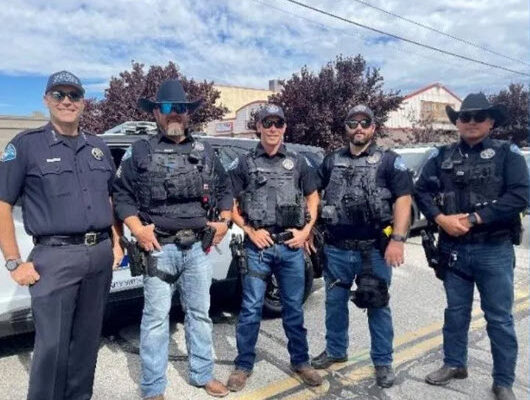
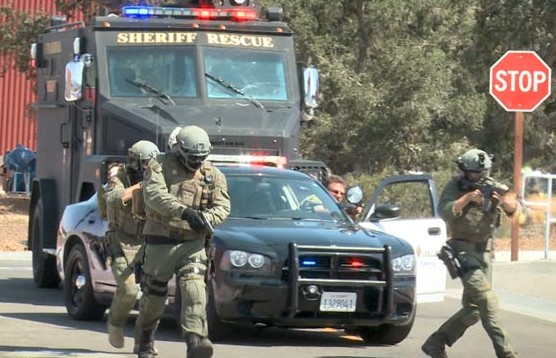
Special Enforcement Team (SET) – Santa Barbara County Sheriff's Office 2

How Police Use “Resistance” Charges to Justify Excessive Force and Block Your Civil Rights Lawsuit

How Do Police Use Resistance Charges to Justify Excessive Force?

When a police officer uses excessive force, they face a problem: the use of force needs to be justified. The solution California police departments have relied on for decades is simple — charge the victim with resisting arrest under PC 148(a)(1) or PC 69. The resistance charge converts the officer from aggressor to responder in the official record. More importantly, if the victim is convicted or takes a plea, the Heck v. Humphrey doctrine may permanently bar their civil rights lawsuit. The criminal charge is both the cover story and the legal trap.

Free case evaluation: (949) 474-1849  |  Available 24 hours  |  jerry@steeringlaw.com

“Resistance” Is the Most Abused Word in California Law Enforcement

I have represented hundreds of clients who were beaten, tased, pepper-sprayed, or brutalized by police. In nearly every case, the police report told the same story: the officer used force because the suspect resisted.

It is a powerful word, “resistance.” It transforms the officer from aggressor into responder. It shifts the narrative so completely that the person lying in a hospital bed with broken ribs looks like the one who caused the problem.

In forty years of civil rights litigation in Southern California, I have learned that “resistance” is often a fiction — a convenient narrative constructed after the fact, in the quiet of the police station, to justify force that was unnecessary, excessive, or outright illegal. I have seen it in Los Angeles County courtrooms, in Orange County federal court, in Riverside and San Bernardino County cases, and in San Diego. The template is the same everywhere.

Here is how it works. Here is how we fight it. And here is why — if you have been charged with a resistance offense after a use-of-force incident — every decision you make in the criminal case will determine whether you ever get justice in civil court.

“Resistance is often a fiction — a convenient narrative constructed after the fact to justify force that was unnecessary, excessive, or outright illegal.”

The Two Statutes — How PC 148 and PC 69 Are Weaponized

There are dozens of statutes officers could theoretically use. In practice, resistance charges in California come down to two. Understanding them — and their limitations — is the foundation of every defense.

PC 148(a)(1) is the workhorse — what I call “The on my firm’s website. It makes it a misdemeanor to willfully resist, delay, or obstruct a peace officer in the lawful performance of their duties.

The deliberate breadth of the word “obstruct” is the point. Officers use PC 148 to cover everything from actual physical struggle down to asking a question at the wrong moment. It is the all-purpose justification charge.

The element the police report never mentions: PC 148 requires that the officer was acting lawfully at the time. If the officer was using excessive force, making an unlawful arrest, or conducting an illegal search when the “resistance” occurred, the charge cannot stand. The prosecution must prove lawful performance beyond a reasonable doubt — and that is the crack in the statute we drive our defense through.

Penalties: Misdemeanor — up to one year in county jail and a $1,000 fine.

PC 69 is the more serious version — what I call “The on my site. It applies when someone uses threats or force to deter an executive officer from performing their duties. It is a wobbler — charged as a misdemeanor or a felony depending on the facts and, critically, on the charging practices of the individual DA’s office.

In my experience, PC 69 is charged as a felony significantly more often in San Bernardino County than in Los Angeles or Orange County under similar or identical facts. Prosecutorial culture matters. Knowing how the local DA approaches these cases is part of the strategic knowledge that comes from forty years in these specific courts.

The same lawful performance requirement applies: If the officer was acting unlawfully when the alleged resistance occurred, PC 69 cannot be sustained.

2023 Update: Recording Police Is Explicitly Protected Under PC 69
In 2023, the California Legislature added subsection (b) to Penal Code § 69, explicitly clarifying that taking a photograph or recording video of an executive officer in a public place does not, by itself, constitute a violation of the statute.  

This codifies what courts in the Ninth Circuit had already recognized as a First Amendment right. If you were charged with PC 69 solely for recording police activity in a public place, that charge is legally indefensible.

Penalties — misdemeanor: Up to one year in county jail, fines up to $10,000.

Penalties — felony: 16 months, 2 years, or 3 years in state prison.

The Resistance Narrative — How the Report Gets Written

The magic trick happens after the incident. The officer — possibly still at the scene, possibly back at the station — sits down and writes the use-of-force report. This report will be the first and often most influential account of what happened. It will be read by supervisors, Internal Affairs, the DA, and eventually the jury.

Officers are extensively trained on use-of-force report writing. They know their reports will be scrutinized. They know what elements need to be documented to withstand review. And they know, because they are taught, that a well-written use-of-force report is what stands between them and discipline, civil liability, and criminal prosecution.

Here is the template — the five-step narrative that appears, with minor variations, in virtually every resistance-justified force case I have handled.

 What the report saysWhat is actually happening
Step 1Lawful contact claimedThe report begins with the officer approaching for an ostensibly lawful purpose — traffic stop, pedestrian check, response to a call. The lawfulness of this initial contact will rarely be questioned at the scene.
Step 2“Verbal resistance” documentedThe subject asks why they are being stopped, declines to answer a question, or expresses frustration. The officer’s report labels this “verbal resistance” or “becoming uncooperative” — neither of which is a crime.
Step 3“Physical resistance” documentedThe subject “tenses arms,” “pulls away,” or “fails to comply with handcuffing commands.” These phrases are boilerplate. In my experience, they appear in use-of-force reports regardless of what actually happened.
Step 4Force described as responseThe officer’s force is described as “objectively reasonable” and “necessary to overcome resistance and gain compliance.” The force is framed as reaction, not action. The officer becomes the responder; the civilian becomes the aggressor.
Step 5Charges filedPC 148(a)(1) and/or PC 69 are charged. This serves two purposes: it justifies the force in the criminal proceeding, and — if the civilian is convicted or takes a plea — it blocks the civil rights lawsuit under the Heck v. Humphrey doctrine.

The problem with Steps 2 and 3 — the verbal and physical resistance — is that they are often fabricated or grossly exaggerated. In case after case, independent witnesses, cell phone video, and security camera footage have directly contradicted what the police report said happened at those steps.

The report is not evidence of what occurred. It is evidence of what the officer needed to have occurred to justify what they did.

Why Body Cameras Do Not Solve This Problem

The most common thing people say when I explain this is: “But what about body cameras? Doesn’t the footage tell the truth?”

In my experience: sometimes yes, sometimes no. Body cameras have changed the practice of police misconduct litigation significantly — they have helped us win cases we would have lost twenty years ago. But they are not the solution people assume they are.

  • Camera placement limits what is captured. Body cameras are worn on the chest. They do not capture peripheral action, what happens behind the officer, or what happens after a subject is taken to the ground and out of the camera’s field of view. I have seen cases where the most significant use of force — the blows after the subject stopped moving, the knee on the neck, the boot to the head — happened just outside the camera frame.
  • Officers narrate to the camera. Experienced officers know they are being recorded. The verbal narration that accompanies force — “Stop resisting! Stop fighting!” — is often delivered for the benefit of the recording, not because the subject is resisting. I have seen body camera footage in which an officer shouts “stop resisting” to a subject who is motionless on the ground. The shout is for the record.
  • Footage can be deactivated or missing. Policies requiring camera activation are inconsistently enforced, and technical malfunctions — real and convenient — occur. The absence of body camera footage when footage should have been captured is itself significant evidence that we argue aggressively.
  • The report is written after the officer reviews footage. In many departments, officers are permitted to review body camera footage before writing their reports. This means the written narrative is constructed with knowledge of what the camera captured — and tailored around it. The report does not precede the footage; it follows it.

The bottom line: body cameras are a tool, not a guarantee. Independent witnesses, medical records, and security camera footage from third-party sources remain the most powerful evidence in these cases — precisely because they were not captured by someone with a stake in the outcome.

The Real Purpose of Resistance Charges — Blocking Your Civil Lawsuit

Now we get to the piece that most victims do not understand until it is too late. The resistance charge is not just about the criminal case. It is a legal trap designed to eliminate the civil rights lawsuit.

The Heck v. Humphrey Doctrine

Under the Supreme Court’s decision neck v. Humphrey, 512 U.S. 477 (1994), a person cannot bring a civil rights claim under 42 U.S.C. § 1983 if success in that civil claim would necessarily imply the invalidity of an existing criminal conviction.

Consider the implications. You were beaten by an officer. The officer charged you with PC 148 — resisting arrest — to justify the force. You took a plea to PC 148 because your public defender said it was the easiest way out, or because you could not afford to fight it, or because the prosecutor threatened a felony if you went to trial. Six months later, you try to file a civil rights lawsuit for the excessive force. The defendant moves to dismiss under Check: your civil claim necessarily implies that the arrest was unlawful — but you already pled guilty to resisting it. Your civil case is barred. Permanently.

This is not an accident. This is the intended function of the charge. Police departments, their defense attorneys, and prosecutors who work alongside them understand Heck. The resistance charge is the mechanism by which a victim is converted into a convicted defendant and then stripped of the right to ever hold anyone accountable.

The Guilty Plea Trap — The Decision That Cannot Be Undone Do not accept a plea to PC 148 or PC 69 without first consulting a civil rights attorney about the Heck consequences.  

“Just making it go away” to avoid criminal exposure can make your civil rights lawsuit go away too — permanently. Even a misdemeanor conviction with no jail time and a small fine can close the door on a significant civil claim.  

In the Ninth Circuit, even entry into certain pretrial diversion programs — without a full acquittal or dismissal on the merits — can trigger the Heck bar in some circumstances. Every case is different, but the principle is the same: any disposition short of a full favorable termination on the merits carries risk.

The criminal defense and the civil rights case must be planned together, from the beginning, by an attorney who handles both.

Qualified Immunity — The Second Obstacle

Even when Heck does not bar the civil claim, police officers invoke qualified immunity — the judicial doctrine protecting officers from civil liability unless they violated a “clearly established” constitutional right. I have written about this in detail atsteeringlaw.com. In excessive force cases, the question becomes whether prior Ninth Circuit or Supreme Court precedent specifically addressed the type of force at issue in circumstances similar enough to put the officer on notice.

In my experience, qualified immunity is raised in virtually every case — not because it applies in every case, but because it is the first line of defense and it costs nothing to assert. The key to defeating it is identifying the specific prior cases that established the right at issue and making the argument at the right procedural stage. This is where the specialist knowledge built over decades of federal civil rights litigation matters most.

The deck is stacked. Two layers of protection — the Heck bar and qualified immunity — stand between a police misconduct victim and accountability. But neither is insurmountable. The path through them requires knowing the law, preserving the right issues, and refusing to accept a plea that closes the civil door before you have even opened it.

How We Fight Resistance Charges — Five Defenses That Work

This is the foundational defense — and the one that directly bridges the criminal and civil cases. Both PC 148 and PC 69 require that the officer was lawfully performing their duties at the time of the alleged resistance. If the officer was making an unlawful arrest, conducting an illegal search, or using excessive force when the interaction occurred, the resistance charge cannot legally stand.

Attacking the lawfulness of the officer’s conduct in the criminal case simultaneously builds the factual record for the civil rights claim. A finding by a criminal court that the officer was acting unlawfully is powerful evidence in the subsequent § 1983 lawsuit. The two cases are not separate; they are the same dispute viewed from two different angles.

See our dedicated pages on false and excessive force for more on how we build these underlying claims.

California law is explicit: you have the right to defend yourself against excessive force by a police officer. CALCRIM No. 2672 — the jury instruction given in PC 148 and PC 69 trials — states directly that if an officer uses unreasonable or excessive force, and the defendant uses only reasonable force in self-defense against that excessive force, the defendant is not guilty of the resistance charge.

This is one of the most powerful defenses in our toolkit — and one of the most underused, because many defense attorneys either do not know to assert it or are not comfortable arguing that the police used excessive force in a criminal courtroom. We are. We present the evidence of the officer’s force — medical records, photographs, expert testimony on use-of-force standards — and argue that what the prosecution calls “resistance” was legally justified self-defense.

Officers who fabricate resistance narratives often have a documented history of doing exactly that. A Pitchess motion — from Pitchess v. Superior Court (1974) — allows defense counsel to petition the court for access to the officer’s personnel file to review prior complaints of dishonesty, excessive force, or misconduct.

The strategic value of a successful Pitchess motion extends well beyond impeachment. A pattern of prior complaints establishes the foundation for a Monell civil rights claim against the department — the argument that the city or county knew about the officer’s propensity for fabrication and failed to address it. In the criminal case, it undermines the officer’s credibility. In the civil case, it implicates the institution.

The police report is the officer’s version of events. It is not the final word. In case after case, independent evidence has directly contradicted what the resistance narrative claimed.

  • Witness testimony: Bystanders who saw what happened and have no stake in the outcome are the most powerful rebuttal to a fabricated resistance narrative. We identify and secure witness statements as early as possible — before memories fade and before they are approached by investigators.
  • Security camera and cell phone footage: Third-party video — from businesses, Ring doorbells, traffic cameras, and bystanders’ phones — is the most objective evidence available because it was captured by sources with no interest in the outcome. We move immediately to preserve this footage because it is overwritten on automated schedules, often within 24 to 72 hours.
  • Medical records: The nature, location, and severity of injuries tell a story that is difficult to contradict. Injuries inconsistent with the officer’s force description, injuries consistent with being struck after being restrained, or the absence of injuries that should be present if the resistance described actually occurred — all of these are evidence.
  • Spoliation letters: We send spoliation letters to the department on the day we are retained, demanding preservation of body-worn camera footage, dashboard camera footage, radio transmissions, CAD logs, and all related materials. Without this letter, footage is often lost to routine retention policies before litigation begins.

in People v. Serna (2025), the California Court of Appeal confirmed that PC 148 requires the defendant to have known — or to have reasonably known — that the person they were interacting with was a peace officer in the performance of their duties. This element creates opportunities for defense in specific factual situations:

  • Plainclothes or undercover officers: Where the officer was not in uniform or did not clearly identify themselves, the knowledge element may not be satisfied.
  • Chaotic or confusing scenes: Where the interaction was fast-moving, involved multiple officers, or occurred in circumstances where identifying who was an officer and what they were ordering was genuinely difficult, intent to resist may not be established.
  • Mental health crisis: Where the defendant was in a mental health crisis at the time of the incident, the willful and knowing elements of both PC 148 and PC 69 may be significantly weakened.

Serna is a recent decision that is still being litigated in trial courts. How broadly courts apply its knowledge requirement is an area of active development, and we monitor new decisions carefully.

What This Means If You Are Facing Charges Right Now

If you are reading this because you were charged with PC 148 or PC 69 after a use-of-force incident — after you were beaten, tased, or injured by a police officer — here is what you need to understand immediately.

You Have Two Cases. Every Decision in One Affects the Other.
The criminal case determines whether you are convicted. A conviction or an unfavorable plea can permanently bar your civil rights lawsuit under the Heck doctrine.  

The civil rights case determines whether you are compensated for what was done to you — medical expenses, lost wages, emotional distress, punitive damages, and attorneys’ fees under 42 U.S.C. § 1988.

These two cases must be evaluated and strategized together, from day one. An attorney who handles only criminal defense cannot advise you on the civil consequences of a plea. An attorney who handles only civil rights cases cannot protect you in the criminal proceeding.  

My firm handles both — simultaneously. Contact us before making any decisions about your criminal case.

Do not take a plea because your public defender says it is the fastest way out. Do not plead guilty to a misdemeanor because the prosecutor told you it will not affect your record. Do not assume that an expungement later will undo the Heck consequences now. Every one of these paths has the potential to close the civil door permanently.

For a complete guide to what to do immediately after a use-of-force incident, see our.

The Six-Month Government Claim Deadline
In California, before you can file a civil lawsuit against a city, county, or other government entity for police misconduct, you must file a government tort claim under California Government Code § 911.2. This claim is typically due within six months of the incident.  

Miss this deadline and you lose the right to sue — permanently. No exceptions. No judicial discretion. This deadline has ended more strong civil rights cases than any legal doctrine or immunity defense.   The six-month clock is running from the day of the incident — not from the day your criminal case resolves. Contact a civil rights attorney immediately.

Where We Handle These Cases

My firm handles PC 148 and PC 69 defense and the related civil rights lawsuits throughout Southern California. We have litigated these cases — on both the criminal defense and the civil rights side — in Los Angeles County, Orange County, Riverside County, San Bernardino County, San Diego County, Ventura County, and Kern County. See for what these cases look like when they are pursued to conclusion.

Results include a $2.9 million settlement against the City of Anaheim, a $1.3 million settlement against Riverside County, and an $800,000 jury verdict against Garden Grove — all in cases where resistance charges were part of what we were fighting through.

Frequently Asked Questions — Resistance Charges and Excessive Force in California

When an officer uses force that is excessive or unlawful, they face a documentation problem — the use of force needs to be justified. The standard solution is to charge the victim with resisting arrest under PC 148(a)(1) or PC 69. These charges reframe the officer as responding to the subject’s conduct rather than acting as the aggressor. More critically, if the victim is convicted or takes a plea, the Heck v. Humphrey doctrine may permanently bar their civil rights lawsuit for the underlying misconduct.

No. Both PC 148(a)(1) and PC 69 require that the officer was lawfully performing their duties at the time of the alleged resistance. An officer using excessive or unreasonable force is not lawfully performing their duties. Additionally, under CALCRIM No. 2672 — the standard jury instruction in these cases — a defendant who uses only reasonable force in self-defense against an officer’s excessive force is not guilty of a resistance charge.

Under Heck v. Humphrey, 512 U.S. 477 (1994), a person convicted of a crime cannot bring a civil rights lawsuit under 42 U.S.C. § 1983 if success in that lawsuit would necessarily imply the invalidity of the criminal conviction. In the police misconduct context: a guilty plea to PC 148 (resisting arrest) may permanently bar a civil rights lawsuit for the underlying false arrest or excessive force. This is why it is essential to consult a civil rights attorney before accepting any plea in a resistance case — the criminal and civil cases must be planned together.

Yes — potentially. If your PC 148 conviction would necessarily imply that the underlying arrest was lawful and the resistance was genuine, then a subsequent civil rights lawsuit for false arrest or excessive force may be barred under the Heck doctrine. “Just making the criminal case go away” with a misdemeanor plea can eliminate the civil claim permanently. Even entry into certain pretrial diversion programs can create Heck complications in the Ninth Circuit. Every case is different, but the principle is consistent: do not resolve the criminal case without first understanding the civil consequences.

A Pitchess motion — from Pitchess v. Superior Court (1974) — allows defense counsel to petition the court for access to a police officer’s personnel records to review prior complaints of dishonesty, excessive force, or misconduct. In resistance charge cases, a Pitchess motion can reveal whether the officer has a documented history of filing false resisting-arrest charges — which directly undermines their credibility in the criminal case and supports a Monell civil rights claim against the department. See our Pitchess and Brady List article for more.

In People v. Serna (2025), the California Court of Appeal confirmed that PC 148 requires the defendant to have known — or reasonably should have known — that the person they were interacting with was a peace officer performing their duties. This knowledge requirement creates defense opportunities in cases involving plainclothes or undercover officers, chaotic multi-officer scenes, and defendants in mental health crisis. Serna is a recent decision still being litigated in trial courts, and its full scope is actively developing.

Before filing a civil lawsuit against a California city or county for police misconduct, you must file a government tort claim under California Government Code § 911.2 — typically within six months of the incident. Miss this deadline and you permanently lose the right to sue, regardless of how strong the case is. Federal § 1983 claims have a two-year statute of limitations under California Code of Civil Procedure § 335.1, but the six-month government claim requirement for state entities is the deadline that most often closes the door. Contact a civil rights attorney immediately after a use-of-force incident.

It depends. Under the Heck v. Humphrey doctrine, a § 1983 civil rights claim is barred if it would necessarily imply the invalidity of a prior conviction. If your conviction is for resisting an arrest that you are now claiming was unlawful, there is a potential Heck conflict. However, if the civil claim can be framed so that it does not necessarily imply the invalidity of the conviction — for example, a claim that the officer used excessive force before any resistance occurred — the civil case may survive. These cases require careful analysis by an attorney who understands both the criminal judgment and the specific constitutional claims at issue.

Fight the Charge. Preserve Your Rights.

Resistance charges are the most abused statutes in California law enforcement. They are the mechanism by which officers justify force, manufacture probable cause, and insulate themselves and their departments from the civil accountability they deserve.

If you were beaten by a police officer and then charged with resisting arrest, you are not just fighting a criminal case. You are fighting for your right to hold the officer and the department accountable in civil court. Every decision in the criminal case — especially a plea — has consequences that extend far beyond the courtroom where the criminal case is heard.

Do not accept the narrative the officer wrote. Do not accept a plea without understanding what it costs you. Do not wait until the six-month deadline has passed.

Fight the charge. Preserve your rights. Vindication is the goal.

About the Author — Jerry L. Steering

Jerry L. Steering is a civil rights attorney and police misconduct specialist who has been suing the police in California since 1984. His practice covers both sides of resistance charge cases: criminal defense of PC 148 and PC 69 charges, and civil rights lawsuits under 42 U.S.C. § 1983 for the excessive force and false arrest that preceded them. He has handled hundreds of police misconduct cases in federal and state courts throughout Los Angeles County, Orange County, Riverside County, San Bernardino County, San Diego County, and the rest of Southern California. Notable results include a $2.9 million settlement against the City of Anaheim, a $1.3 million settlement against Riverside County, an $800,000 jury verdict against the City of Garden Grove, and a $750,000 settlement against the City of Torrance. He has appeared on NBC Dateline with Lester Holt and ABC Good Morning America with Diane Sawyer, and has been featured in the Los Angeles Times, The Washington Post, and People Magazine. View

Law Offices of Jerry L. Steering  |  4063 Birch Street, Suite 100, Newport Beach, CA 92660  |  (949) 474-1849  |  Available 24 Hours  |  jerry@steeringlaw.com

Legal citations and primary sources:

How Long Do You Have to Sue Police in California

Can You Record the Police in California? Your Constitutional Rights, the Law, and What to Do When Officers Try to Stop You

Can You Record the Police in California?

Yes. Recording police officers performing their duties in a public place – or from any location where you have a legal right to be – is protected by the First Amendment to the U.S. Constitution and explicitly by California Penal Code Section 148(g). Recording alone cannot be the basis for a stop, a detention, or an arrest. Officers who arrest you solely for filming are violating clearly established federal law and may not be entitled to qualified immunity. That arrest is a federal civil rights case.

Free case evaluation: (949) 474-1849  |  Available 24 hours  |  jerry@steeringlaw.com

Your Phone Is a Constitutional Right – And Officers Know It

In the age of smartphones, nearly every police encounter is a recorded event. Bystanders film traffic stops from the sidewalk. Residents document arrests from their own front porches. Protesters livestream crowd control in real time. Citizens capture what police reports later describe very differently.

This has changed police accountability in ways that forty years of civil rights litigation alone could not. Video evidence has exposed misconduct that would have been buried in a police report, exonerated innocent people facing fabricated resistance charges, and created the factual record that defeats qualified immunity defenses in federal court.

The question I hear constantly from clients is: Was I allowed to record? And when the officer told me to stop – did I have to?

The answer is clear. Yes, you have the right. No, you do not have to stop on a legal officer’s preference alone. But how you exercise that right – and what you do when an officer challenges it – can be the difference between capturing powerful evidence and spending the night in jail.

“Officers know the law protecting your right to record. When they arrest you for filming anyway, that is not a misunderstanding of the law. That is a violation of it – and a federal civil rights case.”

The Legal Foundation – Two Sources, Both Controlling

Your right to record police in California rests on two independent legal foundations. Either one, standing alone, is sufficient. Together, they create one of the clearest constitutional protections in police accountability law.

Foundation 1: The First Amendment

Courts have consistently held that recording matters of public interest – including police activity – is a form of protected expression under the First Amendment. The Ninth Circuit, the controlling federal circuit for California, recognized this right in Fordyce v. City of Seattle, 55 F.3d 436 (9th Cir. 1995), and the right has been repeatedly affirmed in subsequent cases.

In Sandoval v. County of San Diego, 985 F.3d 657 (9th Cir. 2021), the Ninth Circuit confirmed that there is a First Amendment right to observe and record police activity in public. The right exists regardless of whether you are a professional journalist. Your smartphone makes you the media within the meaning of the First Amendment.

Other circuits have reached the same conclusion – the First, Third, Fifth, Seventh, Ninth, and Eleventh Circuits have all recognized the right to record police as a clearly established constitutional right. The breadth of this consensus is what defeats qualified immunity arguments: officers across the country have been on notice for years that arresting someone for filming is a constitutional violation.

Foundation 2: California Penal Code Section 148(g)

California has codified this protection by statute – and in 2023, strengthened it further. California Penal Code Section 148(g) states explicitly that photographing or making an audio or video recording of a public officer or peace officer while the officer is in a public place – or the person recording is in a place they have the right to be – does not, by itself, constitute:

  • A violation of PC Section 148(a)(1) (resisting, delaying, or obstructing an officer)
  • Reasonable suspicion to detain the person recording
  • Probable cause to arrest the person recording

In 2023, the California Legislature reinforced this further by adding California Penal Code Section 69(b), which explicitly states that photographing or recording an executive officer in a public place does not, by itself, constitute a violation of PC Section 69 (resisting with force or threats). This codified in the felony statute what Section 148(g) had already established for the misdemeanor: recording is not a crime.

What the Law Means in Plain English
The simple act of pointing your phone at a police officer performing their duties in a public place – and recording what you see – is not a crime. It cannot legally justify the officer stopping you. It cannot justify detaining you. It cannot justify arresting you.  

If an officer tells you to stop recording and you do not, that refusal alone – without any physical interference, without approaching or obstructing – is protected conduct. Recording is speech. The First Amendment protects it.

Where You Can Record – and Where the Right Has Limits

Your right to record applies anywhere you have a legal right to be. The protected locations are broader than most people realize.

  • Public sidewalks, streets, and parks. The clearest case. If you are lawfully on a public sidewalk and police activity is occurring within view, you have the right to record it.
  • From inside your vehicle during a traffic stop. You are lawfully in a place you have a right to be. Recording the stop – including the officer’s conduct – is protected.
  • From your own property. Your front porch, your driveway, through your window, or from your yard. If you have the right to be there, you have the right to record police activity visible from there.
  • Protests, public gatherings, and public spaces. Recording police interaction with crowds and protesters is among the most clearly protected applications of the right.
  • Outside government buildings. Police activity occurring in public areas adjacent to government buildings is generally recordable from public vantage points.

Where the right has limits: Areas where police have a legitimate safety perimeter may require you to maintain a greater distance. But distance is not elimination. You can record from where officers can lawfully direct you to stand. The right to record survives a reasonable distance order. It does not survive a complete prohibition.

California’s Two-Party Consent Law Does Not Apply to Police in Public

California Penal Code Section 632 generally requires all parties to consent to the recording of a confidential communication – a conversation in which the parties have an objectively reasonable expectation of privacy. This law does not apply to recording police officers in public.

Officers performing their duties in public have no reasonable expectation of privacy in those actions. Their conduct is public, governmental, and subject to public accountability. Recording a traffic stop, a use-of-force incident, or an arrest in public is not the interception of a confidential communication – it is documentation of a public act by a public official.

What You Can Do and What Police Cannot Do – Quick Reference

The law is clear. Here is the practical summary.

You CANPolice CANNOT
Record from a safe distance (10-15 feet from active situations)Order you to stop recording solely because they dislike being filmed
Record from inside your vehicle during a traffic stopDetain you based solely on the fact that you are recording
Record from your own property – front porch, driveway, or through a windowArrest you based solely on the fact that you are recording
Continue recording even if an officer asks you to stop (absent a lawful order)Confiscate your phone without a warrant (Riley v. California, 2014)
State that you are exercising your First Amendment rightsSearch your phone’s contents without a warrant (Riley v. California, 2014)
Refuse to unlock your phone or consent to a searchDemand you unlock your device without proper legal authority
Livestream or auto-backup to cloud storage in real timeDelete your recordings or photos – this is destruction of evidence
Request body camera footage through a CPRA requestImpose content-based restrictions on what you can record

Every item in the Police Cannot column, if violated, is a potential civil rights claim under 42 U.S.C. Section 1983. An arrest solely for recording is a false arrest. A phone seizure without a warrant violates the Fourth Amendment. Deletion of your recording is destruction of evidence. These are not abstract legal principles – they are federal civil rights violations that my firm litigates. See our false arrest page and excessive force page for the full framework.

The Critical Line – Recording vs. Interfering

The right to record does not include the right to physically interfere with police performing their duties. California Penal Code Section 148(a)(1) prohibits willfully resisting, delaying, or obstructing an officer. Recording alone is explicitly excluded from this statute by Section 148(g). But certain conduct during a recording encounter can cross the line.

Conduct That May Constitute Interference

  • Standing so close to an active arrest or use-of-force situation that officers cannot safely maneuver
  • Refusing a specific, safety-based order to step back – as opposed to a general order to stop recording
  • Physically touching officers, their equipment, or their subjects during the recording
  • Using lights or flashes that impair officers’ vision during an active confrontation
  • Blocking officers’ physical access to a suspect or crime scene

Conduct That Is Protected

  • Recording from a safe distance – courts have generally found 10 to 15 feet reasonable for non-active situations
  • Holding your phone visibly and continuously recording
  • Verbally stating that you are exercising your First Amendment rights when questioned
  • Continuing to record after an officer asks you to stop, as long as you are not physically interfering

The practical principle: distance and non-interference. Officers cannot turn a distance order – ‘step back’ – into a prohibition on recording. They can establish a safety perimeter. They cannot use that perimeter as a pretext to prevent documentation of their conduct.

What the Courts Have Said – Albanese v. City of Oroville

The clearest recent example from California federal courts is Albanese v. City of Oroville, No. 2:22-cv-1131-KJN (E.D. Cal. 2022). The plaintiff was recording officers from approximately 20 feet away – behind a hedge – when he was arrested for obstruction under PC 148(a).

The court denied the motion to dismiss. The court held that California law does not permit arrest for obstruction solely because a person records law enforcement officers. The court further found that the law protecting this right was clearly established, meaning officers who violated it could not invoke qualified immunity to escape civil liability.

What Albanese Confirms
First: Recording alone cannot legally justify an obstruction arrest. Officers cannot bootstrap a recording into a PC 148(a) charge by claiming the act of filming constituted obstruction.  

Second: The law protecting this right is clearly established under qualified immunity analysis. Officers who arrest someone for recording – without genuine interference – can be held personally liable under 42 U.S.C. Section 1983.  

Third: Albanese adds to existing Ninth Circuit and California case law. The right to record has been clearly established for decades.

If You Were Arrested for Recording Police – You May Have a Civil Rights Case

An arrest made solely because you were filming police is a false arrest – a violation of your Fourth Amendment right against unreasonable seizure. If the arrest was also in retaliation for your exercise of First Amendment rights, you have a separate First Amendment retaliation claim under 42 U.S.C. Section 1983. These are not mutually exclusive – and together they constitute a strong civil rights case.

The Contempt of Cop connection: Officers who arrest people for recording them are executing a Contempt of Cop arrest – using the criminal justice system to punish protected conduct. The arrest for recording is typically accompanied by a PC 148(a)(1) or PC 69 charge. Both of those charges are legally indefensible as applied to pure recording conduct, and – if challenged and defeated – leave the officer fully exposed to civil liability.

See my detailed breakdown of the Contempt of Cop mechanism at steeringlaw.com, and the specific analysis of PC 148(a)(1) at steeringlaw.com.

The Guilty Plea Trap – Do Not Accept a Plea to the Recording Arrest Charges
If you were arrested for recording police and charged with PC 148 or PC 69, do not accept a plea without first consulting a civil rights attorney.  


Under the Heck v. Humphrey doctrine, a guilty plea to a resisting arrest charge can permanently bar your civil rights lawsuit for the underlying false arrest and First Amendment retaliation. Just making it go away with a misdemeanor plea can make the civil rights case go away too – permanently.  

These two cases – the criminal defense and the civil rights lawsuit – must be planned together from the beginning. My firm handles both.

If Police Take Your Phone or Delete Your Recording

The Fourth Amendment protects you from unreasonable searches and seizures. In Riley v. California, 573 U.S. 373 (2014), the Supreme Court held unanimously that police must obtain a warrant before searching the digital contents of a cell phone. The Court was explicit: cell phones contain the privacies of life and require full Fourth Amendment protection.

In practice, this means:

  • No warrant, no phone search. An officer cannot search through your phone’s photos, messages, or content during an arrest or detention without a warrant. State clearly that you do not consent to any search.
  • Phone seizure requires either a warrant or exigent circumstances. Officers can potentially seize a phone as evidence if they have probable cause to believe it contains evidence of a crime – but they cannot search it without a warrant. Your recording of their misconduct is not evidence of your crime.
  • Deletion of your recording is destruction of evidence. An officer who deletes your recording has destroyed evidence of potential government misconduct. This supports both a civil rights claim and a spoliation argument in litigation.
  • Livestreaming and cloud backup protect your footage. If you are livestreaming or automatically backing up to cloud storage, your footage may survive even if your physical phone is seized. Setting up automatic cloud backup before you are ever in a position where you might record police is one of the most practical evidence-preservation steps available.

If your phone is seized or your recording deleted, document exactly what happened immediately: the officer’s name and badge number, what they said, what they did with the phone, and the exact sequence of events. Write it down within hours. That contemporaneous account is evidence.

Why Your Recording Can Win a Civil Rights Case

I have litigated police misconduct cases for forty years. Here is what video evidence does in court that nothing else can.

It Contradicts the Police Report

Police reports are written after the fact, with knowledge of what needs to be justified. They describe the officer’s conduct as reasonable and the civilian’s conduct as threatening or resistant – regardless of what actually happened. Video shows what actually occurred: the distance, the words spoken, who moved first, where the hands were, what level of force was used, and when. In case after case, body camera and citizen recordings have directly contradicted what the police report said happened.

It Defeats Qualified Immunity

Qualified immunity protects officers from civil liability unless they violated a clearly established constitutional right. Video establishes precisely what the officer did and what the circumstances were – eliminating the ambiguity that officers rely on when asserting qualified immunity. When video shows an officer using force against an obviously compliant subject, it is far harder to argue that a reasonable officer in the same situation would not have known the conduct was unconstitutional. See my analysis of qualified immunity for the full framework.

It Exposes False Resistance Charges

When officers charge someone with obstruction or resisting arrest to cover an arrest made for recording, video often shows exactly what happened – a person standing at a distance, filming. Nothing more. That footage, combined with PC Section 148(g) and Ninth Circuit clearly established law, dismantles the prosecution and builds the Section 1983 case simultaneously. See the full analysis in my blog on how police use resistance charges to justify excessive force.

It Establishes Monell Patterns

Video does not just win individual cases – it reveals institutional patterns. When multiple recordings show officers from the same department using the same tactics to stop bystanders from filming, those recordings support a Monell claim against the department for a policy or custom of First Amendment retaliation. The individual case becomes the predicate for institutional accountability.

What to Do When an Officer Tries to Stop You From Recording

This is a situation that requires calm, clear thinking. How you respond determines both your immediate safety and the quality of the evidence you are capturing.

  • Stay calm. Do not escalate. An officer who is violating your rights by ordering you to stop filming is doing exactly what I have spent forty years suing police for. Your response in the moment should be calm and clear – not aggressive. The confrontation you want happens in federal court, not on the street.
  • State your rights clearly and once. Say: ‘I am exercising my First Amendment right to record police performing their duties in public. California Penal Code Section 148(g) protects my right to record.’ Say it once, calmly, and continue recording.
  • Comply with specific distance orders – continue recording. If ordered to step back for a legitimate safety reason, step back. Do not stop recording. Complying with a distance order does not mean surrendering the recording.
  • Keep your hands visible. Hold your phone where the officer can see it is a phone. Avoid reaching toward your body suddenly or making movements that could be misinterpreted.
  • Do not physically resist if you are arrested. If an officer arrests you for recording – which is an unlawful arrest – comply physically. Do not resist. The unlawful arrest becomes your civil rights case. Physical resistance becomes an additional charge that complicates everything.
  • Do not consent to a phone search or unlock your device. State clearly: ‘I do not consent to a search of my phone.’ This preserves your Fourth Amendment challenge to any subsequent search.

After the incident: Document the officer’s name, badge number, and unit immediately. Write down the exact sequence of events while your memory is fresh. Note any witnesses. Check whether your footage was backed up to cloud storage. Then call a civil rights attorney – and see our complete guide.

The Six-Month Deadline – If You Were Arrested for Recording
If you were arrested for recording police in California and want to pursue a civil rights claim against the city, county, or public agency, you must file a government tort claim under California Government Code Section 911.2 within six months of the incident.  

Miss this deadline and your state law claims are permanently barred. Federal Section 1983 claims have a two-year statute of limitations, but the six-month government claim is the trap that destroys most cases before they are ever filed.  

Do not wait to see how the criminal case resolves. The civil deadline runs regardless of the criminal proceedings. Call a civil rights attorney immediately.

Getting the Official Footage – Body Camera and CPRA Requests

Your recording is powerful. But you may also have the right to obtain official body camera and dashcam footage through the California Public Records Act (CPRA).

Under California Government Code Sections 832.7 and 832.8, and California Penal Code Section 832.18, law enforcement agencies are required to make available to the public recordings of critical incidents – including officer-involved shootings and uses of force causing death or serious bodily injury – subject to limited exceptions for active criminal investigations.

The critical caveat: body camera footage is often overwritten after 30 to 90 days without a preservation hold. The moment you are involved in or witness a use-of-force incident, your attorney should immediately send a spoliation letter demanding preservation of all footage. CPRA requests should follow – but preservation comes first.

Agencies may delay release if disclosure would substantially interfere with an active criminal or administrative investigation. Courts have held that when footage is released, agencies must provide sufficient context to allow the public to fully understand what occurred – not just seconds surrounding the critical moment.

Serving Southern California – First Amendment Retaliation Cases

My firm handles First Amendment retaliation claims – arrests made in response to protected recording activity – throughout Southern California: Los Angeles County, Orange County, Riverside County, San Bernardino County, San Diego County, Ventura County, and Kern County.

Officers in every one of these jurisdictions have attempted to stop people from recording. In many cases, those attempts were followed by bogus PC 148 or PC 69 charges. In cases I have handled, those charges were defeated and the officers held civilly accountable. See our case results for what these cases look like when pursued to conclusion.

Frequently Asked Questions – Recording Police in California

Yes. Recording police officers performing their duties in a public place – or from any location where you have a legal right to be – is protected by the First Amendment and explicitly by California Penal Code Section 148(g). Recording alone cannot legally justify a stop, a detention, or an arrest. The Ninth Circuit has recognized this as a clearly established constitutional right.

No – not solely because they dislike being filmed. Officers can impose reasonable, content-neutral restrictions on where you stand. They cannot use a safety order as a pretext to end your recording entirely. California Penal Code Section 148(g) explicitly provides that recording does not constitute obstruction of an officer.

Police cannot search your phone without a warrant under Riley v. California, 573 U.S. 373 (2014). A phone seizure may occur if officers have probable cause to believe it contains evidence of a crime – but a subsequent search requires a warrant. An officer who deletes your recording has destroyed evidence. State clearly that you do not consent to any search and document exactly what happened.

Not legally, for recording alone. An arrest made solely because you were filming police is a false arrest and a First Amendment retaliation claim under 42 U.S.C. Section 1983. The Albanese v. City of Oroville decision confirmed that California law does not permit arrest for obstruction solely based on recording, and that officers cannot invoke qualified immunity for this violation.

No. California Penal Code Section 632 requires consent for recording confidential communications – conversations where the participants have a reasonable expectation of privacy. Police officers performing their duties in public have no such expectation. Recording a traffic stop, use-of-force incident, or street arrest does not implicate the two-party consent law.

California Penal Code Section 148(g) explicitly protects the right to record police. It provides that photographing or recording a peace officer in a public place does not, by itself, constitute a violation of PC 148(a)(1), reasonable suspicion to detain, or probable cause to arrest. In 2023, the California Legislature added PC Section 69(b) extending the same protection to the felony resisting statute.

Comply physically with the arrest. Do not resist. Invoke your right to remain silent. Do not consent to a search of your phone. Contact a civil rights attorney immediately – before giving any statement to Internal Affairs or investigators. Under Heck v. Humphrey, any plea you accept in the criminal case can permanently bar your civil rights lawsuit for the underlying false arrest and First Amendment retaliation.

Submit a request under the California Public Records Act (Government Code Sections 832.7-832.8 and Penal Code Section 832.18). The most important first step is preservation: contact a civil rights attorney immediately so a spoliation letter can be sent demanding preservation before footage is overwritten. Body camera footage is often deleted within 30 to 90 days without a preservation hold.

Your Smartphone Is One of the Most Powerful Accountability Tools We Have – Use It

In forty years of civil rights litigation, I have seen what video evidence does to a police misconduct case. It contradicts the police report. It defeats qualified immunity. It exposes false resistance charges. It builds institutional Monell claims that go beyond the individual officer to the department that trained and protected them.

California law is clear. You have the right to record. Officers who arrest you for exercising it are violating clearly established federal law. That violation is a civil rights case.

But your right only protects you if you know how to exercise it – calmly, at a distance, without physical interference – and if you act quickly enough when it is violated to preserve the civil claim.

Fight back. Vindication is the goal.

About the Author – Jerry L. Steering

Jerry L. Steering is a civil rights attorney and police misconduct specialist who has been suing the police in California since 1984. His practice covers First Amendment retaliation, false arrest for recording police, excessive force, malicious prosecution, and Section 1983 civil rights violations throughout Southern California. Notable results include a $2.9 million settlement against the City of Anaheim, a $1.3 million settlement against Riverside County, and an $800,000 jury verdict against Garden Grove. He has appeared on NBC Dateline with Lester Holt and ABC Good Morning America with Diane Sawyer. View Attorney Profile

Law Offices of Jerry L. Steering  |  4063 Birch Street, Suite 100, Newport Beach, CA 92660  |  (949) 474-1849  |  Available 24 Hours  |  jerry@steeringlaw.com

Legal citations and primary sources:

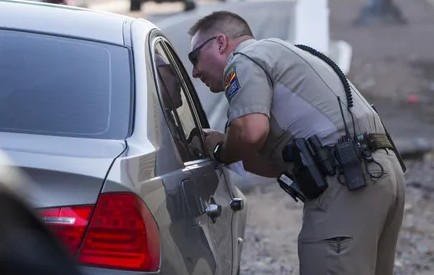
Arizona police officer making traffic stop 2

What To Do Immediately After Police Misconduct in California

What Do You Do After Police Misconduct in California?

Get medical attention. Document everything. Keep quiet with police and investigators. Secure witness contact information and nearby security footage. Contact a civil rights attorney within days — not weeks — because California’s government claim deadline can be as short as six months from the incident (California Government Code § 911.2). Miss that window and you lose your right to sue forever, regardless of how clear the misconduct was.

Free case evaluation: (949) 474-1849  |  Available 24 hours a day  |  jerry@steeringlaw.com

You Were Just Beaten or Falsely Arrested. Here Is What You Need to Know Right Now.

If you are reading this because you or someone you care about was just beaten by police, tased, pepper sprayed, falsely arrested, or otherwise abused by a law enforcement officer — I want to give you the same advice I would give a close friend.

I have been suing the police in California since 1984. In forty-plus years of civil rights litigation, I have seen strong cases destroyed — not by bad facts, but by mistakes made in the first 24 to 72 hours after an incident. Evidence gone. Witnesses lost. Statements used against the victim. Six-month deadlines missed.

What you do right now is as important as what happened to you.

I am also going to tell you something that most attorneys won’t say directly: the system is not designed to help you. Police reports are written to protect the officer. Internal Affairs exists to protect the department. The District Attorney’s office will often prosecute you for a fabricated “resistance offense” specifically to prevent you from suing. Courts have expanded police immunity to levels that would shock most Americans. I wrote about this in detail in my article “Why You (Almost) Have No Rights In America” — it is not hyperbole.

But there is a path to justice. I know where it is because I have walked it for forty years. Here is what you need to do.

STOP: Read This Before Anything Else — The Six-Month Deadline
In California, before you can sue a city, county, or other government entity for police misconduct, you must first file a formal government tort claim with that entity. Under California Government Code § 911.2, you typically have only six months from the date of the incident to file this claim.  

If you miss this deadline — even by one day — you lose your right to sue forever. It does not matter how clear the misconduct was. It does not matter how serious your injuries are. The deadline is the deadline.  

This is the single most common reason that legitimate police misconduct cases cannot be pursued. The evidence was there. The facts were there. The victim waited too long.  

Call a civil rights attorney this week. Not next month. This week.

Understanding What Just Happened to You — The “Contempt of Cop” System

Before I walk you through the specific steps, you need to understand the game that may have just been played on you — because it will affect every decision you make going forward.

When police officers use excessive force on someone, or make a bad stop, or violate someone’s constitutional rights, they have a problem. They used force — or worse. That needs to be justified. So here is what they do: they arrest you. They charge you with a “resistance offense” — California Penal Code § 148(a)(1) (“resisting, delaying, or obstructing” an officer) or California Penal Code § 69 (resisting with force, a felony). These statutes are so vague, so broadly written, that police officers can almost always claim that any innocent person somehow “resisted” or “delayed” them.

This is not an accident. It is a tactic. If you are convicted of one of these resistance offenses, you are generally legally precluded from suing the police for the exact misconduct that they committed against you. The police know this. The DA’s office knows this. The courts know this.

This is what I call the “Contempt of Cop” system. It operates when a civilian verbally questions, challenges, or protests a police officer’s actions — which is constitutionally protected behavior — and the officer retaliates. The arrest and the criminal prosecution are not the end of the abuse. They are the continuation of it, by other means.

Why This Matters for Your Civil Rights Case
If you have been charged with a resistance offense following the incident — Cal. Penal Code § 69, § 148(a)(1), battery on a peace officer, or similar charges — your criminal case and your civil rights case are directly connected. A conviction or a guilty plea can destroy your civil claim.  

Our firm handles both sides of this problem: defending bogus resistance offense cases and suing the police for the underlying misconduct. Do not make any decisions about your criminal case without understanding how it affects your civil rights claim.

What To Do — Step by Step

Your physical safety comes first. But there is a legal dimension to this step that matters enormously for your case.

  • Go to the emergency room or urgent care today. Do not wait. Adrenaline masks injury. Fractures, internal bleeding, and traumatic brain injuries frequently present hours after an incident. If you were beaten or subjected to a Taser, you need to be evaluated.
  • Tell the doctor everything. Every symptom — headache, dizziness, pain anywhere, anxiety, difficulty breathing. Say it all out loud so it gets into your medical record. That record is evidence. It links your physical condition to the incident at a specific date and time.
  • Do not tell the treating physician “I’m fine” or “it’s not that bad.” That statement can and will appear in your medical record, and opposing counsel will use it at trial to argue that your injuries were minor.
  • Keep every receipt, every bill, every document related to your medical treatment. Lost wages. Transportation costs. Everything.

Evidence in police misconduct cases disappears fast. Body camera footage gets overwritten. Witnesses leave. Bruises peak at 24 to 48 hours and then fade. You have a very short window.

  • Photograph every injury right now. Every bruise, laceration, abrasion, swelling, and mark on your body. Then photograph again in 24 hours and again in 48 hours — bruising often darkens and spreads significantly after the initial incident.
  • Photograph your wrists if you were handcuffed. Photograph any torn clothing. Photograph the location of the incident, including street signs, landmarks, and anything that establishes where you were.
  • Write down everything while your memory is fresh. The time. The location. The names, badge numbers, and physical descriptions of every officer involved. What they said. What you said. The sequence of events. Do this within hours — not days. Memory degrades, and you will be asked to testify to these details under oath.
  • Secure security camera footage immediately. Walk or drive to every business and home near the location of the incident — gas stations, restaurants, banks, pharmacies, Ring doorbells. Ask them in person to preserve their footage. Do not wait for a subpoena. Digital footage is overwritten on automated cycles, often within 24 to 72 hours. Once it is gone, it is gone forever.

Bystander witnesses are often the difference between a case that wins and a case that doesn’t. Police reports are written from the officer’s perspective and are designed to justify what the officer did. An independent witness has no stake in the outcome.

  • If there are witnesses still on scene, approach them calmly and ask for their name and phone number.
  • If someone is reluctant to give their name, ask if they would be willing to speak with an attorney.
  • If someone captured the incident on their cell phone, ask them not to delete it and ask for their contact information.
  • Note the description and license plate of any vehicles whose occupants may have witnessed the incident.

Witnesses do not stay at scenes. They go home. They go to work. They lose interest. Get their information now.

This step is the one most people get wrong — and it is the one that most often destroys otherwise valid cases.

After an incident, you may be approached by police officers at the scene, by Internal Affairs investigators, by representatives of the city or county, or by insurance investigators working on behalf of the government entity. They will be polite. They will seem sympathetic. They will say they just want to understand what happened. Do not be deceived.

Do Not Give a Statement Without an Attorney
Internal Affairs investigators are not your friends. They are trained investigators whose job is to protect the department from liability. Anything you say in an Internal Affairs interview — even as the victim — can be used against you in criminal proceedings.  

If the officer who abused you has charged you with a resistance offense, a statement you give to IA or to the DA’s office can be used to support that criminal prosecution. Your words will be taken out of context. Inconsistencies will be exploited. Admissions — however innocent — will be twisted.  

Do not go to any interview with government investigators without your attorney present. Do not give a recorded statement. Do not sign anything. Do not accept the premise that this is a routine inquiry you should cooperate with.  

Your attorney will be present for every interaction with government investigators. That is what attorneys are for.
  • Do not discuss your injuries with officers at the scene. “Are you okay?” is not a welfare check. It is an attempt to get you to minimize your injuries on record.
  • Do not argue about the law at the scene. You cannot talk your way out of a police misconduct situation. You are not going to persuade the officer that what he did was wrong. That argument happens in federal court, not on the street.
  • Do not post about the incident on social media. Anything you say publicly — on Facebook, Instagram, TikTok, or anywhere else — is discoverable evidence in your case. Anything you say can and will be used against you.

One of the most important things a civil rights attorney can do in the immediate aftermath of a police misconduct incident is send a “spoliation letter” to the police department demanding the preservation of all evidence related to the incident.

This letter formally puts the department on notice that litigation is anticipated and that all related evidence must be preserved. Without this letter, departments will often argue — sometimes successfully — that evidence was destroyed as part of routine retention policy.

  • Body-worn camera footage — often overwritten within 60 to 90 days without a preservation hold
  • Dashboard camera footage — from the officer’s patrol vehicle
  • Radio transmissions and dispatch logs — critical for establishing the timeline and what officers were told
  • Computer-Aided Dispatch records — documents what was communicated and when
  • Officer use-of-force reports and supplemental reports
  • Booking photos, jail medical records, and intake documentation if you were arrested

Our office sends spoliation letters the same day we are retained. The faster we move, the better the chance that the evidence is still there when we need it.

I am going to be direct about this because I have seen what happens when people wait.

People wait because they are not sure they have a case. They wait because they are dealing with injuries and criminal charges and they are overwhelmed. They wait because they think they can handle it themselves, or because they think filing a complaint with the department will accomplish something. In my experience, department complaint processes accomplish very little for victims and a great deal for the department — they gather information about your claims before you are represented.

The six-month deadline is not a technicality. It is not something courts routinely waive. I have seen families lose $2 million cases — cases with clear liability, documented injuries, and video evidence — because they called me at month seven instead of month two. The deadline is the deadline.

What Happens When You Call Our Office
We offer a free case evaluation for police misconduct matters. When you call, we will:  

Assess your claim: Hear what happened, identify the constitutional violations, and give you an honest assessment of whether you have a viable case.
Send the spoliation letter immediately: If we take your case, we demand evidence preservation the same day.
File the government tort claim: We handle the California Government Code § 911.2 claim and all deadlines so nothing slips through.
Evaluate your criminal exposure: If you have been charged with a resistance offense, we assess how it affects your civil rights case and advise you accordingly.  

We take police misconduct cases on contingency — you pay nothing unless we recover for you. See our case results to understand what these cases can be worth when pursued correctly.

Quick Reference — Do This, Not That

After a police misconduct incident, confusion is normal. Here is a simple reference.

What TO doWhat NOT to do
DO: Get medical attention immediately — even if you think you’re fineDO NOT: Tell the officer “I’m okay” or discuss your injuries on scene
DO: Photograph every injury, torn clothing, and handcuff marks before they fadeDO NOT: Give a recorded statement to Internal Affairs without an attorney present
DO: Write down the officer’s name, badge number, unit, and everything saidDO NOT: Argue with officers about whether the stop or force was legal — you cannot win that argument on the street
DO: Get witness contact information, or at least ask if they’ll speak to an attorneyDO NOT: Post about the incident on social media — anything you say becomes evidence
DO: Contact nearby businesses and homeowners about security footage immediatelyDO NOT: Wait weeks before contacting an attorney — the six-month government claim deadline is running right now
DO: Contact a civil rights attorney within days, not weeksDO NOT: Assume the police report tells the truth — it was written to justify what they did

The Legal Framework — What You Are Actually Suing For

Most people who have been abused by police think about suing “the cop.” In reality, the legal landscape is more complex — and more powerful — than that.

42 U.S.C. § 1983 — The Federal Civil Rights Statute

The primary vehicle for suing police officers for constitutional violations is42 U.S.C. § 1983, the Civil Rights Act of 1871 — sometimes called the Ku Klux Klan Act because it was originally passed to hold government officials accountable for civil rights violations.

Section 1983 allows individuals to sue state and local government employees — including police officers — who, acting under color of law, violated their federally protected constitutional rights. These are federal lawsuits, filed in United States District Court.

The constitutional rights most commonly at issue in police misconduct cases are:

  • Fourth Amendment — unreasonable search and seizure, excessive force, false arrest, unlawful detention
  • First Amendment — retaliation for speech, including “Contempt of Cop” arrests for verbal protest of police actions
  • Fourteenth Amendment — equal protection violations and denial of due process

Monell Claims — Suing the City or County, Not Just the Officer

Under the Supreme Court’s decision in Monell v. Department of Social Services, a municipality can be held directly liable — not just the individual officer — when the constitutional violation results from an official policy, custom, or widespread practice of the department. A Monell claim allows you to sue the city or county itself, not just the individual cop who hurt you.

This matters enormously in practice. Individual officers often have limited assets. Cities and counties have insurance, significant assets, and — importantly — the political motivation to settle cases that expose their departments to ongoing liability.

Qualified Immunity — The Shield They Will Invoke

The doctrine of qualified immunity is the primary defense used by police officers in federal civil rights cases. It protects officers from suit unless the constitutional right they violated was “clearly established” at the time of the incident — a standard that courts have interpreted so broadly that it shields officers from accountability even for obvious constitutional violations. I have written extensively about this — see “A.

This is one of the reasons why police misconduct litigation requires a specialist. Navigating qualified immunity doctrine, identifying the clearly established law, and preserving the right arguments for appeal requires knowledge of constitutional law that goes far beyond general personal injury practice.

Why the First 24 Hours Determine Whether You Win or Lose

In my experience, the difference between a case that results in a substantial recovery and a case that gets dismissed is almost always the evidence collected in the first 24 to 72 hours.

Police departments are sophisticated defendants. They have insurance. They have experienced defense attorneys. They have investigators who begin building their defense the moment an incident occurs. They write reports. They interview officers. They review footage — and they do it before you have a lawyer.

Here is what happens on their side of the table, in real time, while you are figuring out what to do:

  • The officer writes his use-of-force report. It will describe a reasonable use of force justified by your conduct. It will minimize or explain away any injuries.
  • Officers on scene compare notes and align their accounts. By the time Internal Affairs gets involved, the story is already coordinated.
  • Body camera footage is flagged for preservation by the department — which means it is also accessible to department investigators for review before you get it.
  • Any witnesses who might have contradicted the officers’ account have gone home.

The sooner you have an attorney, the sooner we can get into this fight on your side. Every day you wait is a day the other side is working against you.

Where We Handle Police Misconduct Cases in California

My firm handles police misconduct and civil rights cases throughout Southern California. We have obtained significant settlements and verdicts against police departments in Los Angeles County, Orange County, Riverside County, San Bernardino County, San Diego County, Ventura County, and throughout the state.

Some of our notable results include a $2.9 million settlement against the City of Anaheim for a police shooting, an $800,000 jury verdict against Garden Grove for false arrest, and a $750,000 settlement against the City of Torrance. See.

If you are in Southern California and have been the victim of police misconduct, we want to hear from you. We handle cases throughout the region, including:

Los Angeles County  |  Orange County  |  Riverside County  |  San Bernardino County  |  San Diego County  |  Ventura County  |  Kern County  |  Santa Barbara County  |  and throughout California

Frequently Asked Questions About Police Misconduct in California

Police misconduct in California includes any act by a law enforcement officer that violates a civilian’s constitutional rights. This includes excessive force, police brutality, false arrest, unlawful detention, malicious prosecution, illegal search and seizure, and First Amendment retaliation. Civil rights claims for police misconduct are typically brought under 42 U.S.C. § 1983 in federal court.

Before you can file a lawsuit against a California city, county, or other public entity for police misconduct, you must first file a government tort claim with that entity under California Government Code § 911.2. This claim typically must be filed within six months of the incident. If you miss this deadline, you lose your right to sue — permanently, regardless of how strong your case is. Contact a civil rights attorney immediately after an incident.

Yes. Excessive force by police officers violates the Fourth Amendment to the United States Constitution and can be the basis for a federal civil rights lawsuit under 42 U.S.C. § 1983. You may also have state law claims. The key legal question is whether the force used was objectively reasonable under the circumstances known to the officer at the time. See our excessive force page for more information.

Qualified immunity is a judicially created doctrine that protects police officers from civil liability unless they violated a “clearly established” constitutional right. Courts have interpreted this standard so broadly that it shields officers from accountability even for obvious violations. However, qualified immunity is not absolute — officers can be sued when the constitutional violation was sufficiently clear. An experienced civil rights attorney can assess whether qualified immunity will be an issue in your specific case.

Do not resist. Do not argue with officers about the legality of the arrest at the scene. Comply with the arrest, assert your right to remain silent, and contact a civil rights attorney as soon as possible. A false arrest is a Fourth Amendment violation and can be the basis for a lawsuit under 42 U.S.C. § 1983. See our false arrest page for more detail.

In my experience, filing an Internal Affairs complaint does very little for the victim and a great deal for the department — it gives investigators an opportunity to document your claims and build their defense before you are represented by an attorney. More importantly, anything you say in an IA interview can be used against you in criminal proceedings if you have been charged with a resistance offense. Do not participate in an Internal Affairs interview without your attorney present.

A resistance offense is a charge under California Penal Code § 148(a)(1) (resisting, delaying, or obstructing an officer) or § 69 (resisting with force). These charges are frequently filed against victims of police misconduct to shift blame from the officer to the victim and — critically — to legally preclude the victim from suing the police. A conviction or guilty plea to a resistance offense can destroy your civil rights case. If you have been charged with a resistance offense in connection with a police misconduct incident, contact our office immediately — we handle both the criminal defense and the civil rights lawsuit.

A spoliation letter is a formal written demand sent to a police department immediately after a misconduct incident, requiring the department to preserve all evidence related to the incident — including body-worn camera footage, dashboard camera footage, radio transmissions, CAD logs, and officer reports. Without a spoliation letter, departments may destroy evidence as part of routine retention schedules and later argue the destruction was not intentional. Our firm sends spoliation letters the same day we are retained.

The Bottom Line

Police misconduct litigation is not a game for generalists. The law in this area is complex, the immunities are broad, and the defendants are sophisticated. The government has unlimited resources and experienced defense counsel working on its side from the moment an incident occurs.

You need someone who has been doing this for a long time, who knows the law, who knows the courts, and who is not afraid of going to trial against a police department.

I have been doing exactly that since 1984 — in federal and state courts throughout Southern California. I have obtained settlements and verdicts totaling millions of dollars for victims of police misconduct. If you have a case, I want to hear it. If you don’t have a case, I will tell you that too — honestly, directly, and without wasting your time. Read.

About the Author

Jerry L. Steering is a civil rights attorney and police misconduct specialist practicing in Southern California since 1984. He has handled hundreds of police misconduct cases in federal and state courts throughout Los Angeles County, Orange County, Riverside County, San Bernardino County, and San Diego County. His notable results include a $2.9 million settlement for a police shooting in Anaheim, an $800,000 jury verdict against Garden Grove, and a $750,000 settlement against the City of Torrance. He has appeared on NBC’s Dateline with Lester Holt, ABC’s Good Morning America with Diane Sawyer, and has been featured in the Los Angeles Times, the Washington Post, and People Magazine. View

Law Offices of Jerry L. Steering  |  4063 Birch Street, Suite 100, Newport Beach, CA 92660  |  (949) 474-1849  |  Available 24 Hours  |  jerry@steeringlaw.com

Sources cited in this article:

  • California Government Code § 911.2 — Government tort claim deadline | California Legislative Information
  • 42 U.S.C. § 1983 — The Civil Rights Act of 1871 | Cornell Law School LII
  • California Penal Code § 148(a)(1) and § 69 — Resistance offense statutes | steeringlaw.com
  • Monell v. Department of Social Services, 436 U.S. 658 (1978) — Municipal liability under § 1983
  • ACLU of California — Know Your Rights: Police Encounters | aclu.org
Tehachapi Police Officers

Why Hiring a Local Police Misconduct Attorney Matters in California – And What Forty Years of Local Knowledge Actually Looks Like

Why Does Hiring a Local Police Misconduct Attorney Matter?

Local knowledge is not a marketing claim in police misconduct cases – it is a strategic advantage that directly affects outcomes. The attorney who knows your courthouse, your judge, the specific police department involved, and the city attorney’s negotiating style gets better evidence, better settlements, and better verdicts than one who is learning the territory on your case. In Southern California, I have been building that knowledge for forty years.

Free case evaluation: (949) 474-1849  |  Available 24 hours  |  jerry@steeringlaw.com

Local Knowledge Is Not a Luxury – It Is a Strategic Necessity

When you have been injured, traumatized, or wronged by police, the instinct to hire a lawyer is a good one. But not all lawyers are created equal. And in police misconduct cases, the difference between a national firm operating remotely and a local attorney with deep community roots can be the difference between justice and dismissal.

I have spent forty years practicing civil rights law in California – specifically in Los Angeles, Orange, Riverside, San Bernardino, and Ventura counties. I know the judges, the court clerks, the city attorneys, and the police departments. I know which agencies destroy footage after 30 days and which hold it for 180. I know which prosecutors are reasonable and which fight every claim.

This local knowledge is not a luxury. It is a strategic necessity.

Let me be specific about what that means – because ‘local knowledge’ is easy to claim and hard to evaluate. Here is what it actually looks like in practice.

“Do not settle for a lawyer who has to read a map to find your courthouse. Hire someone who knows the territory – someone who has been fighting here for forty years, who knows the players, and who will use every local advantage to fight for your rights.”

Knowing the Courtroom – Judges, Local Rules, and Venue

California has 58 counties, each with its own superior court system. While the law is consistent across the state, the procedures, timelines, and judicial tendencies vary significantly from courthouse to courthouse. And federal cases in Southern California are heard in the Central District of California – one of the largest federal districts in the country, with courthouses in Los Angeles, Riverside, and Santa Ana.

Judicial Preferences Are Not Academic Abstractions

Judges develop reputations over decades on the bench. Some are plaintiff-friendly. Some have deep skepticism of civil rights claims. Some have strong views on qualified immunity. Some prefer extensive briefing; others want oral argument. Some push hard for settlement conferences; others let cases go to trial without intervention.

I know which judges in the Central District have backgrounds as civil rights lawyers and which spent their careers as prosecutors or defense counsel. I know which judges have ruled favorably on qualified immunity and which have denied it. I know which judges grant extensions readily when counsel shows good cause and which enforce deadlines without flexibility.

This knowledge shapes strategy. If your case is assigned to a judge skeptical of police misconduct claims, I push harder for early settlement at a higher amount. If the judge has a track record of denying qualified immunity in similar cases, I feel confident litigating through to summary judgment. If the judge prefers cases to resolve at settlement conferences, I prepare accordingly.

Local Rules and Venue Are Not Administrative Details

The Central District of California has specific local rules governing electronic filing, meet-and-confer requirements, the formatting of exhibits, and the scheduling of motions. Missing a local rule does not just mean a rejected filing – it can mean lost opportunities, forfeited arguments, and delays that allow evidence to disappear. An attorney filing their first case in the Central District learns these rules from the court’s website. An attorney who has practiced here for forty years knows them instinctively.

Venue selection also matters. Cases filed in the Riverside division of the Central District are heard by different judges with different tendencies than cases filed in the Santa Ana division – even when both involve Orange County defendants. A local attorney knows which division offers the best chance for your specific type of claim and structures the filing accordingly.

Knowing the Police Departments – Culture, Policy, and History

Every police department in Southern California has its own culture, its own use-of-force policies, its own internal accountability structure, and its own history of misconduct. An attorney who has litigated against a department for decades knows things about it that no database can reveal.

The Major Departments – What I Know That Matters

  • LAPD: Subject to a federal consent decree for years, with extensive BWC requirements and civilian oversight through the Police Commission. The LAPD’s policies are more developed than most departments – which means violations of those policies are easier to document and harder to defend. I know which LAPD divisions have the most significant misconduct histories and which officers have recurring complaint patterns.
  • LASD: One of the largest sheriff’s departments in the country, with jurisdiction over unincorporated areas and contract cities throughout Los Angeles County. The LASD’s jail system has its own distinct litigation history. The department’s culture of internal loyalty creates specific patterns of evidence suppression that I know how to identify and challenge.
  • Long Beach PD: An independent city department with its own policies and a specific oversight structure. I know the Long Beach City Attorney’s office, its settlement practices, and its litigation tendencies. I know which Long Beach officers have prior complaints and how the department handles internal investigations.
  • Orange County Sheriff and municipal departments: The OCSD and the smaller Orange County municipal departments – Garden Grove, Santa Ana, Huntington Beach, Irvine, Costa Mesa, Laguna Beach – each have distinct cultures and complaint histories. Many of my largest results have come from Orange County cases precisely because I know these departments.
  • Riverside and San Bernardino County departments: Riverside PD, the Riverside County Sheriff, San Bernardino PD, and the San Bernardino County Sheriff each have different approaches to use-of-force, different BWC policies, and different patterns of misconduct. I have obtained million-dollar results against both county sheriff’s departments.

This is not general knowledge. It is forty years of accumulated specific knowledge – about specific officers, specific supervisors, specific policies, and specific patterns – that only comes from repeatedly litigating against these departments in these courts.

Officer History Through Pitchess Practice

Through four decades of Pitchess motions and public records practice in Southern California, I have built institutional knowledge of officers with documented misconduct histories. An officer with three prior excessive force complaints and a Brady list designation is a very different defendant than a clean-record officer on their first complaint. I know the difference – and I know which officers in which departments have the histories that transform individual cases into Monell claims against the department itself.

Faster Evidence – The Local Advantage That Matters Most

In police misconduct cases, speed is everything. Body camera footage may be overwritten in 30 to 90 days. Third-party surveillance video disappears in 7 to 30 days. Witnesses move, forget, and become reluctant. The attorney who moves fastest gets the evidence that wins cases.

Immediate Response vs. Remote Coordination

When a client calls my office, I can have an investigator at the scene within hours. We photograph the location before conditions change. We identify and interview witnesses while memories are fresh. We walk into nearby businesses and ask in person for security footage to be preserved – before the automatic overwrite cycle runs.

A national firm with a website and an 800 number coordinates this by phone and email. By the time they have arranged for a local investigator to respond, the footage is often already gone.

Public Records Knowledge – Each Agency Is Different

Every law enforcement agency in Southern California has its own process for California Public Records Act requests. Some accept email submissions. Some require certified mail to a specific address. Some respond within days. Others drag their feet for months and require follow-up demands. Some have specific contacts who actually process requests expeditiously. Others have intake processes designed to slow-walk everything.

I know the shortcuts, the contact people, and the escalation paths for every major Southern California law enforcement agency. This is not something you learn from a statute. It is something you learn from doing it, repeatedly, for forty years.

Knowing the Opposing Counsel – Forty Years of Settlement Negotiations

Police misconduct cases rarely go to trial. The vast majority settle. And in settlement negotiations, knowing the person across the table is as important as knowing the law.

I have negotiated with the same city attorneys, deputy city attorneys, and risk managers for twenty and thirty years. I know their negotiating styles. I know which ones have settlement authority and which have to get approval from a committee. I know which ones are bluffing when they say they will try the case and which ones mean it.

More importantly: they know me. City attorneys know that when I make a demand, it is backed by thorough investigation, complete damages documentation, and a realistic case valuation. They know I have tried cases and won jury verdicts – including the $1,010,000 Sharp verdict against Garden Grove and the $612,000 Farahani verdict against Santa Ana. That knowledge affects every offer they make.

What City Attorneys Think About When They Receive My Demand Letter
They are not evaluating the demand in isolation. They are evaluating it against everything they know about my practice.  

They know I go to trial. A firm that settles everything makes settlement offers based on what the plaintiff will accept. A firm with a track record of verdicts gets offers based on what the jury might give.

They know I know their department. They know that when I cite a prior complaint pattern, I have actually reviewed the Pitchess records. They know that when I describe the evidence as strong, I have already secured the footage and interviewed the witnesses.  

They know I know the judge. If the assigned judge has a history of denying qualified immunity motions, they know I know that. The legal landscape around our negotiation is not theoretical – it is specific.  

That credibility is not transferable. It is built case by case, over forty years. It cannot be replicated by a firm learning the territory on your case.

Local Knowledge in Action – Three Cases That Demonstrate the Difference

The Torrance Swastika Case – $750,000 Settlement

The facts: Torrance police officers painted a swastika on a citizen’s impounded vehicle. The department denied knowledge and claimed it could not be determined which officers were responsible.  

Local knowledge advantage: We knew the Torrance Police Department’s policies on impounded vehicles and its evidence documentation requirements. We knew which officers were assigned to the impound division. We knew how to access the specific camera systems at the Torrance impound facility. We secured the video evidence before the department could claim it was unavailable.  

We knew the department’s vulnerabilities: Torrance was already under pressure from prior misconduct complaints. The city attorney’s office knew that a trial would be far more damaging than a settlement – both financially and reputationally. We structured the negotiation to make that calculation explicit.   The result: $750,000 settlement, including compensation for lasting psychological trauma documented by local mental health experts who understood the cultural significance of what was done.
The Long Beach False Arrest Case – $450,000 Recovery

The facts: A client was falsely arrested by Long Beach Police Department officers who lacked probable cause. The standard resistance charge was filed on top of the false arrest.  

Local knowledge advantage: We knew which Long Beach supervisory lieutenant to contact immediately about evidence preservation – before the formal CPRA process began. We knew the standard settlement range for LBPD false arrest cases without significant physical injury. We knew the assigned judge had a reputation for pushing early settlement conferences aggressively.  

We knew the opposing counsel: The Long Beach City Attorney’s office had seen us on prior cases. They knew we would litigate if the offer was inadequate. They knew we had the evidence secured.  

The result: $450,000 recovery – significantly above the baseline for similar cases without serious physical injury, because local knowledge compressed the timeline and maximized negotiating leverage.
Tualaulelei v. City of Compton – $6,000,000 Structured Settlement

The facts: A man was killed by Compton police. The family needed representation that understood the specific department, its history, and its institutional vulnerabilities.  

Local knowledge advantage: The Compton Police Department had a documented history of excessive force complaints and inadequate training that I could access and deploy specifically in this case. We knew which experts in the Southern California area could testify credibly on use-of-force standards against this department’s specific training protocols.  

We knew the family’s long-term needs: We structured the $6,000,000 settlement specifically to provide for the family’s financial security over time – working with local financial and legal professionals who understood California structured settlement law.  

The result: $6,000,000 structured settlement – the largest result in my practice – built on specific knowledge of the department, the jurisdiction, the legal landscape, and the family’s circumstances.

What Local Knowledge Cannot Do – And Why Honesty Matters

I want to be direct about something that is easy to obscure in a marketing context: local knowledge is powerful but not magic.

It cannot create evidence that does not exist. If there is no footage, no witnesses, and no medical records documenting the incident, local knowledge cannot build a case from nothing. If the injuries are minor and fully resolved, the case value is limited regardless of the strength of the attorney or the weaknesses of the officer.

It cannot overcome a client’s unwillingness to testify credibly or a fact pattern that is genuinely ambiguous. Some cases are difficult for reasons that have nothing to do with the attorney’s local knowledge.

What local knowledge can do – and does, consistently, in my practice – is this:

  • Ensure that all existing evidence is identified and preserved before it disappears
  • Find the witnesses and camera sources that a remote attorney would not have known to look for
  • Navigate procedural requirements efficiently, without costly learning mistakes
  • Negotiate from a position of informed strength, with a realistic sense of what the market bears in the specific jurisdiction
  • Make strategic decisions based on actual knowledge of the judge, the opposing counsel, and the department’s vulnerabilities

The difference between a case that settles for $200,000 and one that settles for $500,000 is often not a legal difference. It is a knowledge difference.

What Makes My Practice Different From a General Litigation Firm

If you are evaluating attorneys for a police misconduct claim in California, here is the specific framework I would use – and how my practice compares to each criterion.

What I bringWhy it matters
Forty years in Southern California courtsI have appeared before the judges of the Central District of California – Los Angeles, Riverside, and Santa Ana divisions – for four decades. I know their preferences, their judicial philosophies, and how they approach police misconduct claims. A firm filing its first case in the Central District learns all of this the hard way.
Specific knowledge of every major Southern California police departmentLAPD, LASD, Long Beach PD, Orange County Sheriff, Riverside PD, San Bernardino County Sheriff, and dozens of smaller municipal departments. I know their use-of-force policies, their BWC retention schedules, their training deficiencies, and their litigation histories. That knowledge shapes every decision in every case.
Relationships with city attorneys built over decadesI have negotiated with the same city attorneys, deputies, and risk managers for twenty and thirty years. They know that when I make a demand, it is backed by thorough investigation. They know I try cases. That credibility produces better settlement results than a firm they have never heard of.
Immediate evidence response capabilityWhen a client calls, I can have an investigator at the scene within hours – photographing the location, identifying witnesses, contacting businesses with security cameras before footage is overwritten. A firm in another state coordinates by phone and email while the evidence disappears.
Officer history through Pitchess practiceThrough forty years of Pitchess motions and public records practice in Southern California, I have built institutional knowledge of which officers have prior misconduct complaints, which have been sued before, and which have credibility findings on their personnel records. This knowledge does not exist in a database. It is built through practice.
Track record of jury verdicts in Southern California courtsCity attorneys track which firms go to trial. A firm that settles everything gets lesser offers – because the other side knows the threat of trial is empty. My willingness to try these cases – and win them – affects every settlement negotiation I have.

For the complete list of my results in Southern California courts, see steeringlaw.com/police-misconduct-and-other-civil-rights-case-results/. The results span Orange County, Los Angeles County, Riverside County, San Bernardino County, and beyond – because the local knowledge that produced them was built across all of Southern California, not just one jurisdiction.

The Six-Month Deadline – Why You Need Local Counsel Now, Not Later
Before filing a civil lawsuit against a California city, county, or other public entity for police misconduct, you must file a government tort claim under California Government Code Section 911.2 within six months of the incident.  

Miss this deadline and your state law claims are permanently barred. The clock is running from the day of the incident. The evidence is disappearing daily. Every day you spend evaluating attorneys from across the country is a day closer to the deadline and a day more evidence is overwritten.  

A local attorney can preserve evidence and file the government claim immediately. A remote firm coordinates the same steps by phone while the footage disappears. Call today.

Where I Practice – The Southern California Territory I Know

My firm is based in Newport Beach and handles police misconduct cases throughout Southern California. I know these jurisdictions because I have litigated in them for forty years – not because I read about them.

Los Angeles County: LAPD, LASD, Long Beach PD, Torrance PD, and dozens of municipal departments  |  Orange County: OCSD, Garden Grove PD, Santa Ana PD, Anaheim PD, Huntington Beach PD, Irvine PD, Costa Mesa PD, Newport Beach PD  |  Riverside County: Riverside PD, Riverside County Sheriff  |  San Bernardino County: San Bernardino PD, San Bernardino County Sheriff  |  San Diego County  |  Ventura County  |  Kern County  |  Santa Barbara County

Frequently Asked Questions – Hiring a Local Police Misconduct Attorney

Local knowledge directly affects outcomes in police misconduct cases in several ways. A local attorney knows the assigned judge’s tendencies and can tailor strategy accordingly. They know the opposing city attorney’s negotiating style and settlement authority. They can respond to a case immediately – preserving evidence before it is overwritten rather than coordinating remotely while footage disappears. They know which officers in which departments have prior misconduct complaints. And they negotiate from credibility built over decades of practice in that specific jurisdiction.

Enormously. Each department has its own use-of-force policies, BWC retention schedules, internal investigation processes, and litigation history. An attorney who has litigated against a department before knows its specific vulnerabilities – which policy violations are easiest to document, which arguments have succeeded before the relevant judges, and which city attorneys handle negotiations. An attorney learning these facts for the first time on your case is doing it at your expense.

A national firm can handle the legal framework – the constitutional law is consistent across jurisdictions. But the local knowledge dimension – the courthouse procedures, the judicial tendencies, the specific department’s history, the opposing counsel’s negotiating style, the ability to respond immediately to preserve evidence – is genuinely difficult to replicate remotely. The cases where that knowledge matters most are often the ones where the outcome is closest – where the difference between a $200,000 settlement and a $500,000 settlement is a knowledge advantage, not a legal one.

It is more important than most people realize – and the reason is counterintuitive. A firm’s trial record affects every settlement negotiation it has. City attorneys track which firms go to trial and which settle everything. A firm that never tries cases makes settlement offers based on what the plaintiff will accept. A firm with a track record of jury verdicts gets offers based on what the jury might give. My willingness to try cases – and the verdicts I have obtained – is part of every settlement discussion I have.

Ask how many police misconduct cases they have handled in your specific county. Ask whether they have litigated against your specific police department and what they know about its misconduct history. Ask whether they handle both the criminal defense of any resistance charges and the civil rights lawsuit simultaneously. Ask whether they send spoliation letters the same day they are retained. Ask what their trial record looks like in the specific federal district where your case would be filed. The answers will tell you whether you are talking to a specialist or a generalist.

Proximity matters less than familiarity. My office is in Newport Beach – within Orange County – but I handle cases throughout Southern California because I have developed deep familiarity with every county in the region. What matters is not the address on the letterhead but whether the attorney knows your courthouse, your judge, the specific department involved, and the opposing counsel. Those relationships are built through practice, not geography.

Within days – not weeks. Third-party surveillance video disappears within 7 to 30 days. Body-worn camera footage may be overwritten within 30 to 90 days without a preservation hold. The attorney who sends the spoliation letter on day one gives the case its best chance of having the evidence it needs at trial. Every day that passes without a preservation demand is a day more evidence may be permanently lost.

Vindication Is the Goal. Local Knowledge Is the Path.

Police misconduct cases are hard. The law is complex. The defendants are well-funded and well-represented. The officers are trained witnesses who know how to tell a story. The departments have insurance, experienced defense counsel, and institutional incentives to minimize every claim.

In that environment, every advantage matters. And one of the most significant advantages you can have is an attorney who has spent forty years building the specific knowledge of the specific courts, the specific departments, and the specific people on the other side of your case.

A national firm with a website and an 800 number cannot match this. They cannot match the relationships built over forty years. They cannot match the instinctive understanding of how things actually work in Orange County Superior Court versus the Central District Riverside division versus the Santa Ana federal courthouse.

Do not settle for a lawyer who has to read a map to find your courthouse. Vindication is the goal. Local knowledge is the path.

About the Author – Jerry L. Steering

Jerry L. Steering is a civil rights attorney and police misconduct specialist who has been suing the police in California since 1984. Based in Newport Beach, he has practiced in Los Angeles, Orange, Riverside, San Bernardino, San Diego, and Ventura counties for four decades. He has appeared before the judges of the Central District of California throughout that period and has negotiated with the same city attorneys for twenty and thirty years. His results include a $6 million structured settlement against the City of Compton, a $2.9 million settlement against the City of Anaheim, a $1.3 million settlement against Riverside County, a $1,010,000 jury verdict against the City of Garden Grove, a $900,000 settlement against the City of Fontana, and a $750,000 settlement against the City of Torrance. He has appeared on NBC Dateline with Lester Holt and ABC Good Morning America with Diane Sawyer. View Attorney Profile

Law Offices of Jerry L. Steering  |  4063 Birch Street, Suite 100, Newport Beach, CA 92660  |  (949) 474-1849  |  Available 24 Hours  |  jerry@steeringlaw.com

Practice jurisdictions and representative results:

  • Los Angeles County: Tualaulelei v. City of Compton ($6M), City of Torrance swastika case ($750K), multiple LAPD and LASD cases  |  steeringlaw.com
  • Central District of California – Local Rules and Procedures  |  cdn.ca9.uscourts.gov
  • California Government Code Section 911.2 – Six-month government tort claim deadline  |  leginfo.legislature.ca.gov

How Long Do You Have to File a Police Misconduct Claim in California? Every Deadline, Every Exception.

How Long Do You Have to File a Police Misconduct Claim in California?

Two deadlines apply. First: a government tort claim under California Government Code § 911.2 must be filed with the city, county, or public agency within six months of the incident — before you can sue at all. Miss this and your state law claims are permanently barred. Second: federal civil rights claims under 42 U.S.C. § 1983 have a two-year statute of limitations under California Code of Civil Procedure § 335.1. The six-month deadline is the one that destroys more cases than any other single factor in California police misconduct litigation.

Free case evaluation: (949) 474-1849  |  Available 24 hours  |  jerry@steeringlaw.com

The News I Have Had to Deliver Too Many Times

I have had to deliver heartbreaking news to too many clients: “I believe you were wronged, but we cannot file your case because the deadline has passed.”

The evidence was there. The injuries were documented. The misconduct was clear. And none of it mattered, because the clock ran out before the client called me.

In California, police misconduct claims involve multiple overlapping deadlines — some as short as six months from the date of the incident. Statutes of limitations are not technicalities. They are the firm, unforgiving cutoff after which your right to sue is gone forever, regardless of how strong your evidence, how severe your injuries, or how egregious the misconduct.

I have been litigating police misconduct cases in California courts since 1984 — Los Angeles County, Orange County, Riverside County, San Bernardino County, San Diego County, and beyond. Here is everything you need to know about the deadlines that control your right to sue — and the limited exceptions that may apply.

“The evidence was there. The injuries were documented. The misconduct was clear. None of it mattered because the clock ran out. That is the most preventable tragedy in civil rights law.”

Every Deadline at a Glance — The Complete Reference Table

Before diving into the details, here is the complete reference guide. Bookmark this. Print it. Share it with anyone you know who was recently injured by police.

Claim typeDeadlineWhen clock startsCritical notes
Government tort claim (California Gov. Code § 911.2)6 monthsDate of incidentMANDATORY before suing any California city, county, or public entity. Miss this and your state law claims are barred forever — regardless of how strong the case is.
Filing suit after claim denial (California Gov. Code § 945.6)6 monthsDate rejection notice is mailedAfter your government tort claim is denied, you have 6 months from the date the rejection is mailed — not received — to file your lawsuit.
Filing suit if entity fails to respond (California Gov. Code § 945.6)2 yearsDate of incidentIf the public entity never sends a written denial, you have 2 years from the accrual of the cause of action to file suit.
Federal § 1983 civil rights claim (Cal. CCP § 335.1 / Wilson v. Garcia)2 yearsDate claim accrues (usually date of incident)Federal civil rights claims use California’s personal injury statute of limitations. Clock starts when you knew or should have known of the injury.
California state personal injury claims (Cal. CCP § 335.1)2 yearsDate of incidentApplies to assault, battery, negligence, false imprisonment claims — but only after complying with the Government Claims Act for public entity defendants.
Bivens claims (federal officers) (Cal. CCP § 335.1 applied by analogy)2 yearsDate claim accruesClaims against federal agents (FBI, Border Patrol, DEA) — no government claim requirement, but Bivens itself is increasingly limited post-Egbert v. Boule (2022).
Wrongful death (Cal. CCP § 335.1 / Gov. Code § 911.2)2 years / 6 mo.Date of deathThe 2-year SOL runs from the date of death for the survival action. The 6-month government tort claim still applies to any public entity defendants.

The most important row in the table: the six-month government tort claim deadline. It is shorter than almost every other deadline in civil litigation. It is mandatory before suing any California city, county, or public agency. And it runs from the date of the incident — not the date you decide to pursue a case.

The Six-Month Government Tort Claim — The Deadline That Ends More Cases Than Any Other

Under the California Government Claims Act — California Government Code § 900 et seq. — anyone seeking to sue a California public entity (city, county, police department, public agency) or a public employee acting within the scope of employment must first file an administrative government tort claim with that entity. This requirement is mandatory. There is no way around it. Under California Government Code § 911.2, the deadline to file this claim is six months from the date of the incident.

The Six-Month Government Tort Claim Deadline
Six months from the date of the incident. Not six months from when you feel better. Not six months from when your criminal case resolves. Not six months from when you decide you want to sue. Six months from the day it happened.  

This deadline applies to claims against cities, counties, police departments, sheriffs, and individual officers acting within the scope of their employment.  

If you miss this deadline, your state law claims are barred permanently. No exceptions for ignorance of the deadline. No judicial discretion to waive it. No equitable relief except in the narrowest circumstances. I have seen strong cases with clear liability, documented injuries, and video evidence go nowhere because the victim called me at month seven instead of month one.  

Call a civil rights attorney immediately — not when you feel ready, not after the criminal case, not after you have figured out what you want to do. Now.

The Government Claims Act Process — Step by Step

Here is exactly how the process works after an incident:

  • You file the government tort claim with the relevant public entity — the city, county, or agency — within six months of the incident. The claim must describe the incident, the nature of the claim, the damages sought, and your contact information.
  • The public entity has 45 days to respond. They can grant the claim (rare), deny it (common), or allow it to sit without action.
  • If denied, you have six months from the mailing of the rejection notice to file your lawsuit in court. Under California Government Code § 945.6, the clock runs from the date the notice is deposited in the mail — not the date you receive it. California courts have charged claimants with knowledge of this rule.
  • If the entity never responds and sends no written denial, you have two years from the accrual of the cause of action to file suit under Government Code § 945.6.

The January 15 Example — Walking Through the Timeline

Let me make this concrete with a typical scenario I see in my practice:

A Real Deadline Timeline
January 15: You are subjected to excessive force during a traffic stop in Los Angeles County.
July 14: Six-month government tort claim deadline. If you have not filed your claim by today, your state law claims are barred.
July 1: You filed your claim on July 1 — two weeks before the deadline. Smart.
July 1 + 45 days = August 15: The county must respond by this date. If it denies your claim and mails you a rejection notice on August 15…
February 15 (6 months from August 15): Deadline to file your lawsuit in court. Miss this and your state law claims are gone.
January 15 (2 years from incident): Federal § 1983 deadline — but only if you complied with the government tort claim requirement for the state law claims.  

The danger zone: Many people confuse the two-year § 1983 deadline with the total time they have. They assume they have two years for everything. They do not. The six-month government tort claim is the threshold you must cross before the two-year period even becomes relevant.

Federal § 1983 Claims — Two Years, But With Important Caveats

For claims brought under 42 U.S.C. § 1983, California applies its two-year personal injury statute of limitations under California Code of Civil Procedure § 335.1, as established by Wilson v. Garcia, 471 U.S. 261 (1985). This two-year period applies to:

  • Excessive force — police brutality, unjustified shootings, tasings, use of restraints
  • False arrest and wrongful detention without probable cause or reasonable suspicion
  • Illegal searches and seizures without warrant, probable cause, or valid consent
  • First Amendment retaliation — arrests for recording police, criticizing officers, or exercising protected speech
  • Malicious prosecution — criminal charges filed without probable cause and resolved in your favor

When does the two-year clock start? Federal law determines when a § 1983 claim accrues. The general rule: the claim accrues when the plaintiff knows, or through reasonable diligence should know, of the injury that forms the basis of the action. For most police misconduct incidents, the accrual date is the date of the incident itself — because the injury is immediate and obvious.

The key caveat: the two-year federal deadline and the six-month state government tort claim deadline are not alternatives. They run simultaneously. You can be within your two-year window for the federal claim and still be permanently barred from state law claims because you missed the six-month government tort deadline. Both must be managed.

When Criminal Charges Are Pending — The Heck Complication

Many people who contact my office after a police misconduct incident are also facing criminal charges arising from the same incident — typically PC 148(a)(1) or PC 69 resistance charges. This creates the Heck v. Humphrey complication I have discussed in previous articles.

Under Heck v. Humphrey, 512 U.S. 477 (1994), a § 1983 civil rights claim is barred if it would necessarily imply the invalidity of a prior criminal conviction. A conviction for resisting the arrest you are claiming was unlawful can bar the civil rights claim. This has direct implications for timing:

What Heck Means for Your Deadline Strategy
The criminal case does not pause the clock. The statute of limitations continues to run while criminal charges are pending. You cannot simply wait for the criminal case to resolve before thinking about the civil case. By the time a criminal case goes to trial, you may have missed the six-month government tort claim deadline entirely.  

A conviction closes the door. If you are convicted or take a plea to a resistance charge, the Heck bar may permanently preclude the civil rights lawsuit — regardless of how much time remains on the statute of limitations.  

The right strategy: consult a civil rights attorney immediately after the incident — before you make any decisions about the criminal case and before the six-month deadline runs. The criminal defense strategy and the civil rights strategy must be coordinated from the beginning.  

See my articles on the Contempt of Cop mechanism and the resistance charge trap for the full analysis.

Exceptions and Tolling — The Limited Circumstances When the Clock Pauses

The deadlines are strict. The exceptions are narrow. I want to be direct about this because I have watched too many clients lose cases they thought would be saved by tolling. Here is an honest assessment of each exception.

Tolling groundWhen it appliesWhat you actually need to know
Delayed discovery (discovery rule)The injury or its cause was not reasonably discoverable at the time of the incidentNarrowly applied. Courts require that both the injury and its connection to the defendant were not discoverable through reasonable diligence. Psychological trauma may qualify; physical injuries from a beating almost never do.
Minority (plaintiff was under 18)The plaintiff was a minor at the time the cause of action accruedFor federal § 1983 claims, the statute is tolled until the plaintiff turns 18. However, the six-month government tort claim deadline may still apply — minors are not automatically exempt from the Government Claims Act.
Imprisonment tolling (CCP § 352.1)The plaintiff was imprisoned on a criminal charge when the cause of action accruedTolls the federal § 1983 statute for up to 2 additional years. Ends on release. Death ends tolling entirely. Does not toll the government tort claim deadline.
Continuing violation doctrineThe misconduct constitutes a continuing pattern of violations rather than a single discrete actCan extend the limitations period to the last act in the pattern. Requires showing that each act is part of a unified course of unlawful conduct — not just similar separate incidents. Rarely applies to single-incident use-of-force cases.
Equitable tollingPlaintiff pursued a different remedy in good faith and defendant had notice of the claimRequires three elements: timely notice to defendant, no prejudice to defendant, and reasonable good-faith conduct by plaintiff. California courts apply this narrowly. Do not count on equitable tolling to save a missed deadline — I have seen it fail in cases where clients assumed it would apply.
Defective rejection notice (Gov. Code § 912.7)Public entity failed to include required warning about the lawsuit filing deadline in its rejection noticeIf the rejection notice omits the mandatory 6-month warning, the claimant may be entitled to the 2-year period from accrual instead of 6 months from rejection. Chalmers v. County of Los Angeles (1985).

My frank assessment of equitable tolling: In forty years of California civil rights litigation, I have seen equitable tolling argued successfully in a small fraction of the cases where clients hoped it would apply. California courts are consistent: equitable tolling is not a safety net for missed deadlines. It requires specific, limited circumstances — and even then, it is litigated against defendants who have every incentive to challenge it. Do not structure your case around the assumption that equitable tolling will save you. File the government tort claim. File it early. File it correctly.

Federal Officers — Bivens Claims and Their Growing Limitations

If your claim involves a federal law enforcement officer — FBI, DEA, Border Patrol, TSA, federal marshals, or other federal agents — the claim cannot be brought under 42 U.S.C. § 1983, which applies only to state and local actors. Instead, federal officer claims are brought under Bivens v. Six Unknown Named Agents, 403 U.S. 388 (1971), the Supreme Court’s judge-made analog to § 1983.

For Bivens claims in California, the two-year personal injury statute of limitations under California CCP § 335.1 applies by analogy. There is no government tort claim requirement for federal defendants — the California Government Claims Act applies only to California public entities.

The Critical 2022 Update — Egbert v. Boule
In Egbert v. Boule, 596 U.S. 482 (2022), the Supreme Court significantly restricted the availability of Bivens claims, holding that courts should not recognize new categories of Bivens actions unless the case is virtually identical to one of the three original Bivens contexts.  

The practical effect: excessive force claims against federal officers may still proceed under the original Bivens context (Fourth Amendment unreasonable seizure), but claims in novel contexts — new constitutional rights, new types of conduct, new agency contexts — face serious obstacles.  

If your misconduct involved federal agents rather than state or local police, the viability of a Bivens claim depends heavily on how closely the facts match prior recognized Bivens contexts. This requires analysis by an attorney with federal civil rights litigation experience.

Why Waiting Is Dangerous Even Within the Deadline Window

Having two years for the federal claim does not mean waiting two years is safe. Even within the deadline window, delay costs cases. I cover the complete evidence preservation framework in ourstep-by-step guide to what to do immediately after police misconduct. The deadline-specific reasons not to wait:

  • Body camera and dashcam footage is overwritten. Depending on department retention policies, footage may be automatically deleted in as little as 30 to 90 days without a preservation hold. A spoliation letter sent on day one protects it. Waiting until month six means it may already be gone.
  • Internal investigations do not pause the clock. A pending internal affairs investigation does not toll the statute of limitations. The clock runs regardless of whether IA, a civilian review board, or a criminal investigation is ongoing. Waiting for those processes to conclude before consulting an attorney is a common and costly mistake.
  • Witnesses forget — and leave. The bystander who had the clearest view and was willing to talk on day one may be difficult to locate and reluctant to testify six months later. Witness statements taken early are more credible and more useful than recollections reconstructed later.
  • The department is already building its defense. From the moment of the incident, the police department’s legal machinery is in motion — interviewing officers, reviewing footage, drafting reports. The sooner you have legal representation, the sooner someone is working on your side of the case.

What to Do Right Now — The Specific Actions With the Specific Deadlines

If you believe you were a victim of police misconduct in California, here is what to do, in sequence, with the deadlines attached:

  • Call a civil rights attorney today. Not after your criminal case. Not after you decide whether you want to sue. Today. An attorney can advise you on the interplay between the criminal charges and the civil deadline, send a spoliation letter immediately, and file or prepare your government tort claim.
  • Document everything before the day is out. Photographs of injuries (now and again in 24-48 hours as bruising develops), officer names and badge numbers, exact words spoken, witness contact information, nearby security cameras. See our complete evidence guide at steeringlaw.com.
  • Mark the six-month deadline on your calendar right now. Count forward six months from the date of the incident. That is the absolute outer limit for filing your government tort claim. Your attorney should file it well before that date, but you need to know what the deadline is.
  • Do not give a statement to Internal Affairs without your attorney. IA investigators work for the department. An IA interview does not pause any deadline and can be used against you in the civil case.
  • Do not accept any criminal plea without consulting your civil rights attorney. A guilty plea to a resistance charge can close the door on the civil rights case permanently under the Heck doctrine. The criminal and civil cases must be strategized together.

Results in Cases Where the Deadline Was Met

The cases that resulted in significant recoveries for my clients all shared one thing: someone called in time.

  • $2.9 million settlement, City of Anaheim — police shooting case. Government tort claim filed on time. Federal and state claims both preserved.
  • $1.3 million settlement, Riverside County — excessive force and malicious prosecution. Early action allowed us to secure evidence before it was overwritten.
  • $800,000 jury verdict, City of Garden Grove — false arrest. Government claim filed within weeks of the incident.
  • $450,000 settlement, Riverside County — false arrest, bystander detained during warrant execution. Six-month claim filed while facts were still fully documented.
  • $360,000 settlement, City of Newport Beach — false arrest. Evidence preserved through immediate spoliation letter.

Every one of these cases could have been lost on the deadline alone. None were — because the clients came to us in time. See.

Serving Southern California — Every County, Every Deadline

My firm handles police misconduct cases — and navigates these deadlines — throughout Southern California: Los Angeles County, Orange County, Riverside County, San Bernardino County, San Diego County, Ventura County, Kern County, and Santa Barbara County.

Every public entity in California is subject to the Government Claims Act. Every case has a six-month deadline. Every missed deadline is permanent. If you are in Southern California and believe you have a police misconduct claim, call us today — not tomorrow, not after you think about it. Today.

Frequently Asked Questions — Police Misconduct Deadlines in California

Two deadlines apply. First, before suing any California city, county, or public agency for police misconduct, you must file a government tort claim under California Government Code § 911.2 within six months of the incident. This is mandatory. Missing it permanently bars your state law claims. Second, federal civil rights claims under 42 U.S.C. § 1983 have a two-year statute of limitations under California Code of Civil Procedure § 335.1. Both deadlines run simultaneously from the date of the incident.

The California Government Claims Act (Government Code § 900 et seq.) requires anyone suing a California public entity — city, county, police department, or individual officer acting within the scope of employment — to first file an administrative government tort claim with that entity before filing suit. The deadline is six months from the date of the incident under Government Code § 911.2. Missing this deadline permanently bars all state law claims regardless of how strong the case is. The California Supreme Court and appellate courts have consistently refused to extend this deadline absent specific statutory exceptions.

No. The statute of limitations runs regardless of pending criminal charges. Many victims of police misconduct also face resistance charges (PC 148, PC 69) arising from the same incident. Waiting for the criminal case to resolve before consulting a civil rights attorney is one of the most common and costly mistakes I see. By the time a criminal case concludes, the six-month government tort claim deadline may have already passed. The criminal and civil cases must be managed simultaneously from the beginning.

A dismissed charge is not an automatic indicator of a viable civil rights claim — and it does not extend or reset any deadline. The false arrest analysis focuses on whether probable cause existed at the moment of arrest, not on what happened to the charges afterward. More importantly, the six-month government tort claim deadline runs from the date of the incident — not the date the charges were dismissed. Even if charges are dismissed six months later, your government tort claim deadline has already passed.

Your state law claims are permanently barred. No exceptions for not knowing about the deadline. No judicial discretion to waive it after the fact. The only potential relief is a petition to file a late claim under Government Code § 911.4, which must be filed within one year of the incident and requires a showing that the delay was due to mistake, inadvertence, surprise, or excusable neglect — a narrow standard that courts apply sparingly. Federal § 1983 claims may still be available since the government tort claim requirement does not technically apply to federal civil rights claims — but the loss of state law claims significantly limits your remedies.

Very few, and they are narrowly applied. Minors may have tolling protection for federal claims, though the six-month government tort claim deadline may still apply. Imprisoned plaintiffs get up to two additional years of tolling for federal claims under CCP § 352.1. If the public entity’s rejection notice fails to include the mandatory warning about the six-month filing period, the two-year period may apply instead under Chalmers v. County of Los Angeles (1985). Equitable tolling exists but is applied sparingly — courts do not use it to rescue missed deadlines caused by plaintiff inaction. Do not count on any exception. File the government tort claim.

Claims against federal law enforcement officers are brought under Bivens v. Six Unknown Named Agents (1971), not § 1983. The California Government Claims Act does not apply to federal defendants, so there is no six-month government claim requirement. The two-year statute of limitations applies by analogy. However, the Supreme Court’s 2022 decision in Egbert v. Boule significantly restricted the contexts in which Bivens claims can be brought. Fourth Amendment excessive force claims may still proceed under the original Bivens context, but other claims in novel contexts face serious obstacles.

Zero days. Call as soon as you are physically able to do so after the incident. Every day you wait is a day closer to the six-month deadline, a day that body camera footage is closer to being overwritten, a day that witnesses are harder to locate. A free consultation costs nothing, commits you to nothing, and may be the difference between a case that proceeds and a case that is permanently barred before it begins.

The Moment You Are Free, the Clock Starts Ticking

Time is not on your side in California police misconduct cases. Between the six-month government tort claim requirement and the two-year federal statute of limitations, the window for seeking justice is shorter than most people realize — and more unforgiving than almost any other area of civil litigation.

Do not assume you have plenty of time. Do not wait for an internal investigation to conclude. Do not wait until your criminal case is resolved to learn your rights. Do not wait until you have made up your mind about whether you want to sue.

The moment you are free, the clock starts ticking. Call.

Fight back. Vindication is the goal.

About the Author — Jerry L. Steering

Jerry L. Steering is a civil rights attorney and police misconduct specialist who has been suing the police in California since 1984. His practice covers excessive force, false arrest, malicious prosecution, unlawful detention, and civil rights violations — both the criminal defense of the charges that accompany these incidents and the § 1983 civil rights lawsuits against the officers and municipalities responsible. He has litigated cases in federal and state courts throughout Los Angeles County, Orange County, Riverside County, San Bernardino County, San Diego County, and the rest of Southern California. Notable results include a $2.9 million settlement against the City of Anaheim, a $1.3 million settlement against Riverside County, an $800,000 jury verdict against the City of Garden Grove, a $450,000 recovery for a Riverside County false arrest, and a $360,000 settlement against the City of Newport Beach. He has appeared on NBC Dateline with Lester Holt and ABC Good Morning America with Diane Sawyer. View

Law Offices of Jerry L. Steering  |  4063 Birch Street, Suite 100, Newport Beach, CA 92660  |  (949) 474-1849  |  Available 24 Hours  |  jerry@steeringlaw.com

Legal citations and primary sources:

Sgt. Ken Southern arresting Mr. Chynoweth

False Arrest vs. Unlawful Detention in California – What’s the Difference, and Why It Matters for Your Civil Rights Case

What Is the Difference Between False Arrest and Unlawful Detention in California?

A detention (Terry stop) requires only reasonable suspicion — specific, articulable facts suggesting criminal activity. An arrest requires the higher standard of probable cause — facts sufficient for a reasonable person to believe a crime was committed and this specific person committed it. Both are Fourth Amendment seizures. Both can give rise to civil rights claims under 42 U.S.C. § 1983. The distinction determines which standard the officer needed to meet — and therefore which standard they failed to meet when your rights were violated.  

Free case evaluation: (949) 474-1849  |  Available 24 hours  |  jerry@steeringlaw.com

“Arrest” and “Detention” Are Not the Same Thing — and the Difference Matters Enormously

When clients come to my office after a police encounter that went wrong, they almost always use the words “arrested” and “detained” interchangeably. They tell me they were “arrested” when an officer held them on a sidewalk for twenty minutes. They tell me they were “just detained” when they were handcuffed and placed in a patrol car for an hour.

These distinctions are not semantic. Whether you were detained or arrested determines what constitutional standard the officer needed to satisfy to act lawfully. It determines which rights were triggered and which were violated. And it shapes the civil rights claims available to you in court.

In forty years of suing police in California, I have handled hundreds of false arrest and unlawful detention cases. The fundamental question in every one of them is the same: did the officer have what the law required to do what they did?

“The officer’s report will call it a lawful stop. The question my office asks is whether the law actually gave them the right to do it — because in a lot of these cases, it did not.”

The Fourth Amendment Framework — Two Levels of Seizure, Two Different Standards

Both false arrest and unlawful detention are “seizures” under the Fourth Amendment. The Supreme Court has held that a person is seized when, under the totality of the circumstances, a reasonable person would not feel free to leave or to decline the officer’s requests —Florida v. Bostick, 501 U.S. 429 (1991). But the Fourth Amendment recognizes that not all seizures are equal.

There are two levels of seizure — each requiring a different level of legal justification:

Level 1: Detention — Reasonable Suspicion

A brief investigatory stop — called a Terry stop after Terry v. Ohio, 392 U.S. 1 (1968) — is constitutionally permissible if the officer has specific, articulable facts that would lead a reasonable person to suspect criminal activity is afoot. This is the lower standard. But it is not nothing. It is not a hunch. It is not an intuition. It is not based on race, a high-crime neighborhood, or a gut feeling. The facts must be specific and articulable — the officer must be able to explain them.

Level 2: Arrest — Probable Cause

An arrest requires probable cause — a significantly higher standard. Probable cause exists when the totality of the circumstances would lead a reasonable person to believe that a crime has been or is being committed and that the person to be arrested committed it. An arrest based on something less than probable cause is a Fourth Amendment violation — a false arrest — regardless of what the officer’s report says happened.

 Detention (Terry Stop)Arrest
Legal standard requiredReasonable suspicion — specific, articulable facts suggesting criminal activityProbable cause — facts sufficient for a reasonable person to believe a crime was committed and this person committed it
PurposeBrief investigatory stop; officer is investigating, not detaining to chargeCustodial; officer is taking the person into custody to be charged with a crime
DurationLimited to the time reasonably necessary to address the original purpose of the stopUntil booking, bail hearing, arraignment, or release — can last hours or days
Physical restraintMinimal; handcuffing or placement in a patrol car may convert a detention to an arrestFull physical restraint authorized; handcuffing, transport to station, booking
Freedom to leaveNot free to leave temporarily, but the detention must end when the purpose is completeNot free to leave at all until legally released through bail, ROR, or dismissal
Your right to refuseYou may decline to answer questions beyond identifying yourself in limited circumstancesYou have the right to remain silent; invoke it immediately and clearly
Civil rights remedy§ 1983 Fourth Amendment claim for unlawful seizure — lower threshold to prove§ 1983 Fourth Amendment claim for false arrest — must show absence of probable cause

The table above makes the stakes clear: the difference between a detention and an arrest is not just legal terminology. It is the difference between a standard that is relatively easy to meet and one that requires genuine evidentiary justification. When an officer escalates from a stop to an arrest — by handcuffing you, placing you in a patrol car, or taking you to the station — without crossing that evidentiary threshold, they have committed a constitutional violation.

When a Detention Becomes Unlawful — Three Ways a Terry Stop Goes Wrong

A lawful Terry stop can cross into constitutional violation in three ways. Each creates its own civil rights claim.

1. No Reasonable Suspicion From the Start

If the officer stopped you without specific, articulable facts suggesting criminal activity, the detention was unlawful from the moment it began. The following — individually or in combination — do not constitute reasonable suspicion under established Fourth Amendment case law:

What does NOT constitute reasonable suspicionWhy courts reject it
Being in a high-crime areaPresence in a neighborhood with high crime rates does not give officers the right to stop everyone in that area. Illinois v. Wardlow (2000) held that flight from officers in a high-crime area contributes to reasonable suspicion — but mere presence does not.
Appearing nervous around policeNervousness in the presence of police is not reasonable suspicion. Almost everyone is nervous when a police officer approaches them. Courts have consistently rejected nervousness alone as a justification for a Terry stop.
“Blading” or avoiding eye contactTurning your body away from officers or avoiding eye contact is not suspicious behavior. Attempting to walk away from police — unless you are already lawfully detained — is generally not grounds for a stop.
Race or ethnicity aloneRace cannot be the basis for a stop. It can only be considered as part of a specific suspect description — and even then, only when it is part of a detailed, particularized description rather than a general racial category.
Gut feeling or intuitionAn officer’s hunch — however experienced the officer — is not a substitute for specific, articulable facts. The Supreme Court is clear in Terry v. Ohio: the facts must be articulable, not merely intuited.
Prior criminal historyA person’s prior criminal record alone does not constitute reasonable suspicion to stop them on the street. Prior record can be a factor in a totality analysis, but it cannot substitute for present, specific suspicious conduct.

The question I always ask when evaluating a detention case is simple: what specific conduct did the officer observe that would justify stopping this person, at this moment, in these circumstances? If the answer is “they were in the area” or “they seemed nervous” or “the officer had a feeling” — the detention was unlawful.

2. Prolonging the Stop Beyond Its Purpose

Even if a stop begins lawfully, it becomes an unlawful detention when it lasts longer than necessary to address the original reason for the stop. The Supreme Court addressed this in Rodriguez v. United States, 575 U.S. 348 (2015): the authority for a traffic stop ends when the tasks tied to the traffic infraction are completed. The moment the original purpose of the stop is fulfilled — the license checked, the citation written, the record run — the detention must end unless new, independent reasonable suspicion has developed.

Officers frequently exploit this rule by extending a stop on pretextual grounds — asking unrelated questions, calling for a drug dog, waiting for backup — to extend the time available to find something incriminating. An unlawfully prolonged detention is a Fourth Amendment violation even if the original stop was lawful.

3. Converting a Detention to an Arrest Without Probable Cause

When an officer handcuffs a detained person, places them in a patrol car, or restricts their movement to a degree indistinguishable from custody, the encounter may have crossed the line from a Terry stop into a de facto arrest — requiring probable cause that the officer did not have.

California courts evaluate whether a detention became a de facto arrest based on the totality of the circumstances: the duration of the restraint, the degree of force used, the number of officers present, and whether the restrictions on movement exceeded what a brief investigatory stop requires. Officers who handcuff a person “for safety” without the justification required for an arrest are committing a constitutional violation.

What Makes an Arrest False — The Probable Cause Requirement

A false arrest occurs when a law enforcement officer takes someone into custody without probable cause. Under California law, false arrest is actionable under California Penal Code § 236 (false imprisonment) and as a civil rights violation under 42 U.S.C. § 1983. I have written about the false arrest claim in more detail at steeringlaw.com.

The key legal principle: the probable cause analysis is made at the moment of arrest — based on what the officer knew at that moment, not what was discovered afterward. An arrest made without probable cause does not become lawful because the officer later found evidence of a crime. And an arrest made with probable cause does not become unlawful because the charges were later dismissed. Whether the arrest was lawful is determined at the moment of arrest, full stop.

What About Dismissed Charges?

One of the most common misconceptions I encounter: “The charges were dismissed, so I was falsely arrested.”   Not necessarily. Charges can be dismissed for many reasons — insufficient evidence at trial, plea agreements in other cases, prosecutorial discretion — that have nothing to do with whether probable cause existed at the time of arrest.   The question is not what happened to the charges. The question is what the officer knew at the moment of arrest — and whether that knowledge was sufficient to establish probable cause. A dismissal creates an inference worth investigating. It does not automatically establish a false arrest claim.   What does establish a false arrest claim: evidence that the officer lacked probable cause at the moment of arrest — regardless of what happened to the charges afterward.

Where False Arrests Happen — The Most Common Scenarios in My Practice

This is the most common false arrest scenario I see, and the one most closely connected to the rest of my practice. An officer stops someone — or the person questions why they are being stopped. The person asserts their rights: they decline a search, they ask why they are being detained, they record the encounter, they express displeasure in the officer’s direction. The officer arrests them for PC 148(a)(1) (resisting, delaying, or obstructing) or PC 69 (resisting with force). The arrest has nothing to do with a crime. It has everything to do with an officer whose ego was bruised. See our dedicated Contempt of Cop article for the full breakdown of this pattern.

The critical connection to civil litigation: these arrests almost always come with resistance charges. A guilty plea to that charge — even a misdemeanor, even to make it go away — can permanently bar the civil rights lawsuit under the Heck v. Humphrey doctrine. Do not accept any plea in a Contempt of Cop arrest without first understanding the civil consequences.

Traffic stops are detentions, not arrests. The officer stops you for a Vehicle Code violation, checks your license and registration, and either issues a citation or releases you. That is the legal limit of a traffic stop.

What makes a traffic stop unlawful: prolonging it beyond its purpose without new independent suspicion; using it as a pretext to investigate unrelated matters; converting it to an arrest without probable cause for a criminal offense. I have handled cases where someone was arrested for a serious crime after a traffic stop for a broken taillight — and the only “evidence” supporting the arrest was the officer’s subjective belief that the driver was nervous.

Nervous is not probable cause. Nervous is not reasonable suspicion for a prolonged stop. And nervous is not grounds to convert a traffic stop into an arrest.

Domestic disturbance calls are particularly prone to false arrests because officers arrive at a chaotic scene with incomplete information and a legal framework that in some circumstances encourages arrest. California law requires law enforcement agencies to develop policies encouraging arrest when probable cause exists — California Penal Code § 13701. But officers must make reasonable efforts to identify the dominant aggressor and consider factors like who was acting in self-defense and any history of abuse in the relationship.

In practice, officers frequently arrest the wrong person — often because they arrive to find one party more visibly upset, or because they accept the first account they hear, or because they want to remove someone from the scene quickly. The person who called the police ends up in handcuffs. The actual aggressor goes home. These cases make strong false arrest claims.

Mistaken identity arrests occur when an officer arrests someone based on a warrant or suspect description that matches another person — without making reasonable efforts to verify the identification. An officer who stops someone who shares a name and general description with a wanted individual and arrests them without verification has made a Fourth Amendment violation.

These cases are particularly significant when the error is systematic — when a department has a pattern of acting on incomplete warrant information, or of failing to verify identity before making arrests. In those situations, a Monell claim against the department may be available in addition to the individual officer claim.

During a lawful Terry stop, officers may conduct a pat-down frisk only if they have a reasonable belief that the subject is armed and dangerous —Terry v. Ohio. The frisk is strictly limited to the outer clothing for weapons. Officers cannot reach into pockets, manipulate items felt in clothing, or conduct a general search. These limitations are frequently violated.

When an officer conducts a full search of a person or vehicle without probable cause — using the pretextual justification of a Terry stop — both the search and any resulting arrest may be constitutional violations. Evidence obtained through an illegal search can be suppressed in the criminal case, and the unlawful detention itself gives rise to a civil rights claim.

The Guilty Plea Trap — How a Criminal Plea Can Destroy Your Civil Case

This section deserves its own space because it is the most common, most preventable mistake I see victims of false arrest make.

When you are falsely arrested, the officer almost always charges you with a resistance offense — PC 148(a)(1) or PC 69 — in addition to whatever pretextual charge justified the stop. These resistance charges serve two purposes: they justify the force and the arrest in the criminal proceeding, and — if you are convicted or take a plea — they may bar your civil rights lawsuit under Heck v. Humphrey, 512 U.S. 477 (1994).

The Heck doctrine bars § 1983 civil claims that would necessarily imply the invalidity of a prior criminal conviction. If you plead guilty to resisting the arrest, that plea can be used to argue the arrest was lawful — which is the foundation of your false arrest civil claim.

Do Not Accept a Plea Without Consulting a Civil Rights Attorney Every disposition of a resistance charge — guilty plea, plea to a lesser offense, diversion program — has potential Heck consequences for your civil rights lawsuit.  

“Just making it go away” with a misdemeanor plea can make the civil case go away too — permanently.

The criminal defense and the civil rights case must be evaluated together from the beginning. My firm handles both simultaneously — the criminal defense designed to protect the civil case, and the civil case built on the facts that emerge in the criminal defense.  

Do not make any decisions about your criminal case without first understanding the civil consequences. Contact us for a free case evaluation.

Your Legal Remedies — What You Can Sue For

Federal Civil Rights Claims — 42 U.S.C. § 1983

The primary vehicle for false arrest and unlawful detention claims is 42 U.S.C. § 1983, which allows individuals to sue government officials — including police officers — for violating their constitutional rights under color of law. I have written a detailed breakdown of § 1983 claims atsteeringlaw.com. These claims are filed in United States District Court and can include claims against both individual officers and, under Monell v. Department of Social Services (1978), against the city or county when a policy, custom, or failure to train caused the violation.

California State Law Claims

California Penal Code § 236 defines false imprisonment as the unlawful violation of personal liberty. California tort claims for false arrest and false imprisonment can be filed in state court and may provide remedies beyond what federal § 1983 claims offer in some circumstances. Both federal and state claims can often be pursued simultaneously.

What You Can Recover

TypeWhat it covers
Economic damagesMedical bills, lost wages, bail costs, property damage, legal expenses directly caused by the unlawful detention or arrest
Non-economic damagesPain and suffering, emotional distress, humiliation, loss of liberty, damage to reputation — these are often the most significant damages in false arrest cases where physical injuries are limited
Punitive damagesAvailable against individual officers when their conduct was malicious or recklessly indifferent to your constitutional rights — not available against municipalities, but may be substantial against individual defendants
Attorneys’ fees (42 U.S.C. § 1988)A prevailing plaintiff in a § 1983 case can require the defendant to pay their attorneys’ fees. This is what makes civil rights litigation economically viable regardless of your resources.

Our firm obtained a $450,000 recovery for a client falsely arrested by Riverside County deputies who lacked probable cause. We have obtained significant settlements and verdicts for false arrest victims throughout Southern California — Los Angeles County, Orange County, Riverside County, San Bernardino County, San Diego County, and beyond. See.

The Six-Month Government Claim Deadline — The Deadline That Ends More Cases Than Any Defense

Before filing a civil lawsuit against a California city, county, or other government entity for false arrest or unlawful detention, you must file a government tort claim under California Government Code § 911.2. This claim is typically due within six months of the incident.  

Miss this deadline and you lose the right to sue — permanently. No exceptions. No judicial discretion. The six-month clock starts on the day of the incident — not the day your criminal case resolves, not the day you decide to pursue it, not the day you find an attorney.  

Federal § 1983 claims have a two-year statute of limitations under California Code of Civil Procedure § 335.1. But the government tort claim requirement for state and local entities is the deadline that most often destroys otherwise viable cases.  

Contact a civil rights attorney immediately. Not after the criminal case. Now.

What to Do Immediately After a False Arrest or Unlawful Detention

The steps are the same as for any police misconduct situation, but they carry specific urgency because evidence disappears fast. See our complete for the full framework. Here are the most critical immediate actions:

  • Write everything down within hours — not days. Officer names, badge numbers, exact words used, the sequence of events, the location, the time. Memory degrades fast. What you cannot recall at deposition is what opposing counsel exploits.
  • Photograph every injury immediately. Then again at 24 hours and 48 hours. This includes any marks from handcuffs, bruises, or any physical contact.
  • Secure witness contact information and nearby security footage. Business security cameras, Ring doorbells, and bystander cell phone video are overwritten on automated schedules — often within 24 to 72 hours. Move immediately.
  • Save every document. Citations, release papers, bail receipts, court documents, any paperwork from booking. Every piece of paper is evidence.
  • Do not give a statement to Internal Affairs or investigators without your attorney. IA investigators work for the department that arrested you. Anything you say can and will be used against you in your criminal case and to defeat your civil claim.
  • Do not post about the incident on social media. Everything you say publicly becomes evidence. Contradictions between your social media posts and your sworn testimony will be used against you at trial.
  • Do not accept any plea without consulting a civil rights attorney. The Heck doctrine is real, and a misdemeanor plea today can close the door on a significant civil rights claim permanently.

Where We Handle False Arrest and Unlawful Detention Cases

My firm handles false arrest and unlawful detention cases throughout Southern California — Los Angeles County, Orange County, Riverside County, San Bernardino County, San Diego County, Ventura County, Kern County, and Santa Barbara County.

In forty years of practice in these courts, I have seen the same false arrest patterns play out in department after department. The resistance charge on top of the pretextual stop. The domestic disturbance arrest of the wrong party. The traffic stop extended to a fishing expedition. The Contempt of Cop arrest for daring to assert a constitutional right. I know these cases. I know how to build them and how to win them. See.

Frequently Asked Questions — False Arrest and Unlawful Detention in California

A detention (Terry stop) requires reasonable suspicion — specific, articulable facts suggesting criminal activity. An arrest requires probable cause — facts sufficient for a reasonable person to believe a crime was committed and this person committed it. Both are Fourth Amendment seizures, and both can give rise to civil rights claims under 42 U.S.C. § 1983. A detention that escalates to an arrest without crossing the probable cause threshold is a false arrest. A detention made without reasonable suspicion is an unlawful seizure from the start.

Yes. An unlawful detention — a stop made without reasonable suspicion, or prolonged beyond its lawful purpose — is a Fourth Amendment violation and can give rise to a § 1983 civil rights claim. You do not need to be formally arrested to have a claim. If an officer stopped you without specific, articulable facts justifying the stop, or extended a stop beyond its lawful purpose without developing new independent suspicion, your constitutional rights were violated.

Not automatically. The false arrest analysis focuses on whether probable cause existed at the moment of arrest — based on what the officer knew then. Charges can be dismissed for many reasons unrelated to whether probable cause existed. However, a dismissal is a significant fact worth investigating. If the charges were dismissed because no probable cause existed, or because the arrest was pretextual, that supports a false arrest claim. The analysis requires looking at the specific facts known to the officer at the moment of arrest.

Potentially not — and this is the most important thing to understand. Under Heck v. Humphrey (1994), a § 1983 civil rights claim is barred if it would necessarily imply the invalidity of a prior criminal conviction. A guilty plea to a resisting arrest charge can be used to argue the underlying arrest was lawful — which eliminates the false arrest claim. Do not accept any plea in a false arrest case without first consulting a civil rights attorney about the Heck consequences. The criminal and civil cases must be planned together.

A Terry stop — from Terry v. Ohio, 392 U.S. 1 (1968) — is a brief investigatory detention that is lawful when an officer has specific, articulable facts that would lead a reasonable person to suspect criminal activity. Being in a high-crime area, appearing nervous, or trying to avoid police are not sufficient on their own. The facts must be specific, articulable, and tied to observable conduct suggesting a particular crime — not a hunch, a gut feeling, or a demographic characteristic.

Sometimes — but the use of handcuffs during a Terry stop is strictly scrutinized. Courts evaluate whether the degree of restraint during a stop exceeded what the situation reasonably required. If an officer handcuffs someone during a detention without the specific justification required for that level of restraint, the encounter may have crossed from a lawful Terry stop into a de facto arrest requiring probable cause. Being handcuffed and placed in a patrol car, in particular, is often treated as an arrest requiring probable cause.

A Monell claim — from Monell v. Department of Social Services, 436 U.S. 658 (1978) — allows you to sue the city or county directly when a constitutional violation resulted from an official policy, widespread custom, or deliberate failure to train. In false arrest cases, Monell claims arise when the pattern of false arrests reflects departmental policy or practice — systematic profiling, a pattern of Contempt of Cop arrests, a failure to train officers on probable cause requirements. Monell is important because cities have assets; individual officers often do not.

Before filing a civil lawsuit against a California city or county for false arrest or unlawful detention, you must file a government tort claim under California Government Code § 911.2 — typically within six months of the incident. Miss this deadline and you lose the right to sue permanently. Federal § 1983 claims have a two-year statute of limitations under California Code of Civil Procedure § 335.1. The six-month government claim requirement is the deadline that most often ends otherwise viable cases. Contact a civil rights attorney immediately after the incident.

Your Freedom Was Taken Without Legal Cause. That Has Consequences — For the Officers and the Department.

When a police officer arrests you without probable cause, or detains you without reasonable suspicion, they have violated the Fourth Amendment to the United States Constitution. That is not a legal technicality. That is the foundation of American civil liberty — the right to be free from government seizure without legal justification.

In forty years of civil rights litigation in Southern California, I have sued cities, counties, sheriffs, police chiefs, and the United States government for these violations. The law gives you real remedies — compensatory damages, punitive damages against individual officers, and attorneys’ fees from the defendant under 42 U.S.C. § 1988.

But you must act quickly. The six-month deadline runs from the day it happened. The evidence disappears daily. The decision you make about the criminal case today can determine whether the civil case exists tomorrow.

Fight back. Vindication is the goal.

About the Author — Jerry L. Steering

Jerry L. Steering is a civil rights attorney and police misconduct specialist who has been suing the police in California since 1984. His practice covers false arrest, unlawful detention, excessive force, malicious prosecution, and civil rights violations — both the criminal defense of the resistance charges that accompany these arrests and the § 1983 civil rights lawsuits against the officers and departments responsible. He has litigated these cases in federal and state courts throughout Los Angeles County, Orange County, Riverside County, San Bernardino County, San Diego County, and the rest of Southern California. Notable results include a $450,000 recovery for a Riverside County false arrest, a $2.9 million settlement against the City of Anaheim, and an $800,000 jury verdict against Garden Grove. He has appeared on NBC Dateline with Lester Holt and ABC Good Morning America with Diane Sawyer. View

Law Offices of Jerry L. Steering  |  4063 Birch Street, Suite 100, Newport Beach, CA 92660  |  (949) 474-1849  |  Available 24 Hours  |  jerry@steeringlaw.com

Legal citations and primary sources:

Riverside County pays $1.3 million to Wildomar man whose face was broken by deputies

Riverside County pays $1.3 million to Wildomar man whose face was broken by deputies

The circumstances of the arrest were ‘patently unreasonable, excessively brutal, sadistic and malicious,’ says the lawsuit

Tony Saavedra. (Photo by Paul Bersebach, Orange County Register)

By Tony Saavedra | tsaavedra@scng.com | Orange County Register

PUBLISHED: June 13, 2025 at 1:16 PM PDT

Kenneth Ciccarelli was sitting in his backyard patio one summer night, listening to music — loud music — on his blue-tooth device, when a Riverside County sheriff’s deputy appeared seemingly out of nowhere and demanded he turn off the tunes.

Blinded by the deputy’s flashlight, Ciccarelli initially didn’t believe it was a real law enforcement officer standing in the darkened Wildomar patio, so he was slow in turning down the music that had drawn complaints from neighbors in June 2019. By the time the encounter was over, Ciccarelli’s face had been bashed by deputies and he was arrested on suspicion of battery on a peace officer.

On May 28, Riverside County paid $1.3 million to settle Ciccarelli’s federal lawsuit alleging that two deputies used excessive force to break his facial bones and then lied about it in an attempt to secure a conviction against him. In 2023, a criminal jury split 11-1 in favor of acquittal and the charges were dropped shortly afterward.

“The manner in which (deputies) seized and restrained Ciccarelli was patently unreasonable, excessively brutal, sadistic and malicious,” said the lawsuit, filed Feb. 18 by attorney Jerry Steering, who also defended Ciccarelli in the criminal case.

Steering alleged the Sheriff’s Department destroyed the official pictures taken of Ciccarelli’s face, but he was able to obtain a copy three years later from a deputy’s cellphone. Steering also said the department withheld exculpatory use-of-force reports written after the incident.

Wildomar man Kenneth Ciccarelli and attorney share $1.3 million settlement from Riverside County for alleged beating by deputies. (Courtesy of Attorney Jerry Steering)

According to the lawsuit, Ciccarelli was relaxing, listening to music, in his patio around 9 p.m. on June 4, 2019, his hoodie pulled tightly around his head. Responding to complaints from the neighbors, Deputy William Stokes arrived and walked past the “No Trespassing” sign on the backyard gate and into the patio. Ciccarelli was sitting with his back to the deputy.

Stokes ordered the resident to “turn the (expletive) music off,” but Ciccarelli didn’t clearly hear him. Stokes repeated his demand and, this time, Ciccarelli heard him, but saw only the glare of a flashlight when he turned around, the suit said.

Ciccarelli, according to the suit, initially thought a relative was toying with him, but the deputy grew more ardent. They exchanged expletives as Ciccarelli grew angry that the deputy had walked into his back yard. Stokes lunged at Ciccarelli, the suit said, and slipped on jagged rocks covering the ground. He then used a baton to knock Ciccarelli’s phone from his hand.

Stokes threw Ciccarelli onto the rocky ground and handcuffed him, while Ciccarelli called out to his wife to “call the cops” and to “get my gun.” The wife did not do so, the suit said.

Stokes called for backup, saying into his radio that the resident was threatening to get a gun. Deputy Michael Schmidt arrived and both he and Stokes descended on Ciccarelli, the suit said.

The suit said Stokes hit Ciccarelli three times in the face with powerful fist blows, breaking his orbital bone. But Schmidt told his superiors it was he who hit Ciccarelli because the resident had grabbed hold of his left pinky finger and was bending it back.

Other discrepancies in what transpired were found in the official Sheriff’s Department’s use-of-force report, which claims Ciccarelli flicked a lit cigarette at Stokes when ordered to turn off the music. It also alleges Ciccarelli lunged at the deputy — not the other way around — and attempted to hit Stokes with a cellphone, causing them both to fall to the ground. Stokes injured his hand in the fall. When Schmidt arrived they tried to control Ciccarelli, although he was handcuffed by then.

Finally, paramedics arrived, but Ciccarelli kicked at them and told them he had a gun and was going to get it, the report said.

“The facts of this case clearly show the actions of our deputies were appropriate and lawful,” said a statement from the Sheriff’s Department.

“The settlement in this case is irrelevant and solely a business decision between attorneys, insurance companies, and risk management of the county. It in no way reflects on the facts of the case or points toward wrongdoing by deputies,” the department said. “Part of the decision-making must be the type of evidence and how attorneys will be able to manipulate already anti-law enforcement jurors with partial truths.”

Steering said the Sheriff’s Department was lying.

“That’s the same department that destroyed evidence, withheld exculpatory evidence and tried to frame a man they beat,” he said.

Riverside County pays $1.3 million to Wildomar man whose face was broken by deputies – Press Enterprise

Witnessed Police Brutality in Los Angeles or San Diego? Your Duties and Rights

Witnesses play a critical role in police brutality cases in Los Angeles and San Diego, often providing the independent evidence needed to challenge official police accounts. While civilians generally have no legal obligation to physically intervene, California law protects the right to observe, record, and document police conduct in public spaces as long as there is no interference.

This guide explains what to do if you witness police misconduct, how to safely preserve evidence, and what legal protections are available to witnesses. It also outlines when a witness may decline to give a statement, how retaliation laws work, and when speaking with an attorney is recommended. Understanding these rights allows witnesses to contribute to accountability and justice without placing themselves at unnecessary risk.

Key takeaways include:

  • Witness testimony can corroborate or contradict police reports and body-camera footage
  • Civilians generally have no duty to intervene physically during police misconduct
  • California law allows recording police in public when done without interference
  • Proper documentation immediately after an incident strengthens legal claims
  • Witnesses cannot usually be forced to give on-the-spot statements
  • Legal protections exist against intimidation or retaliation
  • Speaking with a civil rights attorney helps protect witness rights and testimony

Police brutality cases do not rely on victims alone. In many situations, witnesses are the most powerful source of truth. If you witnessed an incident involving excessive force or police misconduct in Los Angeles or San Diego, you may be wondering what your role is and what your rights are if you come forward.

Understanding where you stand legally can help protect you while also ensuring accountability.

Why Witnesses Matter in Police Brutality Cases

Police encounters often unfold quickly, and official reports do not always reflect what actually happened. Independent witnesses can:

  • Corroborate or contradict police accounts
  • Clarify whether force was excessive or unjustified
  • Provide context that body cameras may miss
  • Strengthen civil rights lawsuits and internal investigations

In major cities like Los Angeles and San Diego, where police departments handle thousands of interactions daily, witness testimony can be decisive.

Do You Have a Legal Duty to Intervene?

In most situations, civilians do not have a legal duty to physically intervene when witnessing police misconduct. Attempting to interfere can place you at risk of arrest or harm.

However, you do have the right and often the ability to:

  • Observe police activity in public spaces
  • Record law enforcement interactions, as long as you do not interfere
  • Speak up verbally if it is safe to do so
  • Provide information after the incident

Your role is to document and preserve facts, not to put yourself in danger.

Your Right to Record Police in California

California law generally allows civilians to record police officers performing their duties in public, including in Los Angeles and San Diego.

Key points to remember:

  • You must not interfere with police activity
  • You should keep a reasonable distance
  • Officers cannot lawfully order you to stop recording simply because they dislike being filmed

Video footage from witnesses has played a critical role in exposing misconduct and supporting civil rights claims.

What to Do Immediately After Witnessing Police Brutality

If you witness a concerning incident, consider the following steps when it is safe:

  • Note the date, time, and location
  • Identify the officers involved, if possible
  • Preserve any photos or video without editing
  • Write down what you observed while details are fresh
  • Collect contact information for other witnesses

These actions can be invaluable later, even if you are unsure whether a lawsuit will be filed.

Can You Be Forced to Give a Statement?

In most cases, you cannot be forced to give a statement on the spot. You have the right to:

  • Decline informal questioning
  • Request legal guidance before providing a formal statement
  • Speak with an attorney if contacted later

If approached by internal affairs investigators or attorneys, understanding your rights helps ensure your testimony is accurate and protected.

Protection Against Retaliation

Witnesses sometimes fear retaliation for coming forward. While concerns are understandable, the law provides protections against:

  • Intimidation or harassment
  • Retaliation by law enforcement or government entities
  • Interference with lawful testimony

An attorney can help address these concerns and ensure your cooperation does not expose you to unnecessary risk.

Why Witnesses in Los Angeles and San Diego Are Especially Important

Large metropolitan police departments operate under intense public scrutiny, but also complex internal systems. Witnesses help:

  • Counter institutional bias
  • Ensure incidents are not minimized or dismissed
  • Provide independent credibility to victim accounts

In cities as large and influential as Los Angeles and San Diego, witness involvement can influence not only individual cases, but broader accountability.

When You Should Speak With an Attorney

If you:

  • Recorded or documented an incident
  • Were contacted by police or investigators
  • Fear retaliation
  • Want to ensure your testimony is handled properly

Speaking with an attorney can help you understand your role and protect your interests while contributing to justice.

Standing Up Without Putting Yourself at Risk

Witnessing police brutality can be unsettling. You may feel uncertain about what to do or whether your actions matter. They do. By understanding your rights and acting thoughtfully, you can help ensure that what you saw is not ignored and that accountability is possible without compromising your own safety.

FAQs

Witnesses provide independent accounts that can confirm or challenge police reports, clarify whether force was excessive, and support civil rights investigations or lawsuits.

No. In most situations, civilians are not legally required to physically intervene. Intervening can be dangerous and may result in arrest or harm.

Yes. California law generally permits recording police officers performing their duties in public spaces, as long as the recording does not interfere with law enforcement activity.

Officers cannot lawfully order someone to stop recording simply because they do not want to be filmed, provided the person is not interfering or obstructing police work.

When it is safe, witnesses should note the time and location, preserve photos or videos without editing, write down observations promptly, and gather contact details of other witnesses.

In most cases, no. Witnesses may decline informal questioning and can request legal guidance before providing any formal statement.

Yes. Laws prohibit intimidation, harassment, or retaliation against individuals who provide lawful testimony or evidence related to police misconduct.

A witness should consider legal guidance if they recorded an incident, were contacted by police or investigators, fear retaliation, or want to ensure their testimony is protected.

Why You Need a Local Fontana Attorney for Your Police Brutality Claim

This blog explains why choosing a local Fontana attorney is essential for police brutality claims. These cases are influenced by local police practices, court procedures, and California-specific legal requirements. The content highlights how local experience helps with faster evidence preservation, understanding departmental policies, and navigating San Bernardino County courts. It also emphasizes strict government claim deadlines and the aggressive defense strategies used by police departments, showing why knowledgeable local representation can directly impact accountability and case outcomes.

Key Points:

  • Police brutality cases are shaped by local police departments and the community context
  • Familiarity with Fontana police practices strengthens case strategy
  • Knowledge of local courts and judges helps avoid procedural delays
  • Early action is critical to preserve body camera footage and records
  • The California government claims deadlines must be met to proceed
  • Police departments aggressively defend these claims

When police brutality occurs, the legal battle that follows is rarely simple. These cases are aggressively defended, procedurally complex, and highly dependent on local practices. If you were harmed by law enforcement in Fontana, choosing the right attorney can directly impact whether your case moves forward – or stalls before it ever reaches a jury.

Working with a local Fontana attorney offers strategic advantages that out-of-area firms often cannot replicate.

Police Brutality Cases Are Local by Nature

Although police misconduct claims often involve federal constitutional rights, they are deeply shaped by local factors, including:

  • The specific police department involved
  • Internal policies and training standards
  • Local courts and judicial expectations
  • Regional patterns of enforcement and complaints

A Fontana-based case is not the same as one in Los Angeles, Riverside, or Orange County. Local knowledge matters.

Familiarity With Fontana Police Practices

An attorney experienced with Fontana police brutality cases understands how local law enforcement operates day to day. This includes:

  • Department structure and command hierarchy
  • Common enforcement tactics and patterns
  • Use-of-force policies and reporting procedures
  • Prior incidents involving similar allegations

This familiarity allows attorneys to identify inconsistencies, patterns of misconduct, or training failures that outsiders may miss.

Knowledge of Local Courts and Judges

Police brutality lawsuits are often filed in state or federal courts that serve San Bernardino County. Each court has its own procedures, expectations, and tendencies.

A local attorney understands:

  • Filing requirements and timelines
  • How local judges handle civil rights claims
  • What arguments resonate in local courtrooms
  • How to navigate pretrial motions and discovery efficiently

This insight can prevent costly delays and procedural mistakes.

Faster Access to Critical Evidence

Time is one of the biggest threats to police brutality cases. Body camera footage, dispatch logs, and internal reports can be lost, overwritten, or delayed.

Local attorneys are better positioned to:

  • Act quickly to preserve evidence
  • File immediate requests for records
  • Coordinate with local agencies and courts
  • Secure medical, employment, and witness documentation

Early action can make or break a case.

Stronger Community Context for Your Claim

Police brutality does not occur in a vacuum. Jurors and judges consider context – including the community where the incident occurred.

A Fontana attorney understands:

  • Community-police dynamics in the area
  • How incidents are perceived locally
  • The real-world impact on residents and families

This perspective helps frame your story in a way that is credible, relatable, and grounded in local reality.

Experience With California-Specific Requirements

California imposes strict procedural rules for claims against public entities. In many cases, victims must file a government claim within six months before a lawsuit can proceed.

A local attorney ensures:

  • Deadlines are met
  • Claims are filed correctly
  • State and federal causes of action are preserved

Missing these steps can permanently bar recovery, regardless of how severe the misconduct was.

Why Police Brutality Defendants Fight Hard

Cities and police departments aggressively defend brutality claims to avoid:

  • Financial liability
  • Public scrutiny
  • Policy or training changes

Having an attorney familiar with how Fontana cases are defended allows for smarter strategy, stronger negotiations, and better trial preparation.

Choosing Representation That Knows Fontana

When your case involves local officers, local courts, and local agencies, your legal representation should reflect that reality. A Fontana police brutality attorney brings:

  • Local insight
  • Procedural precision
  • Faster response times
  • Stronger accountability strategies

These advantages can significantly influence the outcome of your claim.

Taking the Next Step After Police Brutality in Fontana

If you were injured, mistreated, or subjected to excessive force by police in Fontana, your choice of attorney matters. Local experience is not just convenient – it is strategic.

Understanding your rights and acting promptly are critical steps toward accountability and justice.


Frequently Asked Questions:

Police brutality claims are shaped by local police policies, enforcement practices, and court expectations. An attorney familiar with Fontana understands how these factors affect case strategy and outcomes.

Local enforcement tactics, reporting procedures, and use-of-force policies influence how misconduct occurs and how it is documented. Knowledge of these practices helps identify errors, inconsistencies, or policy violations.

Police brutality lawsuits are handled in state or federal courts serving San Bernardino County. Each court has its own procedures and judicial tendencies that can impact filings, motions, and case timelines.

Evidence such as body camera footage, dispatch logs, and internal reports can be delayed, overwritten, or lost. Acting quickly helps ensure this information is preserved and available for review.

California law often requires a government claim to be filed within six months before a lawsuit can proceed against a public entity. Missing this deadline can bar recovery entirely.

Suspect in Lompoc soldier's killing sought in Santa Maria Police SWAT

Case Study: Challenging a Wrongful SWAT Raid or Use of Force in San Bernardino County

A SWAT raid is one of the most extreme actions law enforcement can take. When executed lawfully, it is meant to address serious and immediate threats. But when a SWAT operation is based on faulty intelligence, exaggerated risk assessments, or procedural failures, the consequences can be devastating – especially for innocent residents.

In San Bernardino County, including Fontana, wrongful SWAT raids and excessive use of force have resulted in serious injuries, emotional trauma, and violations of constitutional rights. This case study outlines how these cases arise, how they are challenged, and what victims need to know if they’ve experienced a similar ordeal.

The Scenario: When a SWAT Raid Goes Wrong

In wrongful SWAT raid cases, a common pattern emerges:

  • Law enforcement relies on inaccurate or outdated information
  • Warrants are obtained using misleading or incomplete affidavits
  • No meaningful effort is made to verify the presence of an actual threat
  • Officers deploy militarized tactics against occupants who pose no danger

In one representative case from San Bernardino County, a family home was targeted after an anonymous tip incorrectly linked the address to criminal activity. Without proper surveillance or confirmation, officers executed a high-risk raid using flashbang devices, firearms, and forced entry.

The result was chaos – terrified occupants, property destruction, and serious injuries – all without any criminal charges being filed.

The Legal Issues at the Heart of These Cases

Fourth Amendment Violations

The Fourth Amendment protects individuals from unreasonable searches and seizures. In SWAT cases, courts closely examine:

  • Whether the warrant was valid and supported by truthful information
  • Whether officers exaggerated threats to justify militarized force
  • Whether less intrusive methods were available and ignored

A SWAT raid is not automatically lawful simply because a warrant exists. The manner of execution matters.

Excessive Use of Force

Even when police have a lawful reason to enter a property, they are still required to use force that is reasonable under the circumstances.

Courts evaluate:

  • Whether occupants were compliant or posed any threat
  • The use of weapons, flashbangs, or physical force
  • The presence of children, elderly residents, or uninvolved individuals

In many wrongful raid cases, force is applied indiscriminately – leading to claims of excessive force under federal civil rights law.

Municipal Liability

When these raids stem from poor training, flawed policies, or a pattern of reckless tactics, liability may extend beyond individual officers to the department or city itself.

This is particularly relevant in San Bernardino County, where systemic issues such as inadequate oversight or aggressive task force operations may come into play.

The Impact on Victims

The consequences of a wrongful SWAT raid extend far beyond the moment of entry.

Victims often experience:

  • Serious physical injuries
  • Long-term psychological trauma or PTSD
  • Property damage or total loss of their home
  • Ongoing fear of law enforcement
  • Reputational harm within their community

In Fontana and surrounding areas, families have been displaced, children traumatized, and livelihoods disrupted – all without justification.

How These Cases Are Challenged

Evidence Collection

Successful challenges rely on aggressive evidence gathering, including:

  • Body camera and dash camera footage
  • SWAT operation plans and briefings
  • Warrant affidavits and supporting documents
  • Dispatch logs and radio communications
  • Medical and psychological records

These materials often reveal discrepancies between what officers claimed and what actually occurred.

Expert Testimony

Use-of-force experts, former law enforcement supervisors, and tactical specialists are often critical in explaining why the raid was unnecessary or recklessly executed.

Their testimony helps juries understand how standard police procedures were ignored or abused.

Federal Civil Rights Litigation

Most wrongful SWAT raid cases are pursued under federal civil rights laws, which allow victims to seek compensation for:

  • Physical injuries
  • Emotional distress
  • Property damage
  • Violation of constitutional rights

In some cases, punitive damages may also be available.

Why Local Experience Matters in San Bernardino County

Cases involving SWAT operations are complex and aggressively defended. Successfully challenging them requires familiarity with:

  • Local law enforcement agencies and task forces
  • County-specific procedures and command structures
  • Regional patterns of enforcement and prior incidents

This local insight is often the difference between dismissal and accountability.

Time Limits Apply – Even in Extreme Cases

Despite the severity of a SWAT raid, strict deadlines still govern these claims. Evidence can disappear quickly, and delay can weaken even the strongest case.

Speaking with counsel early ensures:

  • Preservation of video and operational records
  • Proper filing under state and federal deadlines
  • A clear strategy before narratives become entrenched

Accountability After a Traumatic Police Encounter

A wrongful SWAT raid is not just a mistake – it is a profound violation of trust and safety. For residents of San Bernardino and Fontana, the law provides a path to accountability when law enforcement oversteps its authority. If you or your family experienced a SWAT raid that never should have happened, understanding your rights is the first step toward justice.