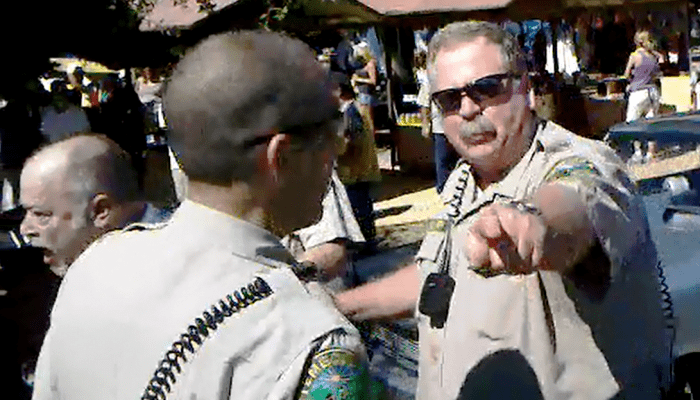
What Is the Difference Between False Arrest and Unlawful Detention in California?
A detention (Terry stop) requires only reasonable suspicion — specific, articulable facts suggesting criminal activity. An arrest requires the higher standard of probable cause — facts sufficient for a reasonable person to believe a crime was committed and this specific person committed it. Both are Fourth Amendment seizures. Both can give rise to civil rights claims under 42 U.S.C. § 1983. The distinction determines which standard the officer needed to meet — and therefore which standard they failed to meet when your rights were violated.
Free case evaluation: (949) 474-1849 | Available 24 hours | jerry@steeringlaw.com
“Arrest” and “Detention” Are Not the Same Thing — and the Difference Matters Enormously
When clients come to my office after a police encounter that went wrong, they almost always use the words “arrested” and “detained” interchangeably. They tell me they were “arrested” when an officer held them on a sidewalk for twenty minutes. They tell me they were “just detained” when they were handcuffed and placed in a patrol car for an hour.
These distinctions are not semantic. Whether you were detained or arrested determines what constitutional standard the officer needed to satisfy to act lawfully. It determines which rights were triggered and which were violated. And it shapes the civil rights claims available to you in court.
In forty years of suing police in California, I have handled hundreds of false arrest and unlawful detention cases. The fundamental question in every one of them is the same: did the officer have what the law required to do what they did?
“The officer’s report will call it a lawful stop. The question my office asks is whether the law actually gave them the right to do it — because in a lot of these cases, it did not.”
The Fourth Amendment Framework — Two Levels of Seizure, Two Different Standards
Both false arrest and unlawful detention are “seizures” under the Fourth Amendment. The Supreme Court has held that a person is seized when, under the totality of the circumstances, a reasonable person would not feel free to leave or to decline the officer’s requests —Florida v. Bostick, 501 U.S. 429 (1991). But the Fourth Amendment recognizes that not all seizures are equal.
There are two levels of seizure — each requiring a different level of legal justification:
Level 1: Detention — Reasonable Suspicion
A brief investigatory stop — called a Terry stop after Terry v. Ohio, 392 U.S. 1 (1968) — is constitutionally permissible if the officer has specific, articulable facts that would lead a reasonable person to suspect criminal activity is afoot. This is the lower standard. But it is not nothing. It is not a hunch. It is not an intuition. It is not based on race, a high-crime neighborhood, or a gut feeling. The facts must be specific and articulable — the officer must be able to explain them.
Level 2: Arrest — Probable Cause
An arrest requires probable cause — a significantly higher standard. Probable cause exists when the totality of the circumstances would lead a reasonable person to believe that a crime has been or is being committed and that the person to be arrested committed it. An arrest based on something less than probable cause is a Fourth Amendment violation — a false arrest — regardless of what the officer’s report says happened.
| Detention (Terry Stop) | Arrest | |
| Legal standard required | Reasonable suspicion — specific, articulable facts suggesting criminal activity | Probable cause — facts sufficient for a reasonable person to believe a crime was committed and this person committed it |
| Purpose | Brief investigatory stop; officer is investigating, not detaining to charge | Custodial; officer is taking the person into custody to be charged with a crime |
| Duration | Limited to the time reasonably necessary to address the original purpose of the stop | Until booking, bail hearing, arraignment, or release — can last hours or days |
| Physical restraint | Minimal; handcuffing or placement in a patrol car may convert a detention to an arrest | Full physical restraint authorized; handcuffing, transport to station, booking |
| Freedom to leave | Not free to leave temporarily, but the detention must end when the purpose is complete | Not free to leave at all until legally released through bail, ROR, or dismissal |
| Your right to refuse | You may decline to answer questions beyond identifying yourself in limited circumstances | You have the right to remain silent; invoke it immediately and clearly |
| Civil rights remedy | § 1983 Fourth Amendment claim for unlawful seizure — lower threshold to prove | § 1983 Fourth Amendment claim for false arrest — must show absence of probable cause |
The table above makes the stakes clear: the difference between a detention and an arrest is not just legal terminology. It is the difference between a standard that is relatively easy to meet and one that requires genuine evidentiary justification. When an officer escalates from a stop to an arrest — by handcuffing you, placing you in a patrol car, or taking you to the station — without crossing that evidentiary threshold, they have committed a constitutional violation.
When a Detention Becomes Unlawful — Three Ways a Terry Stop Goes Wrong
A lawful Terry stop can cross into constitutional violation in three ways. Each creates its own civil rights claim.
1. No Reasonable Suspicion From the Start
If the officer stopped you without specific, articulable facts suggesting criminal activity, the detention was unlawful from the moment it began. The following — individually or in combination — do not constitute reasonable suspicion under established Fourth Amendment case law:
| What does NOT constitute reasonable suspicion | Why courts reject it |
| Being in a high-crime area | Presence in a neighborhood with high crime rates does not give officers the right to stop everyone in that area. Illinois v. Wardlow (2000) held that flight from officers in a high-crime area contributes to reasonable suspicion — but mere presence does not. |
| Appearing nervous around police | Nervousness in the presence of police is not reasonable suspicion. Almost everyone is nervous when a police officer approaches them. Courts have consistently rejected nervousness alone as a justification for a Terry stop. |
| “Blading” or avoiding eye contact | Turning your body away from officers or avoiding eye contact is not suspicious behavior. Attempting to walk away from police — unless you are already lawfully detained — is generally not grounds for a stop. |
| Race or ethnicity alone | Race cannot be the basis for a stop. It can only be considered as part of a specific suspect description — and even then, only when it is part of a detailed, particularized description rather than a general racial category. |
| Gut feeling or intuition | An officer’s hunch — however experienced the officer — is not a substitute for specific, articulable facts. The Supreme Court is clear in Terry v. Ohio: the facts must be articulable, not merely intuited. |
| Prior criminal history | A person’s prior criminal record alone does not constitute reasonable suspicion to stop them on the street. Prior record can be a factor in a totality analysis, but it cannot substitute for present, specific suspicious conduct. |
The question I always ask when evaluating a detention case is simple: what specific conduct did the officer observe that would justify stopping this person, at this moment, in these circumstances? If the answer is “they were in the area” or “they seemed nervous” or “the officer had a feeling” — the detention was unlawful.
2. Prolonging the Stop Beyond Its Purpose
Even if a stop begins lawfully, it becomes an unlawful detention when it lasts longer than necessary to address the original reason for the stop. The Supreme Court addressed this in Rodriguez v. United States, 575 U.S. 348 (2015): the authority for a traffic stop ends when the tasks tied to the traffic infraction are completed. The moment the original purpose of the stop is fulfilled — the license checked, the citation written, the record run — the detention must end unless new, independent reasonable suspicion has developed.
Officers frequently exploit this rule by extending a stop on pretextual grounds — asking unrelated questions, calling for a drug dog, waiting for backup — to extend the time available to find something incriminating. An unlawfully prolonged detention is a Fourth Amendment violation even if the original stop was lawful.
3. Converting a Detention to an Arrest Without Probable Cause
When an officer handcuffs a detained person, places them in a patrol car, or restricts their movement to a degree indistinguishable from custody, the encounter may have crossed the line from a Terry stop into a de facto arrest — requiring probable cause that the officer did not have.
California courts evaluate whether a detention became a de facto arrest based on the totality of the circumstances: the duration of the restraint, the degree of force used, the number of officers present, and whether the restrictions on movement exceeded what a brief investigatory stop requires. Officers who handcuff a person “for safety” without the justification required for an arrest are committing a constitutional violation.
What Makes an Arrest False — The Probable Cause Requirement
A false arrest occurs when a law enforcement officer takes someone into custody without probable cause. Under California law, false arrest is actionable under California Penal Code § 236 (false imprisonment) and as a civil rights violation under 42 U.S.C. § 1983. I have written about the false arrest claim in more detail at steeringlaw.com.
The key legal principle: the probable cause analysis is made at the moment of arrest — based on what the officer knew at that moment, not what was discovered afterward. An arrest made without probable cause does not become lawful because the officer later found evidence of a crime. And an arrest made with probable cause does not become unlawful because the charges were later dismissed. Whether the arrest was lawful is determined at the moment of arrest, full stop.
What About Dismissed Charges?
One of the most common misconceptions I encounter: “The charges were dismissed, so I was falsely arrested.” Not necessarily. Charges can be dismissed for many reasons — insufficient evidence at trial, plea agreements in other cases, prosecutorial discretion — that have nothing to do with whether probable cause existed at the time of arrest. The question is not what happened to the charges. The question is what the officer knew at the moment of arrest — and whether that knowledge was sufficient to establish probable cause. A dismissal creates an inference worth investigating. It does not automatically establish a false arrest claim. What does establish a false arrest claim: evidence that the officer lacked probable cause at the moment of arrest — regardless of what happened to the charges afterward.
Where False Arrests Happen — The Most Common Scenarios in My Practice
| CONTEMPT OF COP | Arrests Made to Punish Protected Conduct |
This is the most common false arrest scenario I see, and the one most closely connected to the rest of my practice. An officer stops someone — or the person questions why they are being stopped. The person asserts their rights: they decline a search, they ask why they are being detained, they record the encounter, they express displeasure in the officer’s direction. The officer arrests them for PC 148(a)(1) (resisting, delaying, or obstructing) or PC 69 (resisting with force). The arrest has nothing to do with a crime. It has everything to do with an officer whose ego was bruised. See our dedicated Contempt of Cop article for the full breakdown of this pattern.
The critical connection to civil litigation: these arrests almost always come with resistance charges. A guilty plea to that charge — even a misdemeanor, even to make it go away — can permanently bar the civil rights lawsuit under the Heck v. Humphrey doctrine. Do not accept any plea in a Contempt of Cop arrest without first understanding the civil consequences.
| TRAFFIC STOPS | Minor Infractions That Escalate Without Cause |
Traffic stops are detentions, not arrests. The officer stops you for a Vehicle Code violation, checks your license and registration, and either issues a citation or releases you. That is the legal limit of a traffic stop.
What makes a traffic stop unlawful: prolonging it beyond its purpose without new independent suspicion; using it as a pretext to investigate unrelated matters; converting it to an arrest without probable cause for a criminal offense. I have handled cases where someone was arrested for a serious crime after a traffic stop for a broken taillight — and the only “evidence” supporting the arrest was the officer’s subjective belief that the driver was nervous.
Nervous is not probable cause. Nervous is not reasonable suspicion for a prolonged stop. And nervous is not grounds to convert a traffic stop into an arrest.
| DOMESTIC CALLS | Wrong Person Arrested at a Domestic Disturbance |
Domestic disturbance calls are particularly prone to false arrests because officers arrive at a chaotic scene with incomplete information and a legal framework that in some circumstances encourages arrest. California law requires law enforcement agencies to develop policies encouraging arrest when probable cause exists — California Penal Code § 13701. But officers must make reasonable efforts to identify the dominant aggressor and consider factors like who was acting in self-defense and any history of abuse in the relationship.
In practice, officers frequently arrest the wrong person — often because they arrive to find one party more visibly upset, or because they accept the first account they hear, or because they want to remove someone from the scene quickly. The person who called the police ends up in handcuffs. The actual aggressor goes home. These cases make strong false arrest claims.
| MISTAKEN IDENTITY | Arrested for Someone Else’s Warrant or Crime |
Mistaken identity arrests occur when an officer arrests someone based on a warrant or suspect description that matches another person — without making reasonable efforts to verify the identification. An officer who stops someone who shares a name and general description with a wanted individual and arrests them without verification has made a Fourth Amendment violation.
These cases are particularly significant when the error is systematic — when a department has a pattern of acting on incomplete warrant information, or of failing to verify identity before making arrests. In those situations, a Monell claim against the department may be available in addition to the individual officer claim.
| STOP-AND-FRISK | Searches and Seizures Beyond What the Law Allows |
During a lawful Terry stop, officers may conduct a pat-down frisk only if they have a reasonable belief that the subject is armed and dangerous —Terry v. Ohio. The frisk is strictly limited to the outer clothing for weapons. Officers cannot reach into pockets, manipulate items felt in clothing, or conduct a general search. These limitations are frequently violated.
When an officer conducts a full search of a person or vehicle without probable cause — using the pretextual justification of a Terry stop — both the search and any resulting arrest may be constitutional violations. Evidence obtained through an illegal search can be suppressed in the criminal case, and the unlawful detention itself gives rise to a civil rights claim.
The Guilty Plea Trap — How a Criminal Plea Can Destroy Your Civil Case
This section deserves its own space because it is the most common, most preventable mistake I see victims of false arrest make.
When you are falsely arrested, the officer almost always charges you with a resistance offense — PC 148(a)(1) or PC 69 — in addition to whatever pretextual charge justified the stop. These resistance charges serve two purposes: they justify the force and the arrest in the criminal proceeding, and — if you are convicted or take a plea — they may bar your civil rights lawsuit under Heck v. Humphrey, 512 U.S. 477 (1994).
The Heck doctrine bars § 1983 civil claims that would necessarily imply the invalidity of a prior criminal conviction. If you plead guilty to resisting the arrest, that plea can be used to argue the arrest was lawful — which is the foundation of your false arrest civil claim.
| Do Not Accept a Plea Without Consulting a Civil Rights Attorney Every disposition of a resistance charge — guilty plea, plea to a lesser offense, diversion program — has potential Heck consequences for your civil rights lawsuit. “Just making it go away” with a misdemeanor plea can make the civil case go away too — permanently. The criminal defense and the civil rights case must be evaluated together from the beginning. My firm handles both simultaneously — the criminal defense designed to protect the civil case, and the civil case built on the facts that emerge in the criminal defense. Do not make any decisions about your criminal case without first understanding the civil consequences. Contact us for a free case evaluation. |
Your Legal Remedies — What You Can Sue For
Federal Civil Rights Claims — 42 U.S.C. § 1983
The primary vehicle for false arrest and unlawful detention claims is 42 U.S.C. § 1983, which allows individuals to sue government officials — including police officers — for violating their constitutional rights under color of law. I have written a detailed breakdown of § 1983 claims atsteeringlaw.com. These claims are filed in United States District Court and can include claims against both individual officers and, under Monell v. Department of Social Services (1978), against the city or county when a policy, custom, or failure to train caused the violation.
California State Law Claims
California Penal Code § 236 defines false imprisonment as the unlawful violation of personal liberty. California tort claims for false arrest and false imprisonment can be filed in state court and may provide remedies beyond what federal § 1983 claims offer in some circumstances. Both federal and state claims can often be pursued simultaneously.
What You Can Recover
| Type | What it covers |
| Economic damages | Medical bills, lost wages, bail costs, property damage, legal expenses directly caused by the unlawful detention or arrest |
| Non-economic damages | Pain and suffering, emotional distress, humiliation, loss of liberty, damage to reputation — these are often the most significant damages in false arrest cases where physical injuries are limited |
| Punitive damages | Available against individual officers when their conduct was malicious or recklessly indifferent to your constitutional rights — not available against municipalities, but may be substantial against individual defendants |
| Attorneys’ fees (42 U.S.C. § 1988) | A prevailing plaintiff in a § 1983 case can require the defendant to pay their attorneys’ fees. This is what makes civil rights litigation economically viable regardless of your resources. |
Our firm obtained a $450,000 recovery for a client falsely arrested by Riverside County deputies who lacked probable cause. We have obtained significant settlements and verdicts for false arrest victims throughout Southern California — Los Angeles County, Orange County, Riverside County, San Bernardino County, San Diego County, and beyond. See.
| The Six-Month Government Claim Deadline — The Deadline That Ends More Cases Than Any Defense Before filing a civil lawsuit against a California city, county, or other government entity for false arrest or unlawful detention, you must file a government tort claim under California Government Code § 911.2. This claim is typically due within six months of the incident. Miss this deadline and you lose the right to sue — permanently. No exceptions. No judicial discretion. The six-month clock starts on the day of the incident — not the day your criminal case resolves, not the day you decide to pursue it, not the day you find an attorney. Federal § 1983 claims have a two-year statute of limitations under California Code of Civil Procedure § 335.1. But the government tort claim requirement for state and local entities is the deadline that most often destroys otherwise viable cases. Contact a civil rights attorney immediately. Not after the criminal case. Now. |
| Falsely Arrested or Unlawfully Detained in Southern California? (949) 474-1849 — Available 24 Hours a Day Free Case Evaluation — No Fee Unless We Recover jerry@steeringlaw.com | steeringlaw.com/free-case-evaluation Law Offices of Jerry L. Steering | 4063 Birch Street, Suite 100 | Newport Beach, CA 92660 Suing the Police in Southern California Since 1984 |
What to Do Immediately After a False Arrest or Unlawful Detention
The steps are the same as for any police misconduct situation, but they carry specific urgency because evidence disappears fast. See our complete for the full framework. Here are the most critical immediate actions:
- Write everything down within hours — not days. Officer names, badge numbers, exact words used, the sequence of events, the location, the time. Memory degrades fast. What you cannot recall at deposition is what opposing counsel exploits.
- Photograph every injury immediately. Then again at 24 hours and 48 hours. This includes any marks from handcuffs, bruises, or any physical contact.
- Secure witness contact information and nearby security footage. Business security cameras, Ring doorbells, and bystander cell phone video are overwritten on automated schedules — often within 24 to 72 hours. Move immediately.
- Save every document. Citations, release papers, bail receipts, court documents, any paperwork from booking. Every piece of paper is evidence.
- Do not give a statement to Internal Affairs or investigators without your attorney. IA investigators work for the department that arrested you. Anything you say can and will be used against you in your criminal case and to defeat your civil claim.
- Do not post about the incident on social media. Everything you say publicly becomes evidence. Contradictions between your social media posts and your sworn testimony will be used against you at trial.
- Do not accept any plea without consulting a civil rights attorney. The Heck doctrine is real, and a misdemeanor plea today can close the door on a significant civil rights claim permanently.
Where We Handle False Arrest and Unlawful Detention Cases
My firm handles false arrest and unlawful detention cases throughout Southern California — Los Angeles County, Orange County, Riverside County, San Bernardino County, San Diego County, Ventura County, Kern County, and Santa Barbara County.
In forty years of practice in these courts, I have seen the same false arrest patterns play out in department after department. The resistance charge on top of the pretextual stop. The domestic disturbance arrest of the wrong party. The traffic stop extended to a fishing expedition. The Contempt of Cop arrest for daring to assert a constitutional right. I know these cases. I know how to build them and how to win them. See.
Frequently Asked Questions — False Arrest and Unlawful Detention in California
A detention (Terry stop) requires reasonable suspicion — specific, articulable facts suggesting criminal activity. An arrest requires probable cause — facts sufficient for a reasonable person to believe a crime was committed and this person committed it. Both are Fourth Amendment seizures, and both can give rise to civil rights claims under 42 U.S.C. § 1983. A detention that escalates to an arrest without crossing the probable cause threshold is a false arrest. A detention made without reasonable suspicion is an unlawful seizure from the start.
Yes. An unlawful detention — a stop made without reasonable suspicion, or prolonged beyond its lawful purpose — is a Fourth Amendment violation and can give rise to a § 1983 civil rights claim. You do not need to be formally arrested to have a claim. If an officer stopped you without specific, articulable facts justifying the stop, or extended a stop beyond its lawful purpose without developing new independent suspicion, your constitutional rights were violated.
Not automatically. The false arrest analysis focuses on whether probable cause existed at the moment of arrest — based on what the officer knew then. Charges can be dismissed for many reasons unrelated to whether probable cause existed. However, a dismissal is a significant fact worth investigating. If the charges were dismissed because no probable cause existed, or because the arrest was pretextual, that supports a false arrest claim. The analysis requires looking at the specific facts known to the officer at the moment of arrest.
Potentially not — and this is the most important thing to understand. Under Heck v. Humphrey (1994), a § 1983 civil rights claim is barred if it would necessarily imply the invalidity of a prior criminal conviction. A guilty plea to a resisting arrest charge can be used to argue the underlying arrest was lawful — which eliminates the false arrest claim. Do not accept any plea in a false arrest case without first consulting a civil rights attorney about the Heck consequences. The criminal and civil cases must be planned together.
A Terry stop — from Terry v. Ohio, 392 U.S. 1 (1968) — is a brief investigatory detention that is lawful when an officer has specific, articulable facts that would lead a reasonable person to suspect criminal activity. Being in a high-crime area, appearing nervous, or trying to avoid police are not sufficient on their own. The facts must be specific, articulable, and tied to observable conduct suggesting a particular crime — not a hunch, a gut feeling, or a demographic characteristic.
Sometimes — but the use of handcuffs during a Terry stop is strictly scrutinized. Courts evaluate whether the degree of restraint during a stop exceeded what the situation reasonably required. If an officer handcuffs someone during a detention without the specific justification required for that level of restraint, the encounter may have crossed from a lawful Terry stop into a de facto arrest requiring probable cause. Being handcuffed and placed in a patrol car, in particular, is often treated as an arrest requiring probable cause.
A Monell claim — from Monell v. Department of Social Services, 436 U.S. 658 (1978) — allows you to sue the city or county directly when a constitutional violation resulted from an official policy, widespread custom, or deliberate failure to train. In false arrest cases, Monell claims arise when the pattern of false arrests reflects departmental policy or practice — systematic profiling, a pattern of Contempt of Cop arrests, a failure to train officers on probable cause requirements. Monell is important because cities have assets; individual officers often do not.
Before filing a civil lawsuit against a California city or county for false arrest or unlawful detention, you must file a government tort claim under California Government Code § 911.2 — typically within six months of the incident. Miss this deadline and you lose the right to sue permanently. Federal § 1983 claims have a two-year statute of limitations under California Code of Civil Procedure § 335.1. The six-month government claim requirement is the deadline that most often ends otherwise viable cases. Contact a civil rights attorney immediately after the incident.
Your Freedom Was Taken Without Legal Cause. That Has Consequences — For the Officers and the Department.
When a police officer arrests you without probable cause, or detains you without reasonable suspicion, they have violated the Fourth Amendment to the United States Constitution. That is not a legal technicality. That is the foundation of American civil liberty — the right to be free from government seizure without legal justification.
In forty years of civil rights litigation in Southern California, I have sued cities, counties, sheriffs, police chiefs, and the United States government for these violations. The law gives you real remedies — compensatory damages, punitive damages against individual officers, and attorneys’ fees from the defendant under 42 U.S.C. § 1988.
But you must act quickly. The six-month deadline runs from the day it happened. The evidence disappears daily. The decision you make about the criminal case today can determine whether the civil case exists tomorrow.
Fight back. Vindication is the goal.
| Call for a Free Case Evaluation — Available 24 Hours (949) 474-1849 jerry@steeringlaw.com | steeringlaw.com/free-case-evaluation Law Offices of Jerry L. Steering 4063 Birch Street, Suite 100, Newport Beach, CA 92660 Suing the Police in Southern California Since 1984 |
About the Author — Jerry L. Steering
Jerry L. Steering is a civil rights attorney and police misconduct specialist who has been suing the police in California since 1984. His practice covers false arrest, unlawful detention, excessive force, malicious prosecution, and civil rights violations — both the criminal defense of the resistance charges that accompany these arrests and the § 1983 civil rights lawsuits against the officers and departments responsible. He has litigated these cases in federal and state courts throughout Los Angeles County, Orange County, Riverside County, San Bernardino County, San Diego County, and the rest of Southern California. Notable results include a $450,000 recovery for a Riverside County false arrest, a $2.9 million settlement against the City of Anaheim, and an $800,000 jury verdict against Garden Grove. He has appeared on NBC Dateline with Lester Holt and ABC Good Morning America with Diane Sawyer. View
Law Offices of Jerry L. Steering | 4063 Birch Street, Suite 100, Newport Beach, CA 92660 | (949) 474-1849 | Available 24 Hours | jerry@steeringlaw.com
Legal citations and primary sources:
- 42 U.S.C. § 1983 — Federal civil rights statute | law.cornell.edu
- 42 U.S.C. § 1988 — Attorneys’ fees in civil rights cases | law.cornell.edu
- California Penal Code § 236 — False imprisonment | leginfo.legislature.ca.gov
- California Penal Code § 13701 — Law enforcement response to domestic violence calls | leginfo.legislature.ca.gov
- California Government Code § 911.2 — Government tort claim deadline | leginfo.legislature.ca.gov

Steering Law is a California-based civil rights and criminal defense firm led by Jerry L. Steering, Esq. The firm focuses on police misconduct cases, including excessive force, false arrest, malicious prosecution, contempt of cop incidents, and 42 U.S.C. §1983 civil rights actions, while also handling serious criminal defense matters. Steering Law is dedicated to protecting clients’ constitutional rights and delivering justice for individuals who have been wronged by law enforcement.