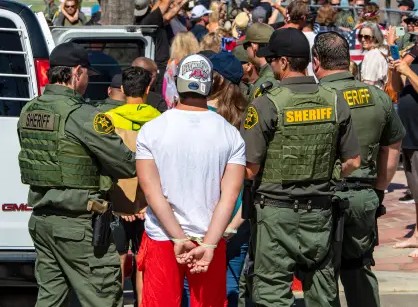
A traffic stop can be stressful, even when you believe you have done nothing wrong. For drivers in Orange County, encounters with law enforcement in cities like Irvine, Newport Beach, Santa Ana, and Anaheim often begin as routine stops but can quickly escalate. Many people walk away from these encounters wondering whether the officer’s behavior was lawful or whether their rights were violated.
Understanding your rights during a traffic stop is critical. Police officers have authority, but that authority has limits. When those limits are crossed, it may constitute police misconduct or even a civil rights violation.
What Police Are Legally Allowed to Do During a Traffic Stop
Under California law and the U.S. Constitution, police officers must have a lawful reason to initiate a traffic stop. This usually means a suspected traffic violation or reasonable suspicion that a crime has occurred.
During a lawful stop, an officer may:
- Ask for your driver’s license, registration, and proof of insurance
- Ask basic questions related to the stop
- Run a records check
- Issue a citation or warning
In some circumstances, officers may ask you to step out of the vehicle. However, their authority does not give them free rein to intimidate, search, or use force without justification.
Your Rights as a Driver in Orange County
If you are stopped by police in Irvine, Newport Beach, Santa Ana, or Anaheim, you still retain important constitutional rights.
You have the right to:
- Remain silent beyond providing identifying information
- Ask why you are being stopped
- Refuse consent to search your vehicle
- Record the interaction, as long as you do not interfere
- Be free from excessive force or intimidation
Exercising these rights should never be met with punishment or retaliation. When officers respond aggressively to lawful behavior, that conduct may cross the legal line.
When Police Conduct During a Traffic Stop Becomes Unlawful
Not every uncomfortable or tense interaction is illegal. However, police conduct during a traffic stop may become unlawful when it violates constitutional protections or uses force that is not objectively reasonable.
Examples of misconduct during traffic stops include:
- Prolonging the stop without legal justification
- Conducting a vehicle search without consent, a warrant, or probable cause
- Using threats or intimidation to coerce compliance
- Ordering occupants out of the car without a valid reason
- Drawing weapons when no immediate threat exists
- Using physical force against a compliant or restrained driver
In Orange County, many police misconduct cases stem from traffic stops that escalate unnecessarily, particularly in situations involving minor violations.
Excessive Force During Traffic Stops
Police are permitted to use force only when it is reasonable and necessary. During a traffic stop, excessive force may include:
- Pulling a driver from the vehicle without cause
- Slamming an individual onto the ground during a nonviolent stop
- Using tasers or pepper spray on compliant individuals
- Continuing to use force after a person is restrained
These actions are especially troubling when the driver or passenger is unarmed and poses no immediate threat. In cities like Santa Ana and Anaheim, where traffic enforcement is frequent, these incidents occur more often than many realize.
Racial Profiling and Discriminatory Stops
Traffic stops are one of the most common settings for racial profiling. When officers stop, question, or search drivers based on race, ethnicity, or appearance rather than behavior, it may constitute a civil rights violation.
Patterns of discriminatory enforcement have been raised across Orange County, including in affluent areas such as Newport Beach and Irvine. Racial profiling during traffic stops is unlawful and can form the basis of a police misconduct or civil rights lawsuit.
Police Brutality vs. Lawful Enforcement
Officers may take control of a situation for safety reasons, but there is a clear difference between lawful enforcement and abuse of authority.
Police conduct may cross the line when:
- Force is used as punishment rather than control
- The response is disproportionate to the alleged violation
- Officers escalate rather than de-escalate
- A driver is harmed after complying with instructions
Determining whether a traffic stop involved police brutality or misconduct often requires reviewing body camera footage, dash cam video, witness testimony, and medical records.
What to Do If Your Rights Were Violated During a Traffic Stop
If you believe police crossed the line during a traffic stop in Orange County, what you do next matters.
You should:
- Seek medical attention for any injuries
- Document injuries and property damage with photos
- Write down everything you remember as soon as possible
- Preserve dash cam or phone recordings
- Collect witness information if available
- Avoid discussing the incident in detail without legal counsel
Claims against police departments and cities often involve strict deadlines and procedural rules under California law.
Holding Police Accountable in Orange County
Police misconduct cases are not just about individual officers. In some cases, liability may extend to the city or department when unlawful conduct is tied to inadequate training, supervision, or policy failures.
An experienced police misconduct attorney can investigate whether misconduct during a traffic stop reflects a broader pattern within a department serving Irvine, Newport Beach, Santa Ana, or Anaheim.
Accountability helps protect not only individual victims, but the community as a whole.
Speak With an Orange County Police Misconduct Lawyer
If your rights were violated during a traffic stop in Orange County, you may have legal options under California and federal civil rights law. An experienced police misconduct lawyer can evaluate whether police conduct crossed the line and pursue justice on your behalf. Standing up for your rights sends a clear message that abuse of authority will not be tolerated, whether it happens on a quiet residential street in Irvine or a busy roadway in Anaheim.

Steering Law is a California-based civil rights and criminal defense firm led by Jerry L. Steering, Esq. The firm focuses on police misconduct cases, including excessive force, false arrest, malicious prosecution, contempt of cop incidents, and 42 U.S.C. §1983 civil rights actions, while also handling serious criminal defense matters. Steering Law is dedicated to protecting clients’ constitutional rights and delivering justice for individuals who have been wronged by law enforcement.