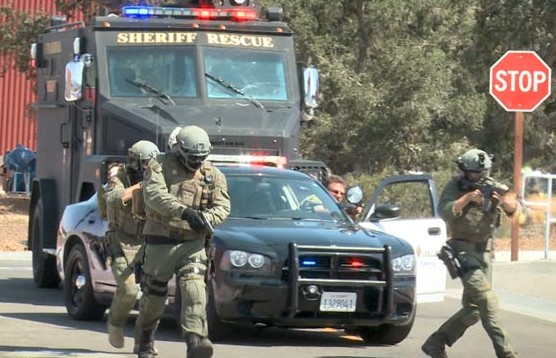
How Do Police Use Resistance Charges to Justify Excessive Force?
When a police officer uses excessive force, they face a problem: the use of force needs to be justified. The solution California police departments have relied on for decades is simple — charge the victim with resisting arrest under PC 148(a)(1) or PC 69. The resistance charge converts the officer from aggressor to responder in the official record. More importantly, if the victim is convicted or takes a plea, the Heck v. Humphrey doctrine may permanently bar their civil rights lawsuit. The criminal charge is both the cover story and the legal trap.
Free case evaluation: (949) 474-1849 | Available 24 hours | jerry@steeringlaw.com
“Resistance” Is the Most Abused Word in California Law Enforcement
I have represented hundreds of clients who were beaten, tased, pepper-sprayed, or brutalized by police. In nearly every case, the police report told the same story: the officer used force because the suspect resisted.
It is a powerful word, “resistance.” It transforms the officer from aggressor into responder. It shifts the narrative so completely that the person lying in a hospital bed with broken ribs looks like the one who caused the problem.
In forty years of civil rights litigation in Southern California, I have learned that “resistance” is often a fiction — a convenient narrative constructed after the fact, in the quiet of the police station, to justify force that was unnecessary, excessive, or outright illegal. I have seen it in Los Angeles County courtrooms, in Orange County federal court, in Riverside and San Bernardino County cases, and in San Diego. The template is the same everywhere.
Here is how it works. Here is how we fight it. And here is why — if you have been charged with a resistance offense after a use-of-force incident — every decision you make in the criminal case will determine whether you ever get justice in civil court.
“Resistance is often a fiction — a convenient narrative constructed after the fact to justify force that was unnecessary, excessive, or outright illegal.”
The Two Statutes — How PC 148 and PC 69 Are Weaponized
There are dozens of statutes officers could theoretically use. In practice, resistance charges in California come down to two. Understanding them — and their limitations — is the foundation of every defense.
| PC 148(a)(1) | California Penal Code § 148(a)(1) — Resisting, Delaying, or Obstructing |
PC 148(a)(1) is the workhorse — what I call “The on my firm’s website. It makes it a misdemeanor to willfully resist, delay, or obstruct a peace officer in the lawful performance of their duties.
The deliberate breadth of the word “obstruct” is the point. Officers use PC 148 to cover everything from actual physical struggle down to asking a question at the wrong moment. It is the all-purpose justification charge.
The element the police report never mentions: PC 148 requires that the officer was acting lawfully at the time. If the officer was using excessive force, making an unlawful arrest, or conducting an illegal search when the “resistance” occurred, the charge cannot stand. The prosecution must prove lawful performance beyond a reasonable doubt — and that is the crack in the statute we drive our defense through.
Penalties: Misdemeanor — up to one year in county jail and a $1,000 fine.
| PC 69 | California Penal Code § 69 — Resisting an Executive Officer |
PC 69 is the more serious version — what I call “The on my site. It applies when someone uses threats or force to deter an executive officer from performing their duties. It is a wobbler — charged as a misdemeanor or a felony depending on the facts and, critically, on the charging practices of the individual DA’s office.
In my experience, PC 69 is charged as a felony significantly more often in San Bernardino County than in Los Angeles or Orange County under similar or identical facts. Prosecutorial culture matters. Knowing how the local DA approaches these cases is part of the strategic knowledge that comes from forty years in these specific courts.
The same lawful performance requirement applies: If the officer was acting unlawfully when the alleged resistance occurred, PC 69 cannot be sustained.
| 2023 Update: Recording Police Is Explicitly Protected Under PC 69 In 2023, the California Legislature added subsection (b) to Penal Code § 69, explicitly clarifying that taking a photograph or recording video of an executive officer in a public place does not, by itself, constitute a violation of the statute. This codifies what courts in the Ninth Circuit had already recognized as a First Amendment right. If you were charged with PC 69 solely for recording police activity in a public place, that charge is legally indefensible. |
Penalties — misdemeanor: Up to one year in county jail, fines up to $10,000.
Penalties — felony: 16 months, 2 years, or 3 years in state prison.
The Resistance Narrative — How the Report Gets Written
The magic trick happens after the incident. The officer — possibly still at the scene, possibly back at the station — sits down and writes the use-of-force report. This report will be the first and often most influential account of what happened. It will be read by supervisors, Internal Affairs, the DA, and eventually the jury.
Officers are extensively trained on use-of-force report writing. They know their reports will be scrutinized. They know what elements need to be documented to withstand review. And they know, because they are taught, that a well-written use-of-force report is what stands between them and discipline, civil liability, and criminal prosecution.
Here is the template — the five-step narrative that appears, with minor variations, in virtually every resistance-justified force case I have handled.
| What the report says | What is actually happening | |
| Step 1 | Lawful contact claimed | The report begins with the officer approaching for an ostensibly lawful purpose — traffic stop, pedestrian check, response to a call. The lawfulness of this initial contact will rarely be questioned at the scene. |
| Step 2 | “Verbal resistance” documented | The subject asks why they are being stopped, declines to answer a question, or expresses frustration. The officer’s report labels this “verbal resistance” or “becoming uncooperative” — neither of which is a crime. |
| Step 3 | “Physical resistance” documented | The subject “tenses arms,” “pulls away,” or “fails to comply with handcuffing commands.” These phrases are boilerplate. In my experience, they appear in use-of-force reports regardless of what actually happened. |
| Step 4 | Force described as response | The officer’s force is described as “objectively reasonable” and “necessary to overcome resistance and gain compliance.” The force is framed as reaction, not action. The officer becomes the responder; the civilian becomes the aggressor. |
| Step 5 | Charges filed | PC 148(a)(1) and/or PC 69 are charged. This serves two purposes: it justifies the force in the criminal proceeding, and — if the civilian is convicted or takes a plea — it blocks the civil rights lawsuit under the Heck v. Humphrey doctrine. |
The problem with Steps 2 and 3 — the verbal and physical resistance — is that they are often fabricated or grossly exaggerated. In case after case, independent witnesses, cell phone video, and security camera footage have directly contradicted what the police report said happened at those steps.
The report is not evidence of what occurred. It is evidence of what the officer needed to have occurred to justify what they did.
Why Body Cameras Do Not Solve This Problem
The most common thing people say when I explain this is: “But what about body cameras? Doesn’t the footage tell the truth?”
In my experience: sometimes yes, sometimes no. Body cameras have changed the practice of police misconduct litigation significantly — they have helped us win cases we would have lost twenty years ago. But they are not the solution people assume they are.
- Camera placement limits what is captured. Body cameras are worn on the chest. They do not capture peripheral action, what happens behind the officer, or what happens after a subject is taken to the ground and out of the camera’s field of view. I have seen cases where the most significant use of force — the blows after the subject stopped moving, the knee on the neck, the boot to the head — happened just outside the camera frame.
- Officers narrate to the camera. Experienced officers know they are being recorded. The verbal narration that accompanies force — “Stop resisting! Stop fighting!” — is often delivered for the benefit of the recording, not because the subject is resisting. I have seen body camera footage in which an officer shouts “stop resisting” to a subject who is motionless on the ground. The shout is for the record.
- Footage can be deactivated or missing. Policies requiring camera activation are inconsistently enforced, and technical malfunctions — real and convenient — occur. The absence of body camera footage when footage should have been captured is itself significant evidence that we argue aggressively.
- The report is written after the officer reviews footage. In many departments, officers are permitted to review body camera footage before writing their reports. This means the written narrative is constructed with knowledge of what the camera captured — and tailored around it. The report does not precede the footage; it follows it.
The bottom line: body cameras are a tool, not a guarantee. Independent witnesses, medical records, and security camera footage from third-party sources remain the most powerful evidence in these cases — precisely because they were not captured by someone with a stake in the outcome.
The Real Purpose of Resistance Charges — Blocking Your Civil Lawsuit
Now we get to the piece that most victims do not understand until it is too late. The resistance charge is not just about the criminal case. It is a legal trap designed to eliminate the civil rights lawsuit.
The Heck v. Humphrey Doctrine
Under the Supreme Court’s decision neck v. Humphrey, 512 U.S. 477 (1994), a person cannot bring a civil rights claim under 42 U.S.C. § 1983 if success in that civil claim would necessarily imply the invalidity of an existing criminal conviction.
Consider the implications. You were beaten by an officer. The officer charged you with PC 148 — resisting arrest — to justify the force. You took a plea to PC 148 because your public defender said it was the easiest way out, or because you could not afford to fight it, or because the prosecutor threatened a felony if you went to trial. Six months later, you try to file a civil rights lawsuit for the excessive force. The defendant moves to dismiss under Check: your civil claim necessarily implies that the arrest was unlawful — but you already pled guilty to resisting it. Your civil case is barred. Permanently.
This is not an accident. This is the intended function of the charge. Police departments, their defense attorneys, and prosecutors who work alongside them understand Heck. The resistance charge is the mechanism by which a victim is converted into a convicted defendant and then stripped of the right to ever hold anyone accountable.
| The Guilty Plea Trap — The Decision That Cannot Be Undone Do not accept a plea to PC 148 or PC 69 without first consulting a civil rights attorney about the Heck consequences. “Just making it go away” to avoid criminal exposure can make your civil rights lawsuit go away too — permanently. Even a misdemeanor conviction with no jail time and a small fine can close the door on a significant civil claim. In the Ninth Circuit, even entry into certain pretrial diversion programs — without a full acquittal or dismissal on the merits — can trigger the Heck bar in some circumstances. Every case is different, but the principle is the same: any disposition short of a full favorable termination on the merits carries risk. The criminal defense and the civil rights case must be planned together, from the beginning, by an attorney who handles both. |
Qualified Immunity — The Second Obstacle
Even when Heck does not bar the civil claim, police officers invoke qualified immunity — the judicial doctrine protecting officers from civil liability unless they violated a “clearly established” constitutional right. I have written about this in detail atsteeringlaw.com. In excessive force cases, the question becomes whether prior Ninth Circuit or Supreme Court precedent specifically addressed the type of force at issue in circumstances similar enough to put the officer on notice.
In my experience, qualified immunity is raised in virtually every case — not because it applies in every case, but because it is the first line of defense and it costs nothing to assert. The key to defeating it is identifying the specific prior cases that established the right at issue and making the argument at the right procedural stage. This is where the specialist knowledge built over decades of federal civil rights litigation matters most.
The deck is stacked. Two layers of protection — the Heck bar and qualified immunity — stand between a police misconduct victim and accountability. But neither is insurmountable. The path through them requires knowing the law, preserving the right issues, and refusing to accept a plea that closes the civil door before you have even opened it.
How We Fight Resistance Charges — Five Defenses That Work
| Defense 1 | Challenge the Lawfulness of the Officer’s Conduct |
This is the foundational defense — and the one that directly bridges the criminal and civil cases. Both PC 148 and PC 69 require that the officer was lawfully performing their duties at the time of the alleged resistance. If the officer was making an unlawful arrest, conducting an illegal search, or using excessive force when the interaction occurred, the resistance charge cannot legally stand.
Attacking the lawfulness of the officer’s conduct in the criminal case simultaneously builds the factual record for the civil rights claim. A finding by a criminal court that the officer was acting unlawfully is powerful evidence in the subsequent § 1983 lawsuit. The two cases are not separate; they are the same dispute viewed from two different angles.
See our dedicated pages on false and excessive force for more on how we build these underlying claims.
| Defense 2 | Self-Defense Against Excessive Force — CALCRIM No. 2672 |
California law is explicit: you have the right to defend yourself against excessive force by a police officer. CALCRIM No. 2672 — the jury instruction given in PC 148 and PC 69 trials — states directly that if an officer uses unreasonable or excessive force, and the defendant uses only reasonable force in self-defense against that excessive force, the defendant is not guilty of the resistance charge.
This is one of the most powerful defenses in our toolkit — and one of the most underused, because many defense attorneys either do not know to assert it or are not comfortable arguing that the police used excessive force in a criminal courtroom. We are. We present the evidence of the officer’s force — medical records, photographs, expert testimony on use-of-force standards — and argue that what the prosecution calls “resistance” was legally justified self-defense.
| Defense 3 | Pitchess Motions — The Officer’s History of Fabrication |
Officers who fabricate resistance narratives often have a documented history of doing exactly that. A Pitchess motion — from Pitchess v. Superior Court (1974) — allows defense counsel to petition the court for access to the officer’s personnel file to review prior complaints of dishonesty, excessive force, or misconduct.
The strategic value of a successful Pitchess motion extends well beyond impeachment. A pattern of prior complaints establishes the foundation for a Monell civil rights claim against the department — the argument that the city or county knew about the officer’s propensity for fabrication and failed to address it. In the criminal case, it undermines the officer’s credibility. In the civil case, it implicates the institution.
| Defense 4 | Independent Evidence — Witnesses, Video, and Medical Records |
The police report is the officer’s version of events. It is not the final word. In case after case, independent evidence has directly contradicted what the resistance narrative claimed.
- Witness testimony: Bystanders who saw what happened and have no stake in the outcome are the most powerful rebuttal to a fabricated resistance narrative. We identify and secure witness statements as early as possible — before memories fade and before they are approached by investigators.
- Security camera and cell phone footage: Third-party video — from businesses, Ring doorbells, traffic cameras, and bystanders’ phones — is the most objective evidence available because it was captured by sources with no interest in the outcome. We move immediately to preserve this footage because it is overwritten on automated schedules, often within 24 to 72 hours.
- Medical records: The nature, location, and severity of injuries tell a story that is difficult to contradict. Injuries inconsistent with the officer’s force description, injuries consistent with being struck after being restrained, or the absence of injuries that should be present if the resistance described actually occurred — all of these are evidence.
- Spoliation letters: We send spoliation letters to the department on the day we are retained, demanding preservation of body-worn camera footage, dashboard camera footage, radio transmissions, CAD logs, and all related materials. Without this letter, footage is often lost to routine retention policies before litigation begins.
| Defense 5 | Challenging the Knowledge Element — People v. Serna (2025) |
in People v. Serna (2025), the California Court of Appeal confirmed that PC 148 requires the defendant to have known — or to have reasonably known — that the person they were interacting with was a peace officer in the performance of their duties. This element creates opportunities for defense in specific factual situations:
- Plainclothes or undercover officers: Where the officer was not in uniform or did not clearly identify themselves, the knowledge element may not be satisfied.
- Chaotic or confusing scenes: Where the interaction was fast-moving, involved multiple officers, or occurred in circumstances where identifying who was an officer and what they were ordering was genuinely difficult, intent to resist may not be established.
- Mental health crisis: Where the defendant was in a mental health crisis at the time of the incident, the willful and knowing elements of both PC 148 and PC 69 may be significantly weakened.
Serna is a recent decision that is still being litigated in trial courts. How broadly courts apply its knowledge requirement is an area of active development, and we monitor new decisions carefully.
What This Means If You Are Facing Charges Right Now
If you are reading this because you were charged with PC 148 or PC 69 after a use-of-force incident — after you were beaten, tased, or injured by a police officer — here is what you need to understand immediately.
| You Have Two Cases. Every Decision in One Affects the Other. The criminal case determines whether you are convicted. A conviction or an unfavorable plea can permanently bar your civil rights lawsuit under the Heck doctrine. The civil rights case determines whether you are compensated for what was done to you — medical expenses, lost wages, emotional distress, punitive damages, and attorneys’ fees under 42 U.S.C. § 1988. These two cases must be evaluated and strategized together, from day one. An attorney who handles only criminal defense cannot advise you on the civil consequences of a plea. An attorney who handles only civil rights cases cannot protect you in the criminal proceeding. My firm handles both — simultaneously. Contact us before making any decisions about your criminal case. |
Do not take a plea because your public defender says it is the fastest way out. Do not plead guilty to a misdemeanor because the prosecutor told you it will not affect your record. Do not assume that an expungement later will undo the Heck consequences now. Every one of these paths has the potential to close the civil door permanently.
For a complete guide to what to do immediately after a use-of-force incident, see our.
| The Six-Month Government Claim Deadline In California, before you can file a civil lawsuit against a city, county, or other government entity for police misconduct, you must file a government tort claim under California Government Code § 911.2. This claim is typically due within six months of the incident. Miss this deadline and you lose the right to sue — permanently. No exceptions. No judicial discretion. This deadline has ended more strong civil rights cases than any legal doctrine or immunity defense. The six-month clock is running from the day of the incident — not from the day your criminal case resolves. Contact a civil rights attorney immediately. |
| Charged With Resisting After Being Beaten by Police in Southern California? (949) 474-1849 — Available 24 Hours a Day Free Case Evaluation — No Fee Unless We Recover jerry@steeringlaw.com | steeringlaw.com/free-case-evaluation Law Offices of Jerry L. Steering | 4063 Birch Street, Suite 100 | Newport Beach, CA 92660 Suing the Police in Southern California Since 1984 |
Where We Handle These Cases
My firm handles PC 148 and PC 69 defense and the related civil rights lawsuits throughout Southern California. We have litigated these cases — on both the criminal defense and the civil rights side — in Los Angeles County, Orange County, Riverside County, San Bernardino County, San Diego County, Ventura County, and Kern County. See for what these cases look like when they are pursued to conclusion.
Results include a $2.9 million settlement against the City of Anaheim, a $1.3 million settlement against Riverside County, and an $800,000 jury verdict against Garden Grove — all in cases where resistance charges were part of what we were fighting through.
Frequently Asked Questions — Resistance Charges and Excessive Force in California
When an officer uses force that is excessive or unlawful, they face a documentation problem — the use of force needs to be justified. The standard solution is to charge the victim with resisting arrest under PC 148(a)(1) or PC 69. These charges reframe the officer as responding to the subject’s conduct rather than acting as the aggressor. More critically, if the victim is convicted or takes a plea, the Heck v. Humphrey doctrine may permanently bar their civil rights lawsuit for the underlying misconduct.
No. Both PC 148(a)(1) and PC 69 require that the officer was lawfully performing their duties at the time of the alleged resistance. An officer using excessive or unreasonable force is not lawfully performing their duties. Additionally, under CALCRIM No. 2672 — the standard jury instruction in these cases — a defendant who uses only reasonable force in self-defense against an officer’s excessive force is not guilty of a resistance charge.
Under Heck v. Humphrey, 512 U.S. 477 (1994), a person convicted of a crime cannot bring a civil rights lawsuit under 42 U.S.C. § 1983 if success in that lawsuit would necessarily imply the invalidity of the criminal conviction. In the police misconduct context: a guilty plea to PC 148 (resisting arrest) may permanently bar a civil rights lawsuit for the underlying false arrest or excessive force. This is why it is essential to consult a civil rights attorney before accepting any plea in a resistance case — the criminal and civil cases must be planned together.
Yes — potentially. If your PC 148 conviction would necessarily imply that the underlying arrest was lawful and the resistance was genuine, then a subsequent civil rights lawsuit for false arrest or excessive force may be barred under the Heck doctrine. “Just making the criminal case go away” with a misdemeanor plea can eliminate the civil claim permanently. Even entry into certain pretrial diversion programs can create Heck complications in the Ninth Circuit. Every case is different, but the principle is consistent: do not resolve the criminal case without first understanding the civil consequences.
A Pitchess motion — from Pitchess v. Superior Court (1974) — allows defense counsel to petition the court for access to a police officer’s personnel records to review prior complaints of dishonesty, excessive force, or misconduct. In resistance charge cases, a Pitchess motion can reveal whether the officer has a documented history of filing false resisting-arrest charges — which directly undermines their credibility in the criminal case and supports a Monell civil rights claim against the department. See our Pitchess and Brady List article for more.
In People v. Serna (2025), the California Court of Appeal confirmed that PC 148 requires the defendant to have known — or reasonably should have known — that the person they were interacting with was a peace officer performing their duties. This knowledge requirement creates defense opportunities in cases involving plainclothes or undercover officers, chaotic multi-officer scenes, and defendants in mental health crisis. Serna is a recent decision still being litigated in trial courts, and its full scope is actively developing.
Before filing a civil lawsuit against a California city or county for police misconduct, you must file a government tort claim under California Government Code § 911.2 — typically within six months of the incident. Miss this deadline and you permanently lose the right to sue, regardless of how strong the case is. Federal § 1983 claims have a two-year statute of limitations under California Code of Civil Procedure § 335.1, but the six-month government claim requirement for state entities is the deadline that most often closes the door. Contact a civil rights attorney immediately after a use-of-force incident.
It depends. Under the Heck v. Humphrey doctrine, a § 1983 civil rights claim is barred if it would necessarily imply the invalidity of a prior conviction. If your conviction is for resisting an arrest that you are now claiming was unlawful, there is a potential Heck conflict. However, if the civil claim can be framed so that it does not necessarily imply the invalidity of the conviction — for example, a claim that the officer used excessive force before any resistance occurred — the civil case may survive. These cases require careful analysis by an attorney who understands both the criminal judgment and the specific constitutional claims at issue.
Fight the Charge. Preserve Your Rights.
Resistance charges are the most abused statutes in California law enforcement. They are the mechanism by which officers justify force, manufacture probable cause, and insulate themselves and their departments from the civil accountability they deserve.
If you were beaten by a police officer and then charged with resisting arrest, you are not just fighting a criminal case. You are fighting for your right to hold the officer and the department accountable in civil court. Every decision in the criminal case — especially a plea — has consequences that extend far beyond the courtroom where the criminal case is heard.
Do not accept the narrative the officer wrote. Do not accept a plea without understanding what it costs you. Do not wait until the six-month deadline has passed.
Fight the charge. Preserve your rights. Vindication is the goal.
| Call for a Free Case Evaluation — Available 24 Hours (949) 474-1849 jerry@steeringlaw.com | steeringlaw.com/free-case-evaluation Law Offices of Jerry L. Steering 4063 Birch Street, Suite 100, Newport Beach, CA 92660 Suing the Police in Southern California Since 1984 |
About the Author — Jerry L. Steering
Jerry L. Steering is a civil rights attorney and police misconduct specialist who has been suing the police in California since 1984. His practice covers both sides of resistance charge cases: criminal defense of PC 148 and PC 69 charges, and civil rights lawsuits under 42 U.S.C. § 1983 for the excessive force and false arrest that preceded them. He has handled hundreds of police misconduct cases in federal and state courts throughout Los Angeles County, Orange County, Riverside County, San Bernardino County, San Diego County, and the rest of Southern California. Notable results include a $2.9 million settlement against the City of Anaheim, a $1.3 million settlement against Riverside County, an $800,000 jury verdict against the City of Garden Grove, and a $750,000 settlement against the City of Torrance. He has appeared on NBC Dateline with Lester Holt and ABC Good Morning America with Diane Sawyer, and has been featured in the Los Angeles Times, The Washington Post, and People Magazine. View
Law Offices of Jerry L. Steering | 4063 Birch Street, Suite 100, Newport Beach, CA 92660 | (949) 474-1849 | Available 24 Hours | jerry@steeringlaw.com
Legal citations and primary sources:
- California Penal Code § 148(a)(1) | leginfo.legislature.ca.gov
- California Penal Code § 69 | steeringlaw.com
- 42 U.S.C. § 1983 — Federal civil rights statute | law.cornell.edu
- 42 U.S.C. § 1988 — Attorneys’ fees in civil rights cases | law.cornell.edu
- California Government Code § 911.2 — Government tort claim deadline | leginfo.legislature.ca.gov

Steering Law is a California-based civil rights and criminal defense firm led by Jerry L. Steering, Esq. The firm focuses on police misconduct cases, including excessive force, false arrest, malicious prosecution, contempt of cop incidents, and 42 U.S.C. §1983 civil rights actions, while also handling serious criminal defense matters. Steering Law is dedicated to protecting clients’ constitutional rights and delivering justice for individuals who have been wronged by law enforcement.