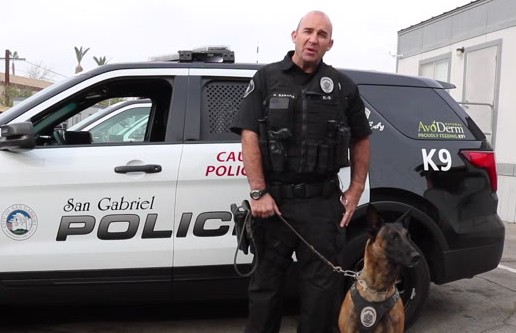
You pull out your phone. You start recording. The officer turns toward you and says, “Put that away.” Or maybe they say nothing — they just walk over, put their hand over the lens, and tell you to move along. Or they grab your arm, take you to the ground, and you wake up in a jail cell charged with obstructing a peace officer.
Here is what California law and federal constitutional law both say about every one of those scenarios: the officer was wrong.
Recording police officers performing their duties in public is a clearly established First Amendment right in California and throughout the Ninth Circuit. It has been for decades. Officers who retaliate against you for exercising that right — by arresting you, seizing your phone, deleting your footage, or using force — have violated your constitutional rights. And as of 2026, that area of law is more settled, more litigated, and more actively enforced than at any point in history.
This blog explains what your rights actually are, where the genuine limits lie, and what you can do when police cross the line.
The Constitutional Foundation: Why Filming Police Is a Protected Right
The First Amendment protects freedom of speech and freedom of the press. Federal courts have consistently interpreted those protections to include the right to gather information about public officials — and recording what law enforcement does in public is one of the most direct ways of doing exactly that.
The Ninth Circuit Court of Appeals — which covers all of California — has held explicitly that there is a First Amendment right to record matters of public interest in public places, including “the right to record law enforcement officers engaged in the exercise of their official duties in public places.” Askins v. Department of Homeland Security, 899 F.3d 1035, 1044 (9th Cir. 2018). That ruling built on Fordyce v. City of Seattle, 55 F.3d 436 (9th Cir. 1995), where the court reversed summary judgment for an officer who assaulted a man and smashed his camera to stop him from filming a protest.
California state law reinforces this. California Penal Code § 148(g) is explicit: photographing, videotaping, or recording police activity in a public space is not, by itself, a violation of the law. Recording alone does not constitute obstruction, delay, or resistance under § 148(a)(1) — the statute officers most commonly invoke when they want to justify a retaliatory arrest.
The right is not limited to journalists. It belongs to everyone. Any person standing on a public sidewalk, watching a traffic stop, an arrest, or any other law enforcement activity has the constitutional right to record it.
What Officers Cannot Do When You Are Filming
When you are lawfully recording police activity in public, officers cannot:
- Order you to stop recording simply because they do not want to be filmed. Personal discomfort with being documented is not a legal basis for any order or arrest.
- Seize or search your phone without a warrant. The Fourth Amendment protects your device. Riley v. California, 573 U.S. 373 (2014), held that police must obtain a warrant before searching a phone seized incident to arrest. Even if you are arrested, the officer cannot access your recordings.
- Delete your footage under any circumstances. The government may never destroy your photographs or videos. Deletion is itself a constitutional violation that can anchor a civil rights lawsuit.
- Arrest you for filming alone. An arrest motivated by the fact that you were recording — absent any other legitimate basis — is a First Amendment retaliation claim under 42 U.S.C. § 1983.
- Physically obstruct your recording. In Irizarry v. Yehia, the Tenth Circuit held that an officer who stood in front of a journalist and shone a flashlight into his camera violated the journalist’s First Amendment rights. Physical interference with lawful recording is itself a constitutional violation.
The Limits: Where the Right to Record Ends
The right to film police is real and broad. It is not unlimited. Understanding where the genuine legal limits fall helps you protect yourself during an encounter.
You cannot physically interfere with an arrest or investigation. Filming does not give you license to stand in the middle of a crime scene, grab an officer’s arm, or obstruct a lawful law enforcement action. If your recording is creating a physical obstacle to what officers are doing — not merely documenting it — you have crossed into territory that can support a legitimate obstruction charge.
You must comply with a lawful order to relocate. If officers establish a legitimate perimeter around a crime scene or active emergency situation, they may order bystanders — including those who are filming — to step back to a specific distance. That order must be based on a genuine law enforcement need, not on the fact that you are recording. If you are ordered to move and you can continue filming from the new position, compliance is your safest course. An officer cannot use a relocation order as a pretext to stop recording entirely.
You cannot use a concealed camera to record private conversations. California Penal Code § 632 requires the consent of all parties to record a private conversation. When police officers are performing their duties in public — a traffic stop, an arrest, a public confrontation — there is no reasonable expectation of privacy, and consent is not required. But recording private conversations between officers in a non-public setting without their knowledge is a different matter and can implicate wiretapping law.
You must maintain a safe distance. “Safe distance” is not a fixed number, and courts recognize that. The standard is whether your position is genuinely interfering with what officers are doing. Standing twenty feet away on a public sidewalk is not interference. Pressing your phone into an officer’s face during a use-of-force incident is.
What Is Happening Right Now: 2025–2026 Developments
The First Amendment right to record police has never been more actively litigated than in 2025 and 2026.
In April 2026, the Ninth Circuit upheld preliminary injunctive relief in L.A. Press Club v. Noem, finding that journalists, legal observers, and protesters subjected to retaliatory force by Department of Homeland Security agents while documenting immigration enforcement in Southern California were likely to succeed on their First Amendment retaliation claims. The court described “an avalanche” of evidence showing a pattern of retaliatory conduct against people exercising their constitutional right to document federal agents in public.
In March 2026, the U.S. Supreme Court denied certiorari in Villarreal v. Alaniz — a case involving a journalist arrested for questioning a public official in what Justice Sotomayor, dissenting, described as a “months-long effort by a police department and district attorney’s office to retaliate against her because they disliked much of her reporting.” The case illustrates how aggressively law enforcement will move against those who document them — and why experience in these cases is not optional.
At the local level, Southern California has seen a significant uptick in civil rights lawsuits arising from protests against federal immigration enforcement in 2025, with multiple plaintiffs alleging that LAPD and LASD officers fired less-lethal projectiles at journalists and bystanders who were recording public law enforcement activity.
The right exists. Officers keep violating it. Courts keep stepping in.
Frequently Asked Questions About Recording Police in California
The federal standard is “objective reasonableness” under the totality of the circumstances, established in Graham v. Connor (1989) and expanded in Barnes v. Felix (2025). California’s state standard under Penal Code § 835a (amended by AB 392, 2019) is stricter: deadly force is permitted only when “necessary” — not merely reasonable — and officers have explicit duties to de-escalate and to intervene when witnessing another officer’s excessive force. In California, you can pursue claims under both federal and state law.
The three factors from Graham v. Connor (1989) are: (1) the severity of the crime at issue; (2) whether the suspect poses an immediate threat to the safety of officers or others; and (3) whether the suspect is actively resisting arrest or attempting to evade arrest by flight. These are not a checklist — they are guideposts for a totality-of-the-circumstances analysis. The immediate threat factor is typically the most heavily weighted.
In Barnes v. Felix, 602 U.S. ___ (2025), the Supreme Court unanimously clarified that the objective reasonableness analysis must consider the officer’s full conduct leading up to the use of force — not just the moment force was applied. This means that if an officer’s reckless actions created the dangerous situation that force was then used to address, that conduct is part of the reasonableness evaluation. Barnes aligns federal law with what California Penal Code § 835a had already required since AB 392 in 2019.
Yes — if the Taser use was not objectively reasonable under the circumstances. Tasing a person who is not actively resisting, who is already subdued, who poses no immediate threat, or who is in a mental health crisis can constitute excessive force under both the Graham standard and California Penal Code § 835a. The Stephenson case — a $5 million verdict in 2025 involving repeated Tasing of a prone, non-resisting individual — illustrates what unreasonable Taser use looks like in a California court. See our dedicated Taser victim attorney page.
Excessive force and wrongful death are not mutually exclusive — when excessive force causes death, the legal claims overlap. A wrongful death claim compensates the surviving family members for the loss of a loved one, in addition to any excessive force claims for the constitutional violation itself. California has specific procedural rules for survival actions (claims on behalf of the deceased) and wrongful death claims (claims on behalf of surviving family). See our wrongful death page for more.
Qualified immunity protects officers from civil liability unless they violated a “clearly established” constitutional right — meaning prior Ninth Circuit or Supreme Court precedent specifically addressed the type of force used in similar circumstances. In excessive force cases, qualified immunity is raised in virtually every case but is not always successful. The more closely the facts of a case match prior case law finding the conduct unconstitutional, the weaker the qualified immunity defense. I have written about qualified immunity in depth at steeringlaw.com.
Before filing a lawsuit against a California city or county for excessive force, you must file a government tort claim under California Government Code § 911.2 — typically within six months of the incident. Missing this deadline permanently eliminates the right to sue. Federal § 1983 claims have a two-year statute of limitations under California Code of Civil Procedure § 335.1. The six-month government claim requirement for state entities is the deadline that most often destroys otherwise viable cases. Contact a civil rights attorney immediately after a use-of-force incident.
Police reports are written to justify the officer’s conduct, not to accurately record what happened. “Resisting” is often the claim that transforms a use-of-force incident into a justified response. Independent evidence — witness testimony, security camera footage, medical records inconsistent with the claimed resistance, and the officer’s own prior history of similar claims — is what we use to challenge that narrative. The resistance charge does not end the excessive force analysis. If the officer was the aggressor, the resistance may have been lawful self-defense under CALCRIM No. 2672.
If They Retaliated Against You for Filming, That Is a Civil Rights Case
Knowing your rights is one thing. Enforcing them is another. If you were arrested, assaulted, had your phone seized, or had your footage deleted because you were recording police activity in California, you may have a viable civil rights claim under both federal and state law.
The Law Offices of Jerry L. Steering has handled First Amendment retaliation cases and police misconduct lawsuits since 1984. We know how these cases are built, what evidence matters, and what it takes to hold an officer accountable in federal court. If it happened to you, call us.
| Call Jerry L. Steering, (949) 474-1849 — Available 24 Hours a Day Free Case Evaluation — No Fee Unless We Recover jerry@steeringlaw.com | steeringlaw.com/free-case-evaluation Law Offices of Jerry L. Steering | Newport Beach, California Serving Orange County, Los Angeles County, Riverside County, San Diego County, and throughout California |
Prior case results do not guarantee or predict similar outcomes in future matters. This article is for informational purposes only and does not constitute legal advice. The State Bar of California does not recognize a specialty in police misconduct.
Sources
- U.S. Constitution, Amendment I — Freedom of speech, press, and assembly.
- Askins v. Department of Homeland Security, 899 F.3d 1035, 1044 (9th Cir. 2018) — First Amendment right to record law enforcement in public.
- Fordyce v. City of Seattle, 55 F.3d 436 (9th Cir. 1995) — Officer who assaulted man filming a protest violated § 1983.
- Riley v. California, 573 U.S. 373 (2014) — Police must obtain a warrant before searching a phone seized incident to arrest.
- Irizarry v. Yehia, No. 21-1247, 2022 WL 2659462 (10th Cir. 2022) — Officer who obstructed journalist’s filming violated First Amendment.
- City of Houston v. Hill, 482 U.S. 451 (1987) — First Amendment protects verbal challenge of police; freedom to oppose police without risking arrest distinguishes free nation from police state.
- Villarreal v. Alaniz, U.S. Supreme Court, cert. denied March 23, 2026, with dissent by Justice Sotomayor — journalist arrested for questioning public official; First Amendment retaliation.
- California Penal Code § 148(g) — Recording police activity in public is not itself a violation of law.
- California Penal Code § 632 — Two-party consent for recording private conversations; does not apply to police performing public duties.
- ACLU — “Recording and Documenting Police and Federal Agents,” updated March 2026. https://www.aclu.org/know-your-rights/recording-and-documenting-police-and-federal-agents
- ACLU of Southern California — “Ninth Circuit Affirms Protesters, Journalists and Legal Observers Are Entitled to First Amendment Protections,” April 2026. https://www.aclusocal.org/press-releases/ninth-circuit-affirms-protesters-journalists-and-legal-observers-are-entitled-to-first-amendment-protections/
- Reporters Committee for Freedom of the Press — “Right to Record Government Officials in Public.” https://www.rcfp.org/reporters-recording-sections/right-to-record/

Steering Law is a California-based civil rights and criminal defense firm led by Jerry L. Steering, Esq. The firm focuses on police misconduct cases, including excessive force, false arrest, malicious prosecution, contempt of cop incidents, and 42 U.S.C. §1983 civil rights actions, while also handling serious criminal defense matters. Steering Law is dedicated to protecting clients’ constitutional rights and delivering justice for individuals who have been wronged by law enforcement.
