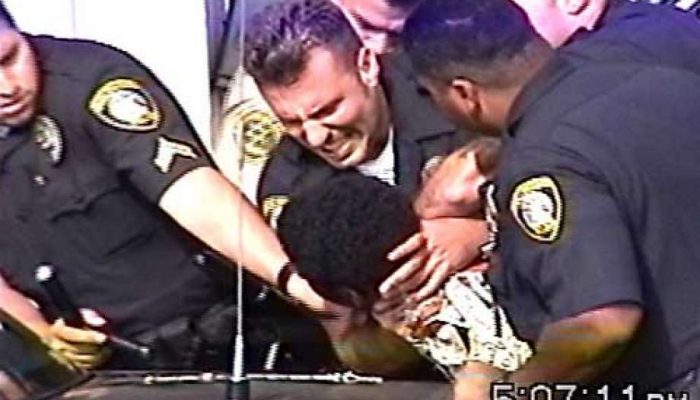
What Is “Contempt of Cop”?
“Contempt of Cop” is the street term for what happens when a police officer arrests someone not because they committed a crime, but because they challenged, questioned, or otherwise bruised the officer’s ego. It is not in the California Penal Code. Disrespecting an officer is not a crime. But officers routinely respond to protected conduct — asserting your rights, recording police, declining a search — by charging innocent people under California Penal Code § 148(a)(1) or § 69. Those charges are the legal mechanism that converts the victim into a defendant.
Free case evaluation: (949) 474-1849 | Available 24 hours | jerry@steeringlaw.com
The Most Common Reason Innocent People Get Arrested in California
I have spent over forty years defending the rights of citizens against police misconduct in Southern California. In that time, I have seen a pattern so consistent it has its own name.
A civilian says something — or doesn’t say something. They ask why they’re being ordered to the ground. They refuse a warrantless search. They pull out their phone to record. They tell an officer he doesn’t have the right to come into their home. None of these things are crimes. Every single one of them is constitutionally protected. And yet, in my four decades of practice, I have watched police officers respond to each of them with the same tactic: arrest the person, charge them with a “resistance offense,” and shift the blame from the officer’s conduct to the civilian’s attitude.
The street term for this is “Contempt of Cop.” The more accurate legal description is: a bogus arrest, brought to punish protected conduct and — critically — to insulate the officer from a civil rights lawsuit.
I have a dedicated article on this phenomenon at steeringlaw.com. This blog covers the mechanics: what Contempt of Cop looks like, which statutes are used to execute it, what your defenses are, and what you can do about it.
“The verbal challenge is used after the fact to transform a victim into a defendant. That is not law enforcement. That is retaliation.”
What “Contempt of Cop” Actually Is
“Contempt of Cop” is not a formal legal term. You will not find it in the California Penal Code. It refers to the informal practice by which officers arrest civilians for conduct that offends the officer’s sense of authority rather than violating any law.
The “offense” can take any number of forms. I have represented clients whose only crime was one of the following:
- Asserting a constitutional right — telling an officer they do not have the right to enter your home without a warrant, or that you are exercising your right to remain silent
- Asking a question — “Why are you ordering me to do that?” is not obstruction. It is a question. Officers who treat it as a challenge are the problem, not the person asking.
- Declining to consent to a search — you have the absolute right to refuse consent to a search. Exercising that right is not evidence of guilt, and it is not obstruction.
- Recording police activity in a public place — this is a clearly established First Amendment right throughout the Ninth Circuit. An arrest for recording police is a First Amendment violation.
- Expressing displeasure, loudly — yelling at a police officer is not a crime. Calling an officer names is not a crime. Offensive speech directed at a government official is constitutionally protected.
Officers with fragile egos perceive all of these as challenges to their authority. And when that happens, the machinery of the criminal justice system gets used — not to enforce the law — but to punish the civilian for failing to comply without question.
How a Contempt of Cop Encounter Escalates — Step by Step
These incidents do not start with an officer walking up to someone and hitting them. They escalate. And the escalation follows a pattern I have seen hundreds of times.
| Step | What happens | What is actually happening |
| 1 | Officer contact | An officer stops or approaches a civilian — lawfully or otherwise |
| 2 | Civilian asserts rights | The civilian questions the order, declines a search, records the encounter, or verbally expresses displeasure — all constitutionally protected conduct |
| 3 | Officer perceives challenge | The officer interprets the protected conduct as an affront to authority. This is the moment the situation stops being about law enforcement and starts being about ego |
| 4 | Officer escalates | Yelling, physical contact, orders to get on the ground — often accompanied by “Stop resisting!” directed at someone who has not yet physically resisted |
| 5 | Civilian responds | The civilian, confused or frightened, may pull back, argue, or fail to comply instantly. Any of these reactions will later be called “resistance” |
| 6 | Force used | The officer strikes, tases, or forcibly subdues the civilian. The official report will describe this as necessary force in response to resistance |
| 7 | Arrest made | The civilian is arrested — not for the original interaction, but for the resistance that was manufactured in steps 4 through 6 |
| 8 | Charges filed | PC 148(a)(1), PC 69, or battery on a peace officer charges are filed. These are the legal tools that convert the victim into the defendant — and, if the civilian is convicted, into someone who cannot sue |
The critical moment in this sequence is Step 3 — when the officer decides to interpret protected conduct as a challenge. Everything that follows is a consequence of that decision. The force, the arrest, the criminal charges — all of it flows from an officer choosing to treat a constitutional right as an insult.
The Two Statutes Officers Use — PC 148 and PC 69
When officers execute a Contempt of Cop arrest, they do not charge the civilian with “being disrespectful.” They reach for specific penal code sections that are vague enough to cover almost any interaction. These are the two most abused statutes in California police misconduct cases.
| PC 148(a)(1) | California Penal Code § 148(a)(1) — Resisting, Delaying, or Obstructing an Officer |
This is the workhorse of the Contempt of Cop toolkit — and the most abused statute in the California Penal Code. On my firm’s website, I call it “The It makes it a misdemeanor to “willfully resist, delay, or obstruct” an officer in the performance of their duties.
The problem is the word “obstruct.” Courts have interpreted it broadly enough that officers regularly use PC 148 to arrest people for conduct that is unambiguously constitutionally protected. Verbally questioning an order. Asking why. Failing to comply immediately. All of this has been charged under PC 148 against people who committed no crime.
| What the prosecution must actually prove under PC 148 1. The officer was lawfully performing their duties. If the officer was making an unlawful arrest, conducting an illegal search, or using excessive force, you cannot be convicted of obstructing them. This is the most powerful defense in PC 148 cases — and the one that connects directly to the civil rights claim. 2. You knew the person was a peace officer. Not usually contested when the officer was in uniform. 3. You willfully resisted, delayed, or obstructed. “Willfully” means intentionally — not accidentally. Stumbling, jerking away from a painful hold, or reflexively reacting to pain does not satisfy this element. |
Penalties for PC 148(a)(1): Misdemeanor. Up to one year in county jail and/or a fine up to $1,000.
| PC 69 | California Penal Code § 69 — Resisting an Executive Officer with Force or Violence |
PC 69 is the felony version — and I have written extensively about it atsteeringlaw.com. It applies when someone uses threats or force to deter an executive officer from performing their duties. Where PC 148 is a misdemeanor, PC 69 is a “wobbler” — it can be filed as a misdemeanor or a felony, and the charging decision is left to prosecutorial discretion.
In practice, PC 69 is deployed in the more serious Contempt of Cop cases — where the officer used substantial force and needs a felony charge to justify it, or where the department wants a more serious charge to give them more leverage in pressuring a plea.
| Important: PC 69(b) — Recording Police Is Explicitly Protected In 2023, the California Legislature added subsection (b) to Penal Code § 69, explicitly clarifying that taking a photograph or recording a video of an executive officer in a public place does not, by itself, constitute a violation of the statute. This matters because recording police had already been recognized as a First Amendment right in courts throughout the Ninth Circuit. The 2023 amendment put it directly in the statute. If you were arrested for recording police activity in California, that arrest is almost certainly unlawful. |
Penalties for PC 69 — misdemeanor: Up to 1 year in county jail, fines up to $10,000.
Penalties for PC 69 — felony: 16 months, 2 years, or 3 years in state prison.
Note on charging disparities: In my experience, PC 69 is filed as a felony significantly more often in San Bernardino County than in Los Angeles or Orange County, under the same or similar facts. Prosecutorial culture varies by jurisdiction — which is one more reason why knowing your county matters.
Related Charges Often Stacked On Top
Contempt of Cop arrests rarely come with a single charge. Officers pile on to increase leverage:
- PC 240 / 241(c) — Assault on a peace officer
- PC 242 / 243(b) — Battery on a peace officer
- PC 148.9 — Providing false identification to an officer
The stacking strategy is not about justice. It is about pressure. The more charges there are, the more likely a civilian will accept a plea to one of the lesser offenses rather than fight them all. And a plea — even to a single misdemeanor PC 148 — has consequences that extend far beyond the case itself.
Contempt of Cop in Action — The Daniele Watts Incident
| Real-World Example: Los Angeles, 2014 Actress Daniele Watts and her boyfriend were sitting in their car in Los Angeles when police received a call about the couple. Officers arrived and found them doing nothing wrong. An officer asked Watts for her name. She declined — correctly. In California, there is no general obligation to identify yourself to police outside of specific circumstances like a lawful traffic stop or an arrest. Courts have held this since In re Gregory S. (1980) and People v. Quiroga (1993). The officer insisted she was wrong. He told her she had to identify herself. She continued to decline. He handcuffed her, placed her in his patrol car, and threatened her with PC 148 — all while claiming “probable cause” for conduct that was not illegal. The officer was wrong on the law. The arrest — or detention — was unlawful. And the driving force behind it was not a crime. It was an officer who did not like being told no. This is the Contempt of Cop mechanism in its purest form: an enforcement action taken not because the law was violated, but because the officer’s authority was questioned. |
Why the Criminal Case and the Civil Case Are Inseparable
This is the piece that most people do not understand — and it is the most important thing in this entire blog.
If you were arrested in a Contempt of Cop situation, you likely have two cases. A criminal case — the PC 148 or PC 69 charge — and a potential civil rights lawsuit for the false arrest, excessive force, or First Amendment violation. These two cases are directly connected, and a decision in one affects the other.
| The Guilty Plea Trap — Do Not Make This Mistake If you plead guilty to a PC 148 or PC 69 charge — even to a misdemeanor, even with an agreement to expunge the record later — you may be legally precluded from bringing a civil rights lawsuit for the very conduct that led to your arrest. Here is the mechanism: Under the Heck v. Humphrey doctrine, a civil rights plaintiff cannot bring a § 1983 claim if the claim would necessarily imply the invalidity of a prior criminal conviction. If you pled guilty to resisting arrest, that plea can be used to argue your arrest was lawful — which is the foundation of the civil case. “Just make it go away” is not a strategy. A misdemeanor conviction for resisting arrest follows you forever — it affects employment background checks, professional licensing, security clearances, and immigration status. Do not accept any plea in a Contempt of Cop criminal case without first consulting a civil rights attorney about the effect on your potential civil claim. Ideally, the same attorney handles both. |
My firm handles both sides of these cases simultaneously — the criminal defense and the civil rights lawsuit. The criminal defense strategy is informed by the civil case we are building. The civil case is protected by the outcome of the criminal defense. That integrated approach is the only way to protect the full scope of what you are entitled to.
Your Legal Defenses to Contempt of Cop Charges
Defense 1 — The Officer Was Not Lawfully Performing Their Duties
This is the most fundamental and most powerful defense to a PC 148 charge. The prosecution must prove the officer was lawfully performing their duties at the time of the alleged resistance. If the officer was making an unlawful arrest, conducting an illegal search, or using excessive force at the moment the “resistance” occurred, you cannot be convicted of obstructing them.
California courts have consistently held that one has the right to resist an unlawful arrest — though physical resistance carries its own risks and I advise against it strongly. More importantly, the lawfulness of the officer’s conduct is the threshold question in the criminal case and the central issue in the civil case. A successful criminal defense on this ground creates the foundation for the civil claim.
Defense 2 — Your Conduct Was Constitutionally Protected Speech
Verbally challenging police — yelling, questioning authority, expressing displeasure, even cursing at an officer — is constitutionally protected First Amendment speech. It is not resisting. It is not obstructing. Officers are trained professionals who are expected to encounter verbal opposition and not make it personal.
If you were arrested solely for what you said — not for any physical conduct — your charges should be dismissed. A First Amendment retaliation claim under 42 U.S.C. § 1983 may also be available if the arrest was made specifically to punish your protected speech.
Defense 3 — You Did Not Act Willfully
PC 148 requires willful conduct — you acted on purpose, with awareness of what you were doing. Accidental, reflexive, or involuntary reactions do not satisfy this element. If you stumbled during a takedown, jerked away from a painful hold, or reflexively moved in response to pain or surprise, you lacked the required intent for a PC 148 conviction.
Defense 4 — The Pitchess Motion: Exposing the Officer’s History
A Pitchess motion — named for Pitchess v. Superior Court (1974) — allows defense attorneys to petition the court for access to a police officer’s personnel file to review prior complaints of dishonesty, excessive force, or fabrication of evidence. I have written a more detailed breakdown of Pitchess motions and the related Brady list process at steeringlaw.com.
In Contempt of Cop cases, a Pitchess motion can be the difference between conviction and dismissal. If the officer has a documented history of filing false resisting-arrest charges, of excessive force complaints, or of misconduct findings, that history is directly relevant to your case — both as evidence of a pattern in the criminal proceeding and as support for a Monell civil rights claim against the department.
Your Civil Rights Claims — Suing for a Contempt of Cop False Arrest
The criminal case determines whether you are convicted. The civil case determines whether you are compensated for what was done to you. Both matter. Here is the civil side.
What You Can Sue For
- False arrest / unlawful seizure — Fourth Amendment violation under 42 U.S.C. § 1983 if the arrest lacked probable cause
- Excessive force — Fourth Amendment violation if force used during the arrest was objectively unreasonable. See our excessive force page for more.
- First Amendment retaliation — if the arrest was made in response to constitutionally protected speech or recording
- Malicious prosecution — if criminal charges were filed without probable cause and later resolved in your favor
- Monell claim against the city or county — if the Contempt of Cop conduct reflects a departmental policy, custom, or failure to train
Damages Available
- Compensatory damages: medical expenses, lost wages, emotional distress, damage to reputation
- Punitive damages: available against individual officers whose conduct was malicious or recklessly indifferent
- Attorneys’ fees under 42 U.S.C. § 1988: a prevailing plaintiff can require the defendant to pay their legal fees — this is what makes civil rights litigation economically viable
| The Six-Month Deadline — Act Now, Not Later Before filing a civil lawsuit against a California city or county for police misconduct, you must file a government tort claim under California Government Code § 911.2. This claim typically must be filed within six months of the incident. Miss this deadline and you lose the right to sue — permanently. No judicial discretion. No exceptions. I have seen strong Contempt of Cop cases — clear liability, documented injuries, video evidence — go nowhere because the victim waited too long. Federal § 1983 claims have a two-year statute of limitations under California Code of Civil Procedure § 335.1, running from the date of the incident. But state law claims and the government tort claim requirement are the traps that most often close the door. If something happened to you — recently or within the last several months — call a civil rights attorney this week. |
| Arrested for “Contempt of Cop” in Southern California? (949) 474-1849 — Available 24 Hours a Day Free Case Evaluation — No Fee Unless We Recover jerry@steeringlaw.com | steeringlaw.com/free-case-evaluation Law Offices of Jerry L. Steering | 4063 Birch Street, Suite 100 | Newport Beach, CA 92660 Suing the Police in Southern California Since 1984 |
What to Do If You Are Caught in a Contempt of Cop Encounter
This advice is specific to the Contempt of Cop dynamic — situations where the encounter is escalating over attitude rather than conduct, and where the officer appears to be moving toward an arrest that has nothing to do with a crime.
- Comply physically. Do not resist. I know how infuriating it is to be ordered to the ground for nothing. Comply anyway. Physical resistance is the one thing that will be used against you in every forum — criminal and civil. The fight happens in court, not on the street.
- Keep talking to a minimum. You can say: “I am exercising my right to remain silent.” You can say: “I do not consent to searches.” Beyond that, stop. Anything you say will appear in the police report, interpreted to your disadvantage.
- Record if you safely can. California law protects your right to record police in public. If you can record safely without escalating the situation, do it. But do not put yourself in danger to get footage.
- Do not post about the incident on social media. Anything you say publicly becomes evidence. Contradictions between your social media posts and your later legal claims will be exploited.
- Document everything immediately after. Injuries, officer names and badge numbers, witness contact information, nearby security cameras. Do it within hours while the details are fresh.
- Contact a civil rights attorney before making any decisions about the criminal case. Specifically: before accepting any plea. A guilty plea to PC 148 or PC 69 can eliminate your civil rights case. The two cases must be evaluated together.
Where We Handle Contempt of Cop Cases
My firm handles Contempt of Cop cases — both the criminal defense and the civil rights lawsuit — throughout Southern California. We have litigated these cases in Los Angeles County, Orange County, Riverside County, San Bernardino County, San Diego County, Ventura County, and Kern County.
See our case results for what Contempt of Cop and false arrest cases look like when pursued to conclusion.
Frequently Asked Questions — Contempt of Cop and False Arrests in California
“Contempt of Cop” is the informal term for arrests made not because the person committed a crime, but because they challenged, questioned, or failed to immediately comply with a police officer’s demands. Disrespecting an officer is not a crime. Asserting your constitutional rights, recording police, declining a search, or verbally questioning an officer’s authority are all protected conduct. When officers respond to protected conduct with an arrest, the charges filed — typically PC 148 or PC 69 — are what constitute the Contempt of Cop mechanism.
Generally, no. California does not have a general “stop and identify” law that requires civilians to provide identification during a street encounter. Courts have held since In re Gregory S. (1980) and People v. Quiroga (1993) that it is not a crime to refuse to identify yourself to police in most circumstances. There are exceptions: lawful traffic stops and post-arrest booking require identification. But absent those specific circumstances, declining to give your name to a police officer on the street is not obstruction.
Yes — potentially. If the arrest lacked probable cause, you may have a false arrest claim under 42 U.S.C. § 1983. If the arrest was in response to constitutionally protected speech or recording, you may have a First Amendment retaliation claim. If excessive force was used, a Fourth Amendment excessive force claim. The critical caveat: if you accepted a plea to the criminal charges, that plea may limit or eliminate your civil claim. Contact our office before making any decisions about the criminal case.
It can — and often does. Under the Heck v. Humphrey doctrine, a § 1983 civil rights claim that would necessarily imply the invalidity of a prior criminal conviction is barred until the conviction is overturned. A guilty plea to resisting arrest can be used to argue the arrest was lawful — which is the foundation of the civil false arrest claim. This is why it is essential to consult a civil rights attorney before accepting any plea in a Contempt of Cop case. The criminal plea and the civil case must be evaluated together.
Yes. Recording police activity in a public place is a clearly established First Amendment right in the Ninth Circuit and throughout California. In 2023, the California Legislature added PC 69(b) to explicitly clarify that recording or photographing an executive officer in a public place does not, by itself, constitute a violation of § 69. An arrest solely for recording police is almost certainly an unlawful arrest and a First Amendment violation. Contact us if you were arrested for recording police.
A Pitchess motion — from Pitchess v. Superior Court (1974) — allows defense attorneys to petition the court for access to a police officer’s personnel records to review prior complaints of dishonesty, excessive force, or fabrication of evidence. In Contempt of Cop cases, a Pitchess motion can reveal a pattern of prior similar conduct by the same officer, which is powerful evidence in both the criminal defense and the civil rights case. See our Pitchess and Brady List article for more.
In California, before filing a lawsuit against a city or county for police misconduct, you must file a government tort claim under California Government Code § 911.2 — typically within six months of the incident. Missing this deadline permanently eliminates the right to sue, regardless of how strong the case is. Federal § 1983 claims have a two-year statute of limitations under California Code of Civil Procedure § 335.1. Contact a civil rights attorney immediately — do not wait to see how the criminal case resolves.
PC 148(a)(1) makes it a misdemeanor to willfully resist, delay, or obstruct an officer in the lawful performance of their duties. It is a catch-all charge used in the vast majority of Contempt of Cop arrests. PC 69 is more serious — it applies when someone uses threats or force against an executive officer and can be charged as either a misdemeanor or a felony. In practice, PC 69 is used in cases involving more significant physical altercations, and it is charged as a felony more aggressively in some counties (notably San Bernardino) than in others.
Fight Back. You Have Rights.
“Contempt of Cop” is not a law. Questioning authority is not obstruction. Recording police is not resisting. Asserting your rights is not a crime.
But the system will try to treat all of them as crimes — through PC 148, PC 69, and every related charge the DA’s office can stack on. The goal is a plea. A plea that closes the criminal case, exposes you to a record that follows you for years, and eliminates the civil rights lawsuit you would otherwise have.
Do not accept that plea without understanding what you are giving up. Do not give a statement to Internal Affairs. Do not assume the police report tells the truth. And do not wait — the six-month government claim deadline is running right now.
Fight back. Vindication is the goal.
| Call for a Free Case Evaluation — Available 24 Hours (949) 474-1849 jerry@steeringlaw.com | steeringlaw.com/free-case-evaluation Law Offices of Jerry L. Steering 4063 Birch Street, Suite 100, Newport Beach, CA 92660 Suing the Police in Southern California Since 1984 |
About the Author — Jerry L. Steering
Jerry L. Steering is a civil rights attorney and police misconduct specialist who has been suing the police in California since 1984. His practice covers both sides of Contempt of Cop cases: criminal defense of bogus PC 148 and PC 69 charges, and civil rights lawsuits against the officers and municipalities responsible. He has handled hundreds of police misconduct cases in federal and state courts throughout Los Angeles County, Orange County, Riverside County, San Bernardino County, San Diego County, and the rest of Southern California. Notable results include a $2.9 million settlement against the City of Anaheim, an $800,000 jury verdict against Garden Grove, and a $750,000 settlement against the City of Torrance. He has appeared on NBC Dateline with Lester Holt and ABC Good Morning America with Diane Sawyer. View
Law Offices of Jerry L. Steering | 4063 Birch Street, Suite 100, Newport Beach, CA 92660 | (949) 474-1849 | Available 24 Hours | jerry@steeringlaw.com
Legal citations and primary sources:
- California Penal Code § 148(a)(1) — Resisting, Delaying, or Obstructing | leginfo.legislature.ca.gov
- California Penal Code § 69 — Resisting an Executive Officer | steeringlaw.com
- 42 U.S.C. § 1983 — Federal civil rights statute | Cornell Law School LII
- California Government Code § 911.2 — Government tort claim deadline | leginfo.legislature.ca.gov

Steering Law is a California-based civil rights and criminal defense firm led by Jerry L. Steering, Esq. The firm focuses on police misconduct cases, including excessive force, false arrest, malicious prosecution, contempt of cop incidents, and 42 U.S.C. §1983 civil rights actions, while also handling serious criminal defense matters. Steering Law is dedicated to protecting clients’ constitutional rights and delivering justice for individuals who have been wronged by law enforcement.
