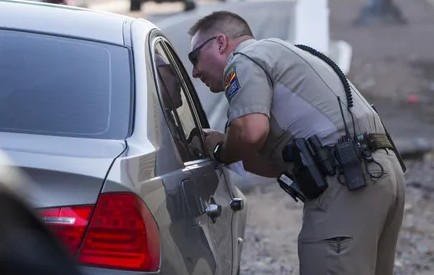
What Do You Do After Police Misconduct in California?
Get medical attention. Document everything. Keep quiet with police and investigators. Secure witness contact information and nearby security footage. Contact a civil rights attorney within days — not weeks — because California’s government claim deadline can be as short as six months from the incident (California Government Code § 911.2). Miss that window and you lose your right to sue forever, regardless of how clear the misconduct was.
Free case evaluation: (949) 474-1849 | Available 24 hours a day | jerry@steeringlaw.com
You Were Just Beaten or Falsely Arrested. Here Is What You Need to Know Right Now.
If you are reading this because you or someone you care about was just beaten by police, tased, pepper sprayed, falsely arrested, or otherwise abused by a law enforcement officer — I want to give you the same advice I would give a close friend.
I have been suing the police in California since 1984. In forty-plus years of civil rights litigation, I have seen strong cases destroyed — not by bad facts, but by mistakes made in the first 24 to 72 hours after an incident. Evidence gone. Witnesses lost. Statements used against the victim. Six-month deadlines missed.
What you do right now is as important as what happened to you.
I am also going to tell you something that most attorneys won’t say directly: the system is not designed to help you. Police reports are written to protect the officer. Internal Affairs exists to protect the department. The District Attorney’s office will often prosecute you for a fabricated “resistance offense” specifically to prevent you from suing. Courts have expanded police immunity to levels that would shock most Americans. I wrote about this in detail in my article “Why You (Almost) Have No Rights In America” — it is not hyperbole.
But there is a path to justice. I know where it is because I have walked it for forty years. Here is what you need to do.
| STOP: Read This Before Anything Else — The Six-Month Deadline In California, before you can sue a city, county, or other government entity for police misconduct, you must first file a formal government tort claim with that entity. Under California Government Code § 911.2, you typically have only six months from the date of the incident to file this claim. If you miss this deadline — even by one day — you lose your right to sue forever. It does not matter how clear the misconduct was. It does not matter how serious your injuries are. The deadline is the deadline. This is the single most common reason that legitimate police misconduct cases cannot be pursued. The evidence was there. The facts were there. The victim waited too long. Call a civil rights attorney this week. Not next month. This week. |
Understanding What Just Happened to You — The “Contempt of Cop” System
Before I walk you through the specific steps, you need to understand the game that may have just been played on you — because it will affect every decision you make going forward.
When police officers use excessive force on someone, or make a bad stop, or violate someone’s constitutional rights, they have a problem. They used force — or worse. That needs to be justified. So here is what they do: they arrest you. They charge you with a “resistance offense” — California Penal Code § 148(a)(1) (“resisting, delaying, or obstructing” an officer) or California Penal Code § 69 (resisting with force, a felony). These statutes are so vague, so broadly written, that police officers can almost always claim that any innocent person somehow “resisted” or “delayed” them.
This is not an accident. It is a tactic. If you are convicted of one of these resistance offenses, you are generally legally precluded from suing the police for the exact misconduct that they committed against you. The police know this. The DA’s office knows this. The courts know this.
This is what I call the “Contempt of Cop” system. It operates when a civilian verbally questions, challenges, or protests a police officer’s actions — which is constitutionally protected behavior — and the officer retaliates. The arrest and the criminal prosecution are not the end of the abuse. They are the continuation of it, by other means.
| Why This Matters for Your Civil Rights Case If you have been charged with a resistance offense following the incident — Cal. Penal Code § 69, § 148(a)(1), battery on a peace officer, or similar charges — your criminal case and your civil rights case are directly connected. A conviction or a guilty plea can destroy your civil claim. Our firm handles both sides of this problem: defending bogus resistance offense cases and suing the police for the underlying misconduct. Do not make any decisions about your criminal case without understanding how it affects your civil rights claim. |
What To Do — Step by Step
| Step 1 | Get Medical Attention — Now, Not Later |
Your physical safety comes first. But there is a legal dimension to this step that matters enormously for your case.
- Go to the emergency room or urgent care today. Do not wait. Adrenaline masks injury. Fractures, internal bleeding, and traumatic brain injuries frequently present hours after an incident. If you were beaten or subjected to a Taser, you need to be evaluated.
- Tell the doctor everything. Every symptom — headache, dizziness, pain anywhere, anxiety, difficulty breathing. Say it all out loud so it gets into your medical record. That record is evidence. It links your physical condition to the incident at a specific date and time.
- Do not tell the treating physician “I’m fine” or “it’s not that bad.” That statement can and will appear in your medical record, and opposing counsel will use it at trial to argue that your injuries were minor.
- Keep every receipt, every bill, every document related to your medical treatment. Lost wages. Transportation costs. Everything.
| Step 2 | Photograph and Document Everything Immediately |
Evidence in police misconduct cases disappears fast. Body camera footage gets overwritten. Witnesses leave. Bruises peak at 24 to 48 hours and then fade. You have a very short window.
- Photograph every injury right now. Every bruise, laceration, abrasion, swelling, and mark on your body. Then photograph again in 24 hours and again in 48 hours — bruising often darkens and spreads significantly after the initial incident.
- Photograph your wrists if you were handcuffed. Photograph any torn clothing. Photograph the location of the incident, including street signs, landmarks, and anything that establishes where you were.
- Write down everything while your memory is fresh. The time. The location. The names, badge numbers, and physical descriptions of every officer involved. What they said. What you said. The sequence of events. Do this within hours — not days. Memory degrades, and you will be asked to testify to these details under oath.
- Secure security camera footage immediately. Walk or drive to every business and home near the location of the incident — gas stations, restaurants, banks, pharmacies, Ring doorbells. Ask them in person to preserve their footage. Do not wait for a subpoena. Digital footage is overwritten on automated cycles, often within 24 to 72 hours. Once it is gone, it is gone forever.
| Step 3 | Get Witness Contact Information |
Bystander witnesses are often the difference between a case that wins and a case that doesn’t. Police reports are written from the officer’s perspective and are designed to justify what the officer did. An independent witness has no stake in the outcome.
- If there are witnesses still on scene, approach them calmly and ask for their name and phone number.
- If someone is reluctant to give their name, ask if they would be willing to speak with an attorney.
- If someone captured the incident on their cell phone, ask them not to delete it and ask for their contact information.
- Note the description and license plate of any vehicles whose occupants may have witnessed the incident.
Witnesses do not stay at scenes. They go home. They go to work. They lose interest. Get their information now.
| Step 4 | Stay Silent With Police and Government Investigators |
This step is the one most people get wrong — and it is the one that most often destroys otherwise valid cases.
After an incident, you may be approached by police officers at the scene, by Internal Affairs investigators, by representatives of the city or county, or by insurance investigators working on behalf of the government entity. They will be polite. They will seem sympathetic. They will say they just want to understand what happened. Do not be deceived.
| Do Not Give a Statement Without an Attorney Internal Affairs investigators are not your friends. They are trained investigators whose job is to protect the department from liability. Anything you say in an Internal Affairs interview — even as the victim — can be used against you in criminal proceedings. If the officer who abused you has charged you with a resistance offense, a statement you give to IA or to the DA’s office can be used to support that criminal prosecution. Your words will be taken out of context. Inconsistencies will be exploited. Admissions — however innocent — will be twisted. Do not go to any interview with government investigators without your attorney present. Do not give a recorded statement. Do not sign anything. Do not accept the premise that this is a routine inquiry you should cooperate with. Your attorney will be present for every interaction with government investigators. That is what attorneys are for. |
- Do not discuss your injuries with officers at the scene. “Are you okay?” is not a welfare check. It is an attempt to get you to minimize your injuries on record.
- Do not argue about the law at the scene. You cannot talk your way out of a police misconduct situation. You are not going to persuade the officer that what he did was wrong. That argument happens in federal court, not on the street.
- Do not post about the incident on social media. Anything you say publicly — on Facebook, Instagram, TikTok, or anywhere else — is discoverable evidence in your case. Anything you say can and will be used against you.
| Step 5 | Demand Preservation of Evidence — The Spoliation Letter |
One of the most important things a civil rights attorney can do in the immediate aftermath of a police misconduct incident is send a “spoliation letter” to the police department demanding the preservation of all evidence related to the incident.
This letter formally puts the department on notice that litigation is anticipated and that all related evidence must be preserved. Without this letter, departments will often argue — sometimes successfully — that evidence was destroyed as part of routine retention policy.
- Body-worn camera footage — often overwritten within 60 to 90 days without a preservation hold
- Dashboard camera footage — from the officer’s patrol vehicle
- Radio transmissions and dispatch logs — critical for establishing the timeline and what officers were told
- Computer-Aided Dispatch records — documents what was communicated and when
- Officer use-of-force reports and supplemental reports
- Booking photos, jail medical records, and intake documentation if you were arrested
Our office sends spoliation letters the same day we are retained. The faster we move, the better the chance that the evidence is still there when we need it.
| Step 6 | Contact a Civil Rights Attorney — This Week |
I am going to be direct about this because I have seen what happens when people wait.
People wait because they are not sure they have a case. They wait because they are dealing with injuries and criminal charges and they are overwhelmed. They wait because they think they can handle it themselves, or because they think filing a complaint with the department will accomplish something. In my experience, department complaint processes accomplish very little for victims and a great deal for the department — they gather information about your claims before you are represented.
The six-month deadline is not a technicality. It is not something courts routinely waive. I have seen families lose $2 million cases — cases with clear liability, documented injuries, and video evidence — because they called me at month seven instead of month two. The deadline is the deadline.
| What Happens When You Call Our Office We offer a free case evaluation for police misconduct matters. When you call, we will: Assess your claim: Hear what happened, identify the constitutional violations, and give you an honest assessment of whether you have a viable case. Send the spoliation letter immediately: If we take your case, we demand evidence preservation the same day. File the government tort claim: We handle the California Government Code § 911.2 claim and all deadlines so nothing slips through. Evaluate your criminal exposure: If you have been charged with a resistance offense, we assess how it affects your civil rights case and advise you accordingly. We take police misconduct cases on contingency — you pay nothing unless we recover for you. See our case results to understand what these cases can be worth when pursued correctly. |
Quick Reference — Do This, Not That
After a police misconduct incident, confusion is normal. Here is a simple reference.
| What TO do | What NOT to do |
| DO: Get medical attention immediately — even if you think you’re fine | DO NOT: Tell the officer “I’m okay” or discuss your injuries on scene |
| DO: Photograph every injury, torn clothing, and handcuff marks before they fade | DO NOT: Give a recorded statement to Internal Affairs without an attorney present |
| DO: Write down the officer’s name, badge number, unit, and everything said | DO NOT: Argue with officers about whether the stop or force was legal — you cannot win that argument on the street |
| DO: Get witness contact information, or at least ask if they’ll speak to an attorney | DO NOT: Post about the incident on social media — anything you say becomes evidence |
| DO: Contact nearby businesses and homeowners about security footage immediately | DO NOT: Wait weeks before contacting an attorney — the six-month government claim deadline is running right now |
| DO: Contact a civil rights attorney within days, not weeks | DO NOT: Assume the police report tells the truth — it was written to justify what they did |
The Legal Framework — What You Are Actually Suing For
Most people who have been abused by police think about suing “the cop.” In reality, the legal landscape is more complex — and more powerful — than that.
42 U.S.C. § 1983 — The Federal Civil Rights Statute
The primary vehicle for suing police officers for constitutional violations is42 U.S.C. § 1983, the Civil Rights Act of 1871 — sometimes called the Ku Klux Klan Act because it was originally passed to hold government officials accountable for civil rights violations.
Section 1983 allows individuals to sue state and local government employees — including police officers — who, acting under color of law, violated their federally protected constitutional rights. These are federal lawsuits, filed in United States District Court.
The constitutional rights most commonly at issue in police misconduct cases are:
- Fourth Amendment — unreasonable search and seizure, excessive force, false arrest, unlawful detention
- First Amendment — retaliation for speech, including “Contempt of Cop” arrests for verbal protest of police actions
- Fourteenth Amendment — equal protection violations and denial of due process
Monell Claims — Suing the City or County, Not Just the Officer
Under the Supreme Court’s decision in Monell v. Department of Social Services, a municipality can be held directly liable — not just the individual officer — when the constitutional violation results from an official policy, custom, or widespread practice of the department. A Monell claim allows you to sue the city or county itself, not just the individual cop who hurt you.
This matters enormously in practice. Individual officers often have limited assets. Cities and counties have insurance, significant assets, and — importantly — the political motivation to settle cases that expose their departments to ongoing liability.
Qualified Immunity — The Shield They Will Invoke
The doctrine of qualified immunity is the primary defense used by police officers in federal civil rights cases. It protects officers from suit unless the constitutional right they violated was “clearly established” at the time of the incident — a standard that courts have interpreted so broadly that it shields officers from accountability even for obvious constitutional violations. I have written extensively about this — see “A.
This is one of the reasons why police misconduct litigation requires a specialist. Navigating qualified immunity doctrine, identifying the clearly established law, and preserving the right arguments for appeal requires knowledge of constitutional law that goes far beyond general personal injury practice.
| Has Your Constitutional Right Been Violated by California Police? (949) 474-1849 — Available 24 Hours a Day Free Case Evaluation — No Fee Unless We Recover jerry@steeringlaw.com | steeringlaw.com/free-case-evaluation Law Offices of Jerry L. Steering | 4063 Birch Street, Suite 100, Newport Beach, CA 92660 Suing the Police in Southern California Since 1984 |
Why the First 24 Hours Determine Whether You Win or Lose
In my experience, the difference between a case that results in a substantial recovery and a case that gets dismissed is almost always the evidence collected in the first 24 to 72 hours.
Police departments are sophisticated defendants. They have insurance. They have experienced defense attorneys. They have investigators who begin building their defense the moment an incident occurs. They write reports. They interview officers. They review footage — and they do it before you have a lawyer.
Here is what happens on their side of the table, in real time, while you are figuring out what to do:
- The officer writes his use-of-force report. It will describe a reasonable use of force justified by your conduct. It will minimize or explain away any injuries.
- Officers on scene compare notes and align their accounts. By the time Internal Affairs gets involved, the story is already coordinated.
- Body camera footage is flagged for preservation by the department — which means it is also accessible to department investigators for review before you get it.
- Any witnesses who might have contradicted the officers’ account have gone home.
The sooner you have an attorney, the sooner we can get into this fight on your side. Every day you wait is a day the other side is working against you.
Where We Handle Police Misconduct Cases in California
My firm handles police misconduct and civil rights cases throughout Southern California. We have obtained significant settlements and verdicts against police departments in Los Angeles County, Orange County, Riverside County, San Bernardino County, San Diego County, Ventura County, and throughout the state.
Some of our notable results include a $2.9 million settlement against the City of Anaheim for a police shooting, an $800,000 jury verdict against Garden Grove for false arrest, and a $750,000 settlement against the City of Torrance. See.
If you are in Southern California and have been the victim of police misconduct, we want to hear from you. We handle cases throughout the region, including:
Los Angeles County | Orange County | Riverside County | San Bernardino County | San Diego County | Ventura County | Kern County | Santa Barbara County | and throughout California
Frequently Asked Questions About Police Misconduct in California
Police misconduct in California includes any act by a law enforcement officer that violates a civilian’s constitutional rights. This includes excessive force, police brutality, false arrest, unlawful detention, malicious prosecution, illegal search and seizure, and First Amendment retaliation. Civil rights claims for police misconduct are typically brought under 42 U.S.C. § 1983 in federal court.
Before you can file a lawsuit against a California city, county, or other public entity for police misconduct, you must first file a government tort claim with that entity under California Government Code § 911.2. This claim typically must be filed within six months of the incident. If you miss this deadline, you lose your right to sue — permanently, regardless of how strong your case is. Contact a civil rights attorney immediately after an incident.
Yes. Excessive force by police officers violates the Fourth Amendment to the United States Constitution and can be the basis for a federal civil rights lawsuit under 42 U.S.C. § 1983. You may also have state law claims. The key legal question is whether the force used was objectively reasonable under the circumstances known to the officer at the time. See our excessive force page for more information.
Qualified immunity is a judicially created doctrine that protects police officers from civil liability unless they violated a “clearly established” constitutional right. Courts have interpreted this standard so broadly that it shields officers from accountability even for obvious violations. However, qualified immunity is not absolute — officers can be sued when the constitutional violation was sufficiently clear. An experienced civil rights attorney can assess whether qualified immunity will be an issue in your specific case.
Do not resist. Do not argue with officers about the legality of the arrest at the scene. Comply with the arrest, assert your right to remain silent, and contact a civil rights attorney as soon as possible. A false arrest is a Fourth Amendment violation and can be the basis for a lawsuit under 42 U.S.C. § 1983. See our false arrest page for more detail.
In my experience, filing an Internal Affairs complaint does very little for the victim and a great deal for the department — it gives investigators an opportunity to document your claims and build their defense before you are represented by an attorney. More importantly, anything you say in an IA interview can be used against you in criminal proceedings if you have been charged with a resistance offense. Do not participate in an Internal Affairs interview without your attorney present.
A resistance offense is a charge under California Penal Code § 148(a)(1) (resisting, delaying, or obstructing an officer) or § 69 (resisting with force). These charges are frequently filed against victims of police misconduct to shift blame from the officer to the victim and — critically — to legally preclude the victim from suing the police. A conviction or guilty plea to a resistance offense can destroy your civil rights case. If you have been charged with a resistance offense in connection with a police misconduct incident, contact our office immediately — we handle both the criminal defense and the civil rights lawsuit.
A spoliation letter is a formal written demand sent to a police department immediately after a misconduct incident, requiring the department to preserve all evidence related to the incident — including body-worn camera footage, dashboard camera footage, radio transmissions, CAD logs, and officer reports. Without a spoliation letter, departments may destroy evidence as part of routine retention schedules and later argue the destruction was not intentional. Our firm sends spoliation letters the same day we are retained.
The Bottom Line
Police misconduct litigation is not a game for generalists. The law in this area is complex, the immunities are broad, and the defendants are sophisticated. The government has unlimited resources and experienced defense counsel working on its side from the moment an incident occurs.
You need someone who has been doing this for a long time, who knows the law, who knows the courts, and who is not afraid of going to trial against a police department.
I have been doing exactly that since 1984 — in federal and state courts throughout Southern California. I have obtained settlements and verdicts totaling millions of dollars for victims of police misconduct. If you have a case, I want to hear it. If you don’t have a case, I will tell you that too — honestly, directly, and without wasting your time. Read.
| Call for a Free Case Evaluation — Available 24 Hours (949) 474-1849 jerry@steeringlaw.com | steeringlaw.com/free-case-evaluation Law Offices of Jerry L. Steering 4063 Birch Street, Suite 100, Newport Beach, CA 92660 Suing the Police in Southern California Since 1984 |
About the Author
Jerry L. Steering is a civil rights attorney and police misconduct specialist practicing in Southern California since 1984. He has handled hundreds of police misconduct cases in federal and state courts throughout Los Angeles County, Orange County, Riverside County, San Bernardino County, and San Diego County. His notable results include a $2.9 million settlement for a police shooting in Anaheim, an $800,000 jury verdict against Garden Grove, and a $750,000 settlement against the City of Torrance. He has appeared on NBC’s Dateline with Lester Holt, ABC’s Good Morning America with Diane Sawyer, and has been featured in the Los Angeles Times, the Washington Post, and People Magazine. View
Law Offices of Jerry L. Steering | 4063 Birch Street, Suite 100, Newport Beach, CA 92660 | (949) 474-1849 | Available 24 Hours | jerry@steeringlaw.com
Sources cited in this article:
- California Government Code § 911.2 — Government tort claim deadline | California Legislative Information
- 42 U.S.C. § 1983 — The Civil Rights Act of 1871 | Cornell Law School LII
- California Penal Code § 148(a)(1) and § 69 — Resistance offense statutes | steeringlaw.com
- Monell v. Department of Social Services, 436 U.S. 658 (1978) — Municipal liability under § 1983
- ACLU of California — Know Your Rights: Police Encounters | aclu.org

Steering Law is a California-based civil rights and criminal defense firm led by Jerry L. Steering, Esq. The firm focuses on police misconduct cases, including excessive force, false arrest, malicious prosecution, contempt of cop incidents, and 42 U.S.C. §1983 civil rights actions, while also handling serious criminal defense matters. Steering Law is dedicated to protecting clients’ constitutional rights and delivering justice for individuals who have been wronged by law enforcement.
