
VICTORVILLE WOMAN VINDICATED BY $499,000 SETTLEMENT FOR HER MALICIOUS PROSECUTION
County settles case with local woman falsely accused of child endangerment by San Bernardino County Sheriff’s Department Sgt. Jerimiah Cornett
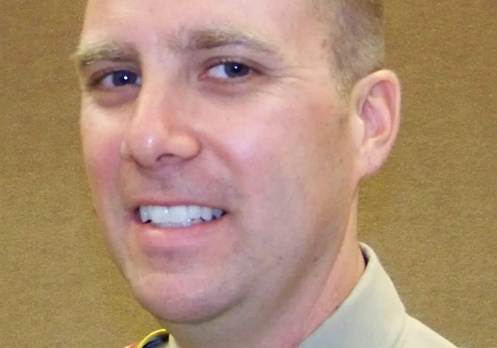
San Bernardino County Sheriff’s Department Sgt. Jerimiah Cornett
Former Victorville resident Alaisha Tyshari Browder was awarded a $499,000.00 settlement from San Bernardino County for her malicious criminal prosecution by San Bernardino County Sheriff’s Department Sgt. Jerimiah Cornett for being falsely prosecuted for felony Child Endangerment charges after an eight-year battle to clear her name.
On November 6, 2018 Alaisha Tyshari Browder was subjected to a search of her Victorville apartment when her former boyfriend, Dejuan Reed, falsely accused her of forging his name on the lease agreement for their Nisqualli Road apartment. In fact, unbeknownst to Alaisha Browder, Dejuan Reed was living a double life, with one family in Los Angeles County, and with her; neither woman knowing of the other family’s existence.
When Dejuan Reed learned that there was an Unlawful Detainer judgment against him for unpaid rent at the Nisqualli Road apartment in Victorville, he called the Los Angeles County Sheriff’s Department and falsely claimed that he never lived at the Nisqualli Road apartment, that he didn’t know an Alaisha Browder, and that he had never been to Victorville.
That Unlawful Detainer action against Alaisha Browder and Dejuan Reed for possession of the apartment and for unpaid rent resulted from Alaisha Browder refusing to pay the rent when the apartment no longer had any hot water and heating.
Based on those false claims by Dejuan Reed to the Los Angeles County Sheriff’s Department, that agency contacted San Bernardino County Sheriff’s Department Sgt. Jerimiah Cornett, who obtained a search warrant for Alaisha Browder’s Nisqualli Road apartment..
When Sgt. Cornett searched Ms. Browder’s apartment on November 6, 2018 he found mounds of paperwork and other evidence showing that Dejuan Reed had lied to him, and that Mr. Reed had lived at the Nisqualli Road apartment with Alaisha Browder.
Sgt. Cornett also found Alaisha Browder’s apartment to be in disarray; a mess. However, that day, Alaisha Browder had rented a U-Haul truck to move herself and her two children out of that apartment, due to that lack of heating and hot water. There were boxes of various food items and other items of personal property that were only there in the position that they were in because Alaisha Browder was in the process of moving; not because she kept a dirty and unhealthy home.
On November 6, 2018 Sgt. Cornett Because arrested Alaisha Browder for forgery and for violation of Cal. Penal Code § 273a(a); Child Endangerment for the messy house.
 Thereafter, Alaisha Browder was criminally prosecuted in San Bernardino County Superior Court for violation of Cal. Penal Code § 273(a) & (b); child endangerment[1].
At the conclusion of the prosecution’s case at Alaisha Browder’s felony child endangerment trial, the San Bernardino Superior Court ruled that the prosecution’s case did not show any child neglect or child endangerment by Alaisha Browder and held:
“ . . . based on the state of the evidence at this time, the Court grants the motion to dismiss the case against the defendant. Okay. Case dismiss[ed].
Thereafter, Alaisha Browder sued San Bernardino County and Sgt. Jerimiah Cornett for malicious prosecution; for fabricating evidence in Sgt. Cornett’s police report that resulted in the San Bernardino County District Attorney’s Office filing that felony child endangerment case against her.
In her federal malicious prosecution lawsuit[2], United States District Judge Jesus G. Bernal dismissed Alaisha Browder’s case, finding that Sgt. Cornett had probable cause for his child endangerment claims against Alaisha Browder.
However, the United States Court of Appeals for the Ninth Circuit reversed Judge Bernal’s dismissal of Alaisha Browder’s case, holding:
“The district court found the following facts established probable cause to arrest Browder as a matter of law:
Here, while searching Browder’s residence [for evidence of forgery] pursuant to a warrant, Cornett noticed rotten food on the floor, a trash bin filled with trash and rotten food, knives and other eating utensils throughout the residence, knives between couch cushions, a nearly empty fridge, and boxes and bags scattered throughout the residence. Cornett also smelled a foul odor, which he assumed came from the rotting food. From these conditions, Cornett determined the residence was uninhabitable and posed a safety and health risk to Browder’s children. Browder herself told Cornett the residence was uninhabitable, though she claimed it was because she was in the process of moving due to her eviction.
While some of these facts support probable cause, some cut both ways, and other undisputed facts cut against a finding of probable cause. For instance, the fact that Browder “was moving out of the apartment” at the time of the search, her explanation that “the residence was in disarray because she was packing,” and her statement that “she knew the residence was currently not in a habitable condition,” as recounted in Cornett’s report, plausibly support opposite inferences: either that Browder’s home was not habitable in general, or that Browder’s home was not presently habitable at the time of the arrest because Browder and her children were in the midst of a move. Indeed, one of Browder’s minor children reported to Cornett that “the residence was typically clean[;] however, for the past two or three days they had been packing items to move out.”
Cornett’s report also contained a misrepresentation about the knives that he observed at Browder’s home on the day of the arrest. He wrote: “Steak knives and other eating utensils were found throughout the residence. Some of the steak knives were found between the couch cushions.” These statements are untrue. During Browder’s subsequent trial for child endangerment, Cornett testified under oath that he found only one steak knife at the residence; it was on a kitchen counter. And the knives that Cornett reported finding in the couch were two butter knives. Although butter knives on the couch may weigh in favor of a finding of probable cause, the notion that the presence of steak knife on a kitchen counter placed Browder’s then seven- and eleven-year-old children in a situation “likely to produce great bodily harm or death,” Cal. Pen. Code § 273a(a), strains credulity. So too with the report’s mention of “other eating utensils.” The report, and the district court’s order, leave us guessing whether these other utensils were plastic spoons or meat cleavers; they do not demonstrate probable cause for child endangerment as a matter of law.
Moreover, when Browder was ultimately tried for child endangerment under California Penal Code § 273a(b), the trial judge dismissed the case at the close of the prosecution’s case-in-chief “based on the state of the evidence at [that] time.” Although the trial judge’s determination that the prosecutor could not prove child endangerment under section 273a(b) beyond a reasonable doubt is not dispositive of whether Cornett had probable cause to arrest Browder for the more serious charge under section 273a(a), the finding of insufficient evidence to convict under section 273a(b) cuts against a finding that Cornett had probable cause to arrest under section 273a(a).
Because the evidence points both ways on probable cause, and viewing that evidence in the light most favorable to Browder, we hold that the district court erred in resolving the probable cause inquiry on summary judgment.”[3] (BROWDER, ALAISHA – MEMORANDUM OPINION REVERSING DISTRICT COURT.)
Alaisha Browder’s lawyer, Newport Beach Police Misconduct Attorney Jerry L. Steering is elated in the settlement of this malicious prosecution case:
 “Malicious prosecution cases are called a “disfavored remedy” by the courts. They are so “disfavored” that under California state law, all police officers are absolutely immune for maliciously prosecuting anyone, ever. The police can attempt to literally frame a person for a crime who they know is innocent and are simply immune from suit for doing so under California Government Code Section 821.6[4].”
Moreover, it was not until April 4, 2022 that the federal courts actually recognized that one could sue for a pure malicious criminal prosecution[5] as opposed to just unjustified pre-trial confinement. Also, in federal malicious prosecution cases the law presumes thathe District Attorney’s Office used its “independent judgment” in deciding to prosecute the malicious prosecution plaintiff, and there is a high burden of proof that the plaintiff must show to overcome that presumption.
That showing is often impossible or close to impossible to achieve because the plaintiff has to show that the District Attorney’s Office relied on false material statements by the police in deciding to file the underlying criminal case, to rebut the presumption that the District Attorney’s Office used its independent judgment in deciding to prosecute, and Deputy District Attorneys will usually lie about why they filed the criminal case to protect the police (Yes, lie; perjure themselves).
Accordingly, malicious prosecution case victories were and continue to be rare.”
On the case settlement, Mr. Steering notes: “The County of San Bernardino made a calculated decision not to take their chances at trial in Alaisha Browder’s case, and she is thrilled with her $499,000.00 settlement. Moreover, Alaisha Browder’s victory in the Ninth Circuit Court of Appeals is a vindication of her being falsely accused of child endangerment; something that would be a nightmare to any mother.”


[1] Cal. Penal Code § 273a provides:(a) Any person who, under circumstances or conditions likely to produce great bodily harm or death, willfully causes or permits any child to suffer, or inflicts thereon unjustifiable physical pain or mental suffering, or having the care or custody of any child, willfully causes or permits the person or health of that child to be injured, or willfully causes or permits that child to be placed in a situation where his or her person or health is endangered, shall be punished by imprisonment in a county jail not exceeding one year, or in the state prison for two, four, or six years.
(b) Any person who, under circumstances or conditions other than those likely to produce great bodily harm or death, willfully causes or permits any child to suffer, or inflicts thereon unjustifiable physical pain or mental suffering, or having the care or custody of any child, willfully causes or permits the person or health of that child to be injured, or willfully causes or permits that child to be placed in a situation where his or her person or health may be endangered, is guilty of a misdemeanor.
[2] Alaisha Tyshari Browder et al. v. County of San Bernardino, et al.; United States District Court for the Central District of California; 5:19-cv-02306-JGB-SP.
[3] Alaisha Tyshari Browder et al. v. County of San Bernardino, et al.; United States Court of Appeals for the Ninth Circuit Case Number 22-55846, Memorandum Opinion filed March 28, 2024.
[4] California Government Code Section 821.6 provides:
“A public employee is not liable for injury caused by his instituting or prosecuting any judicial or administrative proceeding within the scope of his employment, even if he acts maliciously and without probable cause.”
[5] In Thompson v. Clark , 596 U.S. 36 (2022). Prior to Thompson v. Clark, the Supreme Court the Supreme Court allowed some to recover for pre-trial confinement based on false evidence presented by the police to the prosecution, but did not actually use the term “malicious prosecution”.